Ramaphosa Faces Accountability Test as South Africa Marks 70 Years Since Women’s March
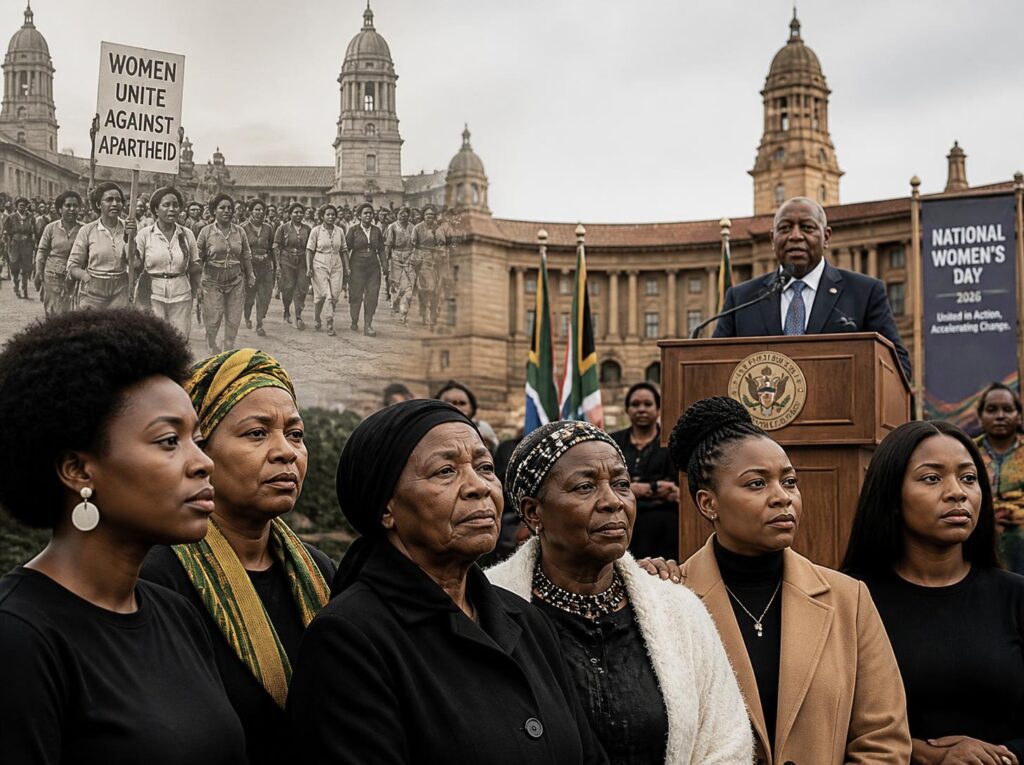
President Cyril Ramaphosa will deliver the keynote address at the National Women’s Day commemoration at the Union Buildings in Pretoria on Sunday as South Africa marks 70 years since the historic 1956 Women’s March.
PRETORIA – President Cyril Ramaphosa is scheduled to deliver the keynote address at South Africa’s National Women’s Day commemoration at the Union Buildings in Pretoria at 10:00 on Sunday, 9 August 2026.
This year’s commemoration marks the 70th anniversary of the historic Women’s March of 9 August 1956, when at least 20,000 women marched to the Union Buildings in protest against the apartheid government’s decision to extend pass laws to women.
The 2026 commemoration is being held under the theme, “Empowered Women, Empower Nations,” with a particular focus on women’s healthcare.
The Presidency said the programme would highlight the importance of ensuring that women have access to quality healthcare, describing this as essential to advancing social justice, sustainable development and economic growth.
Seventy years since the historic march
The 1956 Women’s March remains one of the most important acts of mass resistance in South African history.
Led by struggle icons including Lilian Ngoyi, Helen Joseph, Rahima Moosa and Sophia Williams-De Bruyn, women from across racial and cultural backgrounds marched to the Union Buildings to deliver petitions opposing pass laws.
The march gave rise to the historic declaration, “Wathint’ Abafazi, Wathint’ Imbokodo”, meaning, “You strike a woman, you strike a rock.”
Seventy years later, the anniversary provides an opportunity to honour the courage of the women who participated in the march while examining how much progress South Africa has made in addressing the challenges facing women.
Ramaphosa expected to address continuing challenges
Ramaphosa’s speech is expected to focus on gender-based violence and femicide, women’s healthcare, unemployment, economic participation and government programmes intended to advance gender equality.
The address will also provide the President with an opportunity to account for the government’s progress in improving the lives of women and implementing policies intended to protect their rights.
However, the commemoration takes place against the backdrop of continued violence against women, high unemployment, poverty and unequal access to healthcare and economic opportunities.
Many women, particularly those living in rural areas, informal settlements and disadvantaged communities, continue to experience difficulty accessing essential public services.
South Africa’s persistently high levels of gender-based violence and femicide are also expected to remain central to the national conversation surrounding the commemoration.
Speech faces an accountability test
Ramaphosa’s address will face scrutiny over whether it includes measurable commitments, new interventions and clear implementation timelines or largely repeats promises made during previous Women’s Month commemorations.
Particular attention will be paid to any announcements relating to the government’s response to gender-based violence and femicide, access to healthcare, employment opportunities and support for women-owned businesses.
The President may also use the address to outline measures aimed at improving women’s participation in the economy and positions of leadership.
The speech is likely to produce the government’s most significant political message of the day, particularly as the country reflects on the gap between the constitutional promise of equality and the daily experiences of millions of women.
Beyond ceremonial coverage
The significance of the 70th anniversary extends beyond the official ceremony and the President’s prepared address.
It raises a broader public-interest question: What has actually changed for South African women since the 1956 march?
While women have secured constitutional rights and greater representation in political and professional life, violence, unemployment, poverty, inadequate healthcare and economic exclusion continue to affect millions.
MDNtv will examine the strongest policy announcement or accountability claim made during Ramaphosa’s speech and test it against available evidence.
The National Women’s Day commemoration is scheduled to begin at 10:00 at the Union Buildings in Pretoria.
- 70th anniversary Women’s March, Cyril Ramaphosa, femicide South Africa, gender based violence South Africa, National Women’s Day 2026, Ramaphosa Women’s Day speech, South Africa Women’s Day, Union Buildings Pretoria, Women’s Day South Africa, women’s healthcare South Africa, Women’s March 1956, women’s rights South Africa