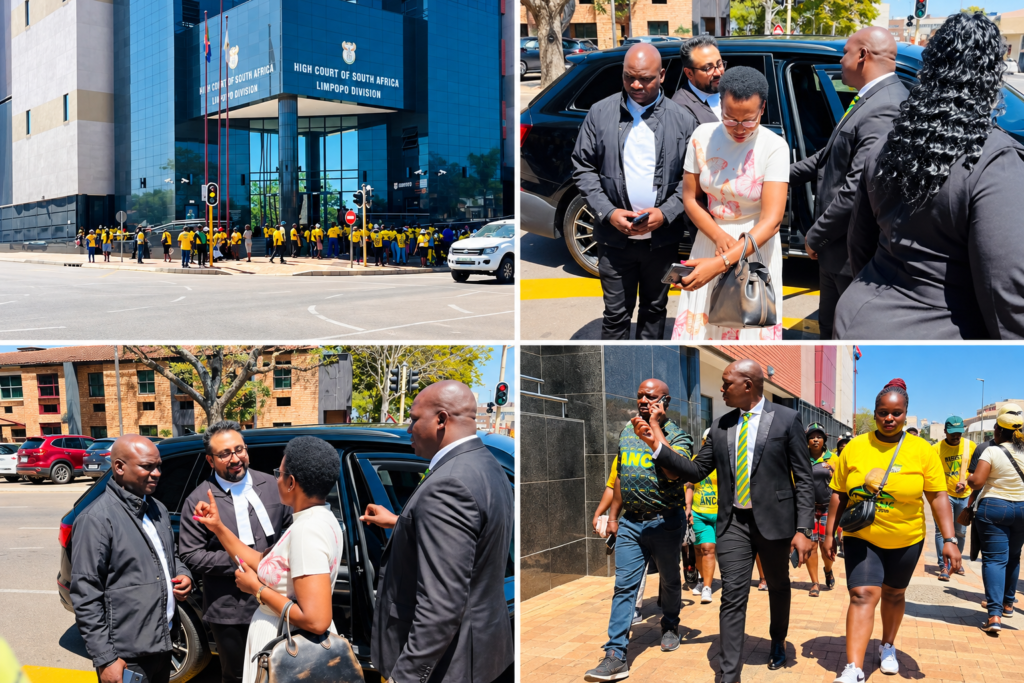
RAMAPHOSA ADMITS TOO MANY MUNICIPALITIES ARE FAILING AS ANC UNVEILS SIX-POINT PLAN TO RESTORE BASIC SERVICES
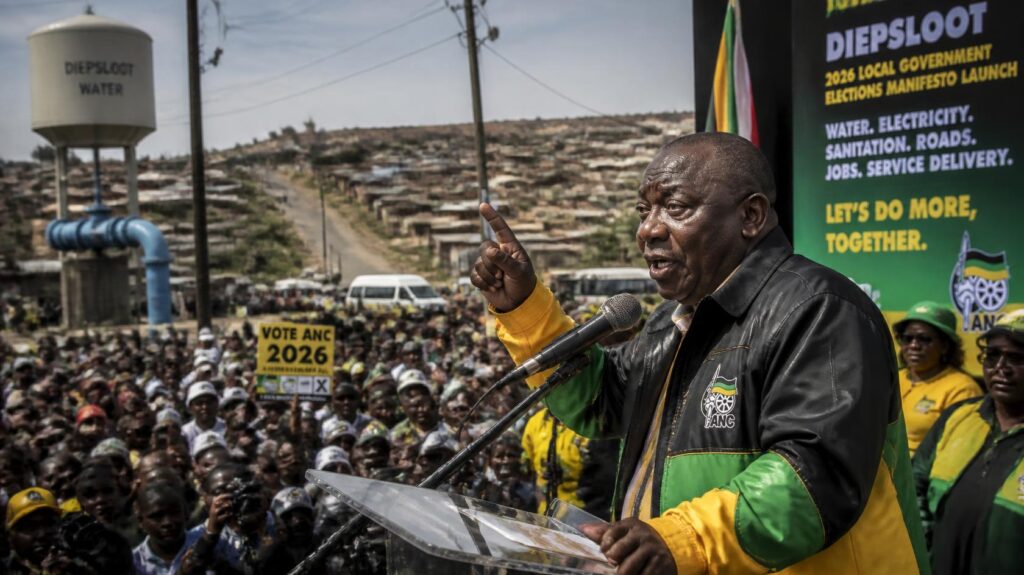
ANC president Cyril Ramaphosa has acknowledged that too many South African municipalities are failing residents on the most basic measures of local government, as the party launched its 2026 Local Government Elections manifesto in Diepsloot on Sunday, 23 August 2026.
Ramaphosa said democracy must be experienced in people’s daily lives through reliable water, electricity, sanitation, roads and other essential services, not only at election time.
His remarks came as the ANC set out six key actions aimed at rebuilding public trust in local government, including improving water provision, ensuring more reliable electricity supply and addressing critical service-delivery failures.
The admission is politically significant because the ANC heads into the 4 November 2026 municipal elections under intense pressure over deteriorating infrastructure, water interruptions, electricity problems and unstable councils in major metros.
Ramaphosa says South Africans must feel democracy every day
Ramaphosa told supporters gathered in Diepsloot that local government is where citizens experience the state most directly.
He argued that South Africans should not have to wait for political speeches or elections to feel the benefits of democracy.
Instead, those benefits should be visible through working taps, functioning electricity networks, clean neighbourhoods and municipalities capable of responding when services fail.
The speech represented one of the clearest acknowledgements yet from the ANC leadership that local government remains a major weakness for the party.
SABC reported Ramaphosa saying that too many municipalities are failing to provide services adequately.
Six actions aimed at rebuilding public trust
The ANC says its new manifesto is centred on six major actions designed to restore confidence in municipalities.
The first immediate priorities highlighted by Ramaphosa include water provision and reliable electricity, two issues that have become politically explosive across Gauteng and several other provinces.
The party has also identified broader service-delivery challenges involving sanitation, roads, waste management, infrastructure maintenance and municipal administration as areas requiring urgent intervention.
The exact implementation detail for each action will now become crucial.
Voters have heard repeated promises about fixing municipalities across several election cycles, meaning the ANC will face pressure to attach measurable targets and deadlines to the new commitments.
Water becomes major election battleground
Water is likely to become one of the defining issues of the November election.
Johannesburg, Tshwane, Ekurhuleni and other municipalities have experienced repeated supply interruptions linked to ageing infrastructure, insufficient maintenance, population growth and operational failures.
The ANC’s own recent review of its 2021 local-government manifesto acknowledged that water losses, service interruptions, wastewater failures and ageing infrastructure remain significant problems.
The party says government is strengthening oversight systems and prioritising rehabilitation and maintenance of water and wastewater infrastructure.
But residents will judge the promise primarily on whether taps work consistently.
Electricity reliability also central
Electricity is another major pressure point.
Although national load shedding has eased substantially, many communities continue to experience municipal outages and load reduction.
The ANC’s January policy statement acknowledged that local electricity networks remain vulnerable to debt, illegal connections, vandalism and infrastructure failure.
The party has called on municipalities to strengthen billing and revenue collection, honour debt-repayment commitments to Eskom and act against illegal connections.
For households, however, the key question is simpler: whether electricity remains available and whether outages are repaired quickly.
ANC admits previous commitments were not fully delivered
The 2026 manifesto was developed after what the party describes as a frank assessment of its 2021 local-election promises.
The ANC says that review examined what had been delivered, where progress had been made and where implementation had fallen short.
That is important because this campaign is not starting from a blank slate.
The ANC has governed the majority of South African municipalities for decades.
Opposition parties are therefore likely to argue that the party should be judged less on new promises and more on the condition of municipalities it already controls.
Ramaphosa’s admission that too many municipalities are failing appears aimed partly at confronting that criticism directly.
Diepsloot chosen as symbol of service-delivery pressure
The location of Sunday’s launch is politically significant.
Diepsloot is one of Gauteng’s most densely populated communities and has experienced persistent challenges involving housing, crime, roads, water, sanitation and electricity.
Holding the manifesto launch there allows the ANC to present itself as confronting service-delivery failures in communities where those failures are highly visible.
But it also raises the political stakes.
Residents in Diepsloot and similar communities will expect the manifesto promises to translate into tangible improvements rather than another campaign document.
Election comes after ANC lost national majority
The 2026 municipal election will take place in a dramatically different political environment from previous contests.
The ANC lost its outright national majority in the 2024 general election and now governs nationally through the Government of National Unity.
At municipal level, coalition governments have become common in Johannesburg, Tshwane, Ekurhuleni and several other councils.
That means the ANC is no longer campaigning from a position of guaranteed dominance.
Every major metro is now potentially contestable.
The November election will therefore serve as another major test of whether the party can recover voter confidence after its historic national decline.
Ramaphosa becomes central face of local election campaign
ANC secretary-general Fikile Mbalula has made clear that Ramaphosa will remain the main national face of the party’s municipal campaign.
That strategy links local election performance directly to the president’s political credibility.
It also allows the ANC to campaign around a national message even while its final mayoral candidates in several major metros remain unresolved.
The party delayed announcing those candidates until September after concerns over vetting and internal unity.
That means Ramaphosa’s manifesto message is carrying even more weight in the early phase of the campaign.
Automatic access to free basic services also part of ANC plan
The manifesto also contains a major social-policy proposal to link qualifying SASSA grant recipients automatically to municipal indigent registers.
The intention is to make it easier for poor households to receive free basic water, electricity, sanitation and refuse services without repeatedly reapplying at municipal offices.
That proposal could affect millions of households if implemented successfully.
However, it remains an election commitment rather than a nationwide policy already in force.
Municipal finances, data quality and implementation capacity will determine whether it can work in practice.
Opposition likely to attack ANC record
The DA, EFF, ActionSA, MK Party and other opposition parties are expected to focus heavily on municipalities where the ANC has governed during periods of deteriorating services.
Johannesburg will be among the biggest battlegrounds.
The city has faced repeated water outages, infrastructure failures, financial pressure and political instability.
Tshwane and Ekurhuleni will also be heavily contested.
Ramaphosa’s message that the ANC understands the failures and has a plan to correct them will therefore be tested against the lived experiences of residents.
What happens next
The critical question after Sunday’s launch is whether the six-point plan is followed by measurable implementation commitments.
Voters will want to know how quickly failing water infrastructure will be repaired, how electricity networks will be stabilised and what will happen to municipal officials and political leaders who fail to deliver.
The ANC says it wants to rebuild public trust.
Its own leader has now publicly acknowledged why that trust has been damaged.
Too many municipalities are failing, Ramaphosa says, and South Africans should experience democracy through working basic services every single day.
- 2026 South Africa municipal elections, ANC 2026 local government elections, ANC manifesto 2026, ANC six point plan, Cyril Ramaphosa, Diepsloot ANC manifesto, Ekurhuleni elections, electricity problems municipalities, Johannesburg local elections, local government elections South Africa, municipal service delivery, service delivery South Africa, South African municipalities, Tshwane elections, water crisis South Africa