
MDNtv EXCLUSIVE | “THE OTHER CELLS WARN US”: TIFFANY MEEK LEAK PUTS PRISON SEARCHES UNDER SCRUTINY
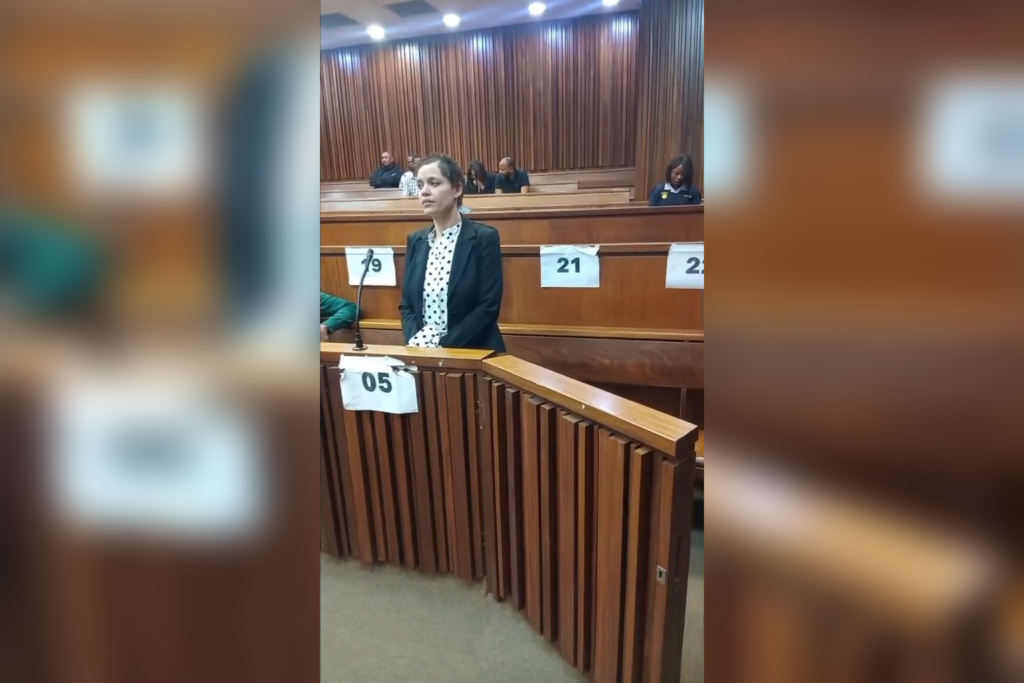
JOHANNESBURG — Buried in the leaked WhatsApp conversation at the centre of MDNtv’s continuing investigation into alleged cellphone access by murder accused Tiffany Meek is a claim that goes beyond one inmate and one device.
Asked about searches inside the correctional facility, an account purportedly belonging to Meek allegedly says inmates were able to conceal their cellphones because prisoners elsewhere warned them.
The message reads:
“most have phones so they hide it well because the other cells warn us.”
The claim has not been independently verified. The leaked communications have not been authenticated or tested in court, and MDNtv has not established that inmates were in fact receiving advance warnings of searches.
But the allegation raises a different question from the one examined in earlier instalments of The Tiffany Meek Files.
Not simply how an alleged cellphone entered a correctional facility, but whether the system intended to find it could have been anticipated.
That distinction matters.
The Department of Correctional Services has itself described frequent and unannounced searches as part of its security measures. Its annual reporting refers to cell searches and planned shakedowns of housing units, with reports submitted through correctional management structures.
If inmates could routinely alert one another before officials reached their cells, the effectiveness of that system would warrant examination.
The leaked exchange does not establish that this happened.
DCS records could help establish whether it did.
A QUESTION OF TIMING
The messages are dated 5 September 2025.
In the exchange, the account bearing the name “Tiffany Lucas” allegedly tells another participant that she had her own cellphone and had arranged for it to be brought inside.
When asked about searches, the account does not claim searches never happened.
It claims something potentially more consequential: that inmates knew when they were coming.
According to the account, other prisoners had cellphones and concealed them because “the other cells warn us.”
The messages do not explain how.
There is no allegation in that particular sentence that a correctional official provided the warning.
Inmates may simply have been able to observe officials moving between sections. Searches may have followed a recognisable sequence. Information may have travelled quickly between prisoners.
The claim could also be exaggerated or false.
Those possibilities matter because they lead to very different conclusions.
What the leaked material does not permit MDNtv to do is choose between them without evidence.
WHAT AN UNANNOUNCED SEARCH DEPENDS ON
The element of surprise is central to the effectiveness of a contraband search.
If a prisoner knows officials are approaching, a prohibited cellphone can potentially be moved, concealed or passed elsewhere before the search reaches that inmate.
That does not require a corrupt official.
A search can lose its element of surprise simply because of the way it progresses through a facility.
That is why the wording in the leaked conversation matters.
The account does not say merely that prisoners sometimes escaped detection.
It alleges that “the other cells warn us.”
The question is whether that was simply inmate-to-inmate observation or evidence of a weakness in how searches were conducted.
Correctional Services should be capable of examining that distinction.
THERE SHOULD BE A PAPER TRAIL
Unlike some allegations contained in private conversations, aspects of this claim can be tested against institutional records.
Search records could establish when searches were conducted at the facility where Meek was being held, which sections were searched and what contraband was recovered.
They could establish whether Meek’s accommodation was searched during the period covered by the leaked messages.
Confiscation records could show whether a cellphone associated with her was ever recovered.
Incident and disciplinary records could establish whether inmates were found concealing prohibited devices.
Internal investigations could show whether DCS itself ever suspected that the effectiveness or confidentiality of searches had been compromised.
None of those records would automatically prove that inmates were warning one another.
But they could move the issue beyond an allegation in a WhatsApp conversation.
A CONTRABAND PROBLEM FAR BIGGER THAN ONE CASE
Unauthorised cellphones are not an isolated problem within South Africa’s correctional system.
DCS has publicly reported thousands of search operations and the confiscation of thousands of cellphones from correctional facilities.
During its 2025/26 festive security operation, the Department reported 5,592 search operations and the confiscation of 8,063 cellphones.
By May 2026, Correctional Services Minister Pieter Groenewald told Parliament that intensified raids had resulted in more than 37,500 cellphones and other contraband items being confiscated. He also disclosed contraband-related misconduct cases involving correctional officials.
Those national figures do not prove anything contained in the Meek messages.
They establish something narrower but important: unauthorised cellphone possession is a persistent operational problem inside the correctional system.
The question raised by MDNtv’s exclusive material is what happened at the facility where Meek was detained.
THE SEARCH ALLEGATION FOLLOWS ANOTHER CLAIM
The alleged warnings cannot be considered entirely separately from the preceding messages.
Earlier in the same conversation, the account purportedly belonging to Meek says:
“My own. Had to arrange it to be brought in. I feel like a real criminal.”
Asked who brought the phone, the account refers to another woman she says she trusts and mentions clothes for court and from home.
Later, it states:
“She brought it in safely without anyone knowing.”
MDNtv has previously reported those messages as part of its exclusive investigation.
They have not been authenticated in court.
But if the account is genuine, the sequence presents two different alleged failures.
The first concerns how a cellphone supposedly entered custody without detection.
The second concerns how it allegedly remained concealed despite searches.
The claim about warnings from other cells sits directly between those two issues.
THE WARDER ALLEGATION
In the previous instalment of The Tiffany Meek Files, MDNtv examined another statement contained in the conversation.
The account alleged:
“majority of the wardens are in on everything here.”
MDNtv found no evidence establishing that a correctional official supplied Meek with a cellphone or helped conceal one.
The leaked messages also do not identify an official as the source of the alleged warnings before searches.
Those points should not be conflated.
The allegation that inmates warned one another is not evidence that warders leaked information.
But viewed together, the messages gave DCS reason to establish both how the alleged phone entered the facility and how it allegedly avoided detection once inside.
MDNtv ASKED DCS
MDNtv’s enquiries to Correctional Services have not been limited to whether Meek allegedly possessed a cellphone.
The Department was asked whether it knew about the alleged device, whether it had been recovered, whether Meek or her accommodation had been searched and whether an internal investigation had been opened.
MDNtv also asked whether any correctional official, inmate, visitor or other person had been investigated for potentially facilitating access to the alleged cellphone.
Questions were put concerning CCTV, visitor and access records, searches and whether the allegations had been referred to police or prosecutors.
When substantive answers were not received, MDNtv escalated its enquiries to the Office of Correctional Services Minister Pieter Groenewald.
The Department was also asked whether officials had been questioned, investigated, suspended or subjected to disciplinary proceedings.
As of publication, MDNtv has not received substantive answers resolving those questions.
WHAT THE LEAK DOES NOT ESTABLISH
There is an important difference between an allegation that inmates warned one another and evidence that prison searches were deliberately compromised.
MDNtv has no evidence showing a correctional official warning Meek or another inmate that a search was coming.
The leaked exchange does not identify an official as the source of the alleged warnings.
It does not establish that search schedules were leaked.
It does not establish that DCS personnel deliberately gave inmates time to conceal contraband.
And it does not explain how information allegedly moved between cells.
But from a security perspective, there is another possibility that also requires examination.
A search does not need to be deliberately leaked to lose its effectiveness.
If inmates in one section can reliably alert inmates elsewhere before officials arrive, the weakness exists regardless of whether an official caused it.
MEEK’S LAWYERS CHALLENGE THE MATERIAL
Meek’s legal representatives have previously told MDNtv that their client expressly does not admit the cellphone allegations.
LB Wyngaard & Associates has also questioned whether the electronic material can reliably be attributed to Meek without access to the complete underlying communications, original electronic files and metadata.
The firm cautioned that electronic communications can be misattributed, removed from context or technically altered.
Those objections remain part of the record.
The leaked WhatsApp communications have not been authenticated or tested before a court.
Meek has pleaded not guilty to charges arising from the death of her 11-year-old son, Jayden-Lee Meek, and denies killing him.
Her trial in the Johannesburg High Court, sitting at Palm Ridge, was postponed on 14 September after the State prosecutor fell ill. Proceedings are expected to resume on 26 and 27 October 2026.
The alleged prison communications are separate from the evidence being tested in the murder trial and do not establish Meek’s guilt or innocence.
THE QUESTION HAS MOVED
When MDNtv first obtained the leaked material, the immediate question was how an alleged cellphone could have entered a correctional facility.
The investigation subsequently turned to the allegation concerning warders.
There is now another question.
If searches were taking place, why does the account purportedly belonging to Meek claim inmates had enough warning to hide their phones?
There may be a straightforward operational explanation.
DCS may possess evidence contradicting the allegation entirely.
Its search reports, confiscation records, incident registers and any internal investigation should help establish what happened.
MDNtv has repeatedly sought those answers.
The Department has yet to provide a substantive response resolving the central allegation.
MDNtv will incorporate any substantive response received from the Department of Correctional Services, the Minister’s office, Meek’s legal representatives or any other affected party.
This report forms part of The Tiffany Meek Files, an MDNtv exclusive investigation. The leaked communications have not been authenticated or tested in court. Allegations contained in them should not be treated as established facts. Tiffany Meek remains presumed innocent unless and until proven guilty.