
Inside Beitbridge: BMA’s Mass Repatriation and Deportation Operation Reveals Growing Border Pressure
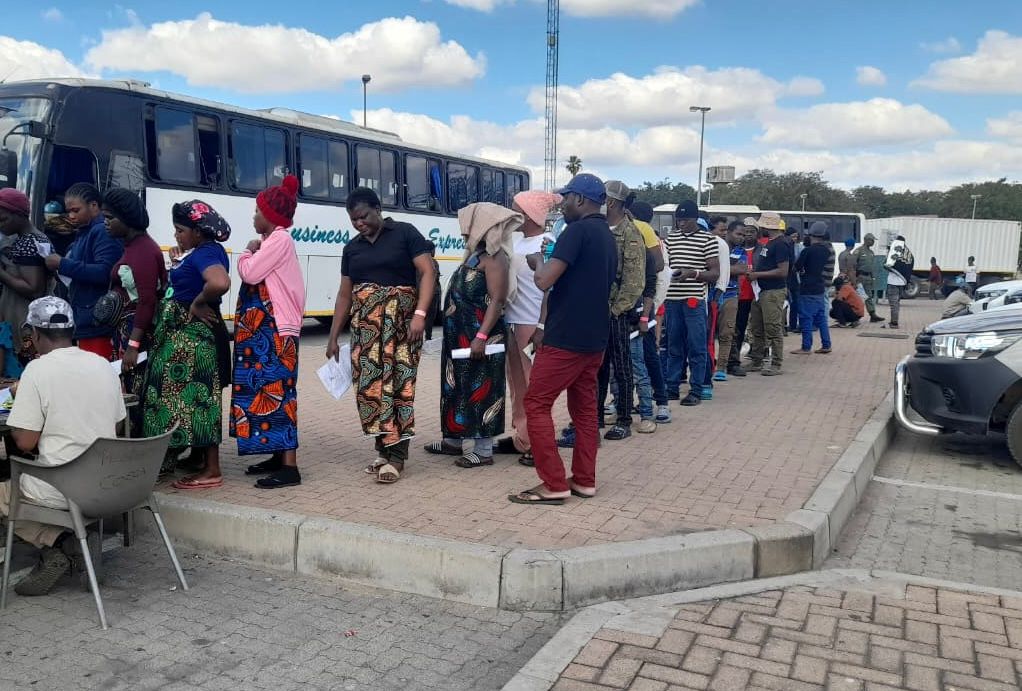
At the Beitbridge Port of Entry, one of Southern Africa’s busiest and most politically sensitive crossings, the movement of people rarely slows. But in recent days, the rhythm of the border has taken on a more forceful tone, marked by coordinated deportations, repatriations and heightened enforcement operations led by the Border Management Authority (BMA).
Behind the logistical precision lies a larger story of pressure, scale and enforcement: more than 1,300 foreign nationals processed, transported and returned across borders in a tightly coordinated national operation involving multiple agencies and foreign missions.
The operations underscore South Africa’s increasingly assertive stance on immigration control, even as officials insist that dignity and legality remain central to every decision taken at the border.
A Coordinated Operation Across Provinces and Borders
The BMA confirmed that it facilitated the repatriation of 673 Malawian nationals and 202 Zimbabwean nationals through Beitbridge, working in coordination with the Zimbabwean and Malawian foreign missions, the Department of Home Affairs and the South African Police Service (SAPS).
The scale of the operation stretched far beyond the border itself.
Zimbabwean nationals were transported on three buses from Gauteng, while Malawian nationals were moved in a multi-province operation involving five buses from Durban in KwaZulu-Natal and another five from Cape Town.
Officials described the process as logistically demanding, requiring simultaneous coordination across long distances, multiple jurisdictions and strict immigration procedures.
In parallel, 453 Malawian nationals detained at the Lindela Holding Facility were deported and processed before being transported back to their country of origin. Seven dedicated buses were used for their removal.
The Lindela facility, often at the centre of South Africa’s immigration enforcement system, once again became a key staging ground for large-scale removals.
“Professionalism Under Pressure”: BMA Leadership Responds
BMA Commissioner Dr Michael Masiapato commended officials for what he described as disciplined execution under difficult conditions, highlighting the operational strain placed on border personnel during mass movements.
He said the operations required precision and endurance, particularly given the number of individuals processed and the distances involved.
According to Masiapato, the authority is committed to balancing enforcement with humane treatment.
“The processing of large volumes of travellers under demanding conditions requires precision and endurance. The BMA is upholding the rule of law while maintaining the dignity of all individuals undergoing repatriation and deportation processes,” he said.
He added that despite logistical pressure, teams remained focused and ensured procedures were carried out efficiently and accurately.
“The scale of these operations reflects the increasing operational demands placed on our officials. Despite these pressures, our teams remained focused and ensured that all procedures were executed with efficiency, accuracy and humanity,” he said.
Border Vigilance and Interceptions
While coordinating large-scale removals, BMA officials were simultaneously tasked with preventing illegal entry attempts at the border.
During the same operational period, officials intercepted two Zimbabwean nationals listed on the Visa and Entry Stop List, commonly known as the V-list, preventing their entry into South Africa.
In a separate enforcement action, eleven undocumented Zimbabwean nationals were stopped while attempting to cross without valid documentation.
The BMA says such interventions remain a critical part of its mandate, particularly at high-volume ports of entry like Beitbridge, where cross-border movement is constant and enforcement pressure remains high.
Overstays, Fingerprints and “Undesirable” Declarations
Beyond coordinated repatriation efforts, the BMA also processed several foreign nationals who exited South Africa under separate immigration enforcement actions.
According to officials, seven Zambian nationals, one Tanzanian national, 28 Zimbabwean nationals and 33 Malawian nationals were removed after overstaying their permitted time in the country.
All individuals were fingerprinted and declared undesirable in terms of immigration regulations before being facilitated for departure.
These measures form part of South Africa’s broader immigration enforcement framework under the Immigration Act, aimed at tracking repeat overstays and preventing re-entry where applicable.
A Border Under Strain, A System Under Scrutiny
The operations at Beitbridge highlight a broader reality: South Africa’s immigration system is under sustained pressure, balancing legal migration, enforcement obligations and humanitarian considerations in equal measure.
For the BMA and its partner agencies, the challenge is no longer just enforcement at the border, but coordination across the country’s entire migration network, from detention facilities like Lindela to provincial transport hubs feeding into repatriation routes.
As operations of this scale become more frequent, questions around capacity, efficiency and the human impact of mass removals are likely to remain at the centre of South Africa’s immigration debate.
For now, Beitbridge remains what it has long been: a gateway, a checkpoint and, increasingly, a stage where the tensions of migration policy play out in real time.