Four years, thousands of Jobs and a City repositioned: Dr Bheka Zulu closes historic TASEZ chapter as his tenure draws to a close
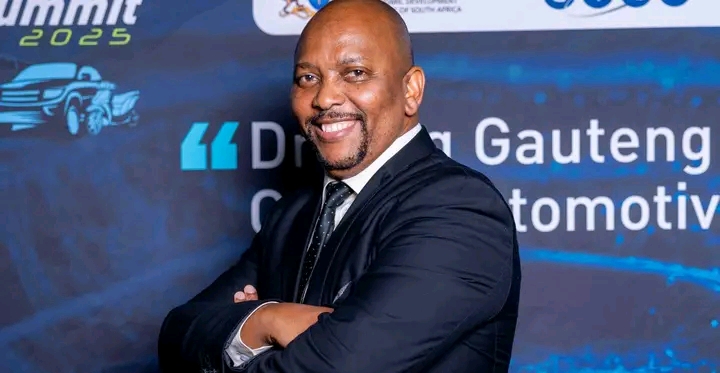
The outgoing CEO of the Tshwane Automotive Special Economic Zone (TASEZ) Dr Bheka Zulu reflects with gratitude and purpose on helping turn Africa’s first automotive city into a platform for jobs, skills, township enterprise and national industrial renewal.
When Zulu took the wheel at the TASEZ, South Africa was still carrying the aftershocks of a disrupted global economy, weak growth, investor caution and deep pressure on jobs.
Four years later, as his tenure comes to a close, TASEZ stands more firmly as one of the country’s most visible examples of industrial policy becoming practical delivery, and of leadership rooted in service becoming visible impact.
Zulu’s exits the CEO role at the conclusion of his 2022-2026 tenure, marking the end of a demanding chapter carried with discipline, conviction and care.
Yet the work he has come to represent continues: industrial growth that creates jobs, builds skills, opens space for SMMEs and brings real opportunity closer to the communities around major economic assets. His impact is felt in numbers, but also in the lives behind them.
Performance figures reflected in the latest media copy indicate that the TASEZ ecosystem generated more than 3,400 direct industrial jobs and 10,396 indirect job opportunities, with impact spreading through the Tshwane region, nearby communities and the national automotive value chain.
More than R2 billion in SMME and procurement participation also placed local enterprises closer to the economic value created by the zone.
“This chapter was never only about infrastructure. It was about people. It was about jobs, skills, suppliers, communities and proving that South Africa can still build industrial platforms that carry hope.”
But for families in Mamelodi, Eersterust, Nellmapius and surrounding areas, its meaning is deeply human.
“Industrial development means work. It means contracts. It means training. It means young people being able to imagine a future that is not only promised from podiums, but connected to actual factories, supply chains and livelihoods,” he said.
Zulu’s tenure placed a deliberate emphasis on localisation and SMME participation. The more than R2 billion SMME and procurement participation figure became a critical part of the story because it spoke to one of South Africa’s hardest and most urgent questions of industrial investment.
That question cannot be answered by slogans.
It requires procurement systems, training, enterprise support, community legitimacy and sustained engagement between government, industry and local business. It also requires leaders who understand that development is ultimately measured not only in output, but in dignity, access and shared progress.
From maritime discipline to automotive transformation Zulu’s personal journey adds further depth to the legacy.
A PhD-qualified leader with roots in maritime management, port operations, international trade and logistics, he brought a disciplined operating lens to an inland automotive project.
His career moved from the sea and logistics corridors into the heart of South Africa’s automotive manufacturing ambitions, carrying with it a clear belief that systems matter because people depend on them.
That background shaped his public language. In interviews and public platforms, including local radio discussions on the role of TASEZ as an engine of growth, Zulu repeatedly connected infrastructure to people, investment to communities, and manufacturing to national confidence.
His message was consistent: industrialisation must be practical, inclusive and felt in the daily lives of people.
The leaders and structures behind the chapter “No chapter of this scale is carried by one person. I am deeply grateful to the TASEZ Board, shareholders, government partners, investors, tenants, communities and the staff of TASEZ, whose work and support helped carry this journey.”
He recognises the role the Board has played, together with shareholders, government partners, investors, communities and the TASEZ team, in advancing the Zone’s industrial, economic and social impact.
His reflection on this chapter is intentionally collective.
He credits Minister Parks Tau, now Minister of Trade, Industry and Competition, for his strategic role in driving and implementing the SEZ programme, MEC Tasneem Motara for her contribution to the automotive sector, GDED entities, job creation, SMME development and gender, youth and disability inclusion, MEC Lebogang Maile for investment mobilisation, infrastructure focus, last-mile delivery, SMME participation and skills development; and the current MEC Vuyiswa Ramokgopa for the continuing emphasis on change, youth empowerment and economic-development priorities.
The same recognition extends, with sincerity, to Blake Mosley-Lefatola, Mpho Nawa and Motlatjo Moholwa in their departmental roles; portfolio committees, advisory committees and members of Parliament who visited, interrogated and supported the SEZ journey; investors, tenants, the CPC under Matton Tela, ward based community structures, the labour desk, SMMEs and the TASEZ staff, Exco and Manco.
In naming these partners, Zulu frames the chapter not as an individual achievement, but as a shared act of public purpose.
“The measure of a leadership chapter is not only what was built in concrete and steel. It is what was unlocked for people, for communities and for the future of the economy.”
The TASEZ story sits inside a larger policy frame. South Africa has spoken for years about localisation, industrialisation, public-private partnership and the need to rebuild manufacturing capacity.
What makes TASEZ important is that it gives policy a physical address. It shows what happens when government, investors, communities and implementing institutions move with intent from commitment to delivery.