Faith Leaders Back Ramaphosa but Demand Urgent Action on Border Security and Law Enforcement
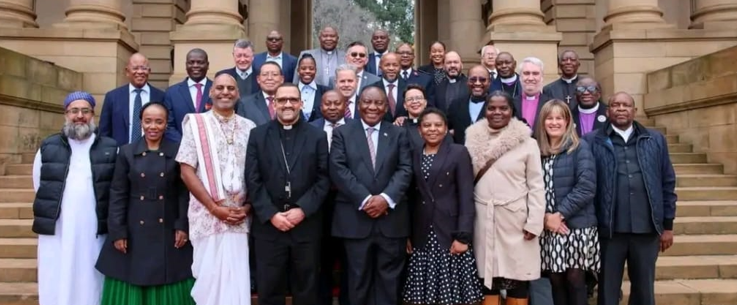
PRETORIA – As concerns over migration, border control and community tensions continue to rise across South Africa, a coalition of faith-based organisations has called on the government to take decisive action to strengthen law enforcement and secure the country’s borders.
The appeal came after President Cyril Ramaphosa convened an urgent meeting with a broad coalition of religious leaders at the Union Buildings on Wednesday to discuss the country’s growing migration challenges.
The meeting unfolded against a backdrop of mounting pressure in communities across the country, particularly in parts of the Western Cape and KwaZulu-Natal, where vulnerable families and displaced individuals continue to face significant hardship.
Religious leaders expressed concern over what they described as an increasingly troubling trend: ordinary citizens stepping into roles traditionally reserved for the state.
According to the organisations, some community members have begun conducting patrols, demanding identification documents, questioning access to public services and attempting to enforce immigration laws themselves.
The faith leaders warned that such actions risk undermining the rule of law and could further inflame tensions within already strained communities.
“We urge South Africans not to feel compelled to perform the duties of police officers, immigration officials, labour inspectors or the courts,” the organisations said.
The coalition stressed that enforcing immigration laws and maintaining public order remain the responsibility of government institutions and authorised law enforcement agencies.
While expressing confidence in the government’s ability to uphold the law, the organisations delivered a sharp criticism of what they view as shortcomings in the state’s response to border management and law enforcement.
They argued that stronger action is needed to address weaknesses in border security and improve the enforcement of existing laws.
The call places renewed focus on one of South Africa’s most contentious policy challenges: balancing humanitarian concerns with effective migration management.
Faith leaders said they sympathise deeply with communities experiencing genuine hardship, as well as with vulnerable individuals and families displaced in the Western Cape and KwaZulu-Natal. However, they maintained that lasting solutions can only come through effective governance rather than citizen-led enforcement efforts.
Their message to government was clear: restore public confidence by strengthening law enforcement, securing the country’s borders and ensuring that state institutions fulfil their constitutional responsibilities.
As migration debates continue to dominate public discourse, the meeting highlighted growing concern from civil society that failure to act decisively could deepen social tensions and place further pressure on communities already grappling with economic and social challenges.
For now, faith leaders are urging calm, restraint and trust in the country’s legal institutions, while simultaneously demanding stronger action from government to address the root causes driving public frustration.