Equality Court Finds Ngizwe Mchunu Guilty of Hate Speech Against LGBTQIA+ Community
Controversial podcaster ordered to apologise, undergo human rights training and pay R250,000 after landmark ruling
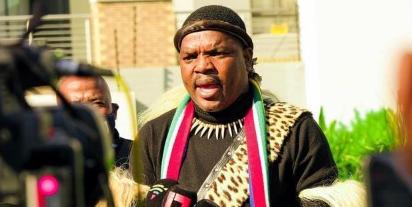
A controversial social media campaign that targeted South Africa’s LGBTQIA+ community has ended in a significant court defeat for Amabhinca President and podcaster Ngizwe Mchunu.
The Equality Court sitting in Johannesburg on Friday found Mchunu guilty of hate speech, harassment and unfair discrimination against gay, lesbian and transgender people following a series of social media posts and public statements made in 2025.
The judgment marks one of the strongest legal rebukes against anti-LGBTQIA+ rhetoric in recent years, with the court imposing a range of sanctions aimed at preventing further discriminatory conduct.
Court bans future discriminatory posts and demonstrations
Judge Gregory Wright granted a final interdict prohibiting Mchunu from publishing social media content that directly or unfairly discriminates against LGBTQIA+ individuals or communities.
The court also permanently barred him from instigating, organising, leading or participating in any march or demonstration that directly or indirectly discriminates against LGBTQIA+ people.
In addition, Mchunu was ordered to issue an unconditional public apology on his Facebook page within five days. The apology must remain pinned to the top of his page for three months.
The ruling further requires him to complete 20 hours of human rights sensitisation training and pay R250,000 to either Transhope or the Hate Crime Working Group, organisations that were central to the legal challenge brought through the South African Human Rights Commission.
Videos and posts sparked legal action
The case stemmed from 12 videos and a flyer published on Mchunu’s Facebook page between September and October 2025.
According to court papers, the content repeatedly referred to LGBTQIA+ people using the derogatory term “izitabane” and included inflammatory remarks comparing gay people to dogs. Some posts suggested that gay people deserved imprisonment or death.
Mchunu also accused LGBTQIA+ individuals of grooming children and corrupting Zulu culture, while presenting a proposed protest as necessary to protect humanity.
The controversy erupted after two men, dressed in traditional Zulu attire, publicly announced their intention to marry, a development that triggered widespread debate on social media and prompted Mchunu’s campaign against the LGBTQIA+ community.
Failure to comply with earlier court order
The ruling follows an earlier legal intervention in October 2025 when Transhope and the Hate Crime Working Group secured an ex parte interim interdict against Mchunu.
The order prevented him from organising an anti-LGBTQIA+ march in Johannesburg’s Kwa Mai Mai area and instructed him to remove offensive content from his online platforms.
However, the court heard that he failed to comply with those directives.
Judge Wright noted that Mchunu had been properly served with court documents but repeatedly declined opportunities to oppose the application or participate in the legal proceedings.
“The statements are, quite obviously, hate speech, harassment and unfair discrimination under the Promotion of Equality and Prevention of Unfair Discrimination Act,” Wright said.
“He has acted against the Constitution and has insulted and threatened persons who enjoy Constitutional rights.”
The court also ordered Mchunu to pay the legal costs of the application.
Activists welcome judgment
Education activist Hendrick Makaneta welcomed the ruling, describing it as an important reaffirmation of South Africa’s constitutional values.
“We welcome this ruling not as an act of punishment, but as a necessary reaffirmation of a constitutional democracy grounded in law, dignity and equality,” Makaneta said.
“Freedom of expression cannot be used as a shield for prejudice, nor can public platforms be weaponised to undermine the humanity of others.”
He said the judgment sent a clear message that discrimination against LGBTQIA+ people would not be tolerated under South African law.
Makaneta also expressed support for the court-ordered remedies, including the public apology, financial compensation, human rights training and restrictions on future discriminatory conduct.
“These measures are not symbolic. They are corrective instruments that reflect a society committed not only to punishment, but to transformation, education and the rebuilding of social cohesion,” he said.
He added that the court’s emphasis on education highlighted the need to confront prejudice through learning, accountability and respect for human rights.
A significant moment for equality rights
The judgment is likely to be viewed as a landmark victory for LGBTQIA+ rights advocates and civil society organisations that have long campaigned against hate speech and discrimination.
As South Africa continues to grapple with issues of inclusion, equality and constitutional freedoms, the ruling underscores a principle repeatedly reinforced by the courts: freedom of expression does not extend to conduct that promotes hatred, discrimination or the violation of another person’s dignity.
For many activists, Friday’s judgment represents more than a legal victory. It is a powerful statement that constitutional rights belong to every South African, regardless of sexual orientation or gender identity.