
‘They Eliminate Witnesses’: DCS Boss Exposes Prison Gang Operations at Madlanga Commission
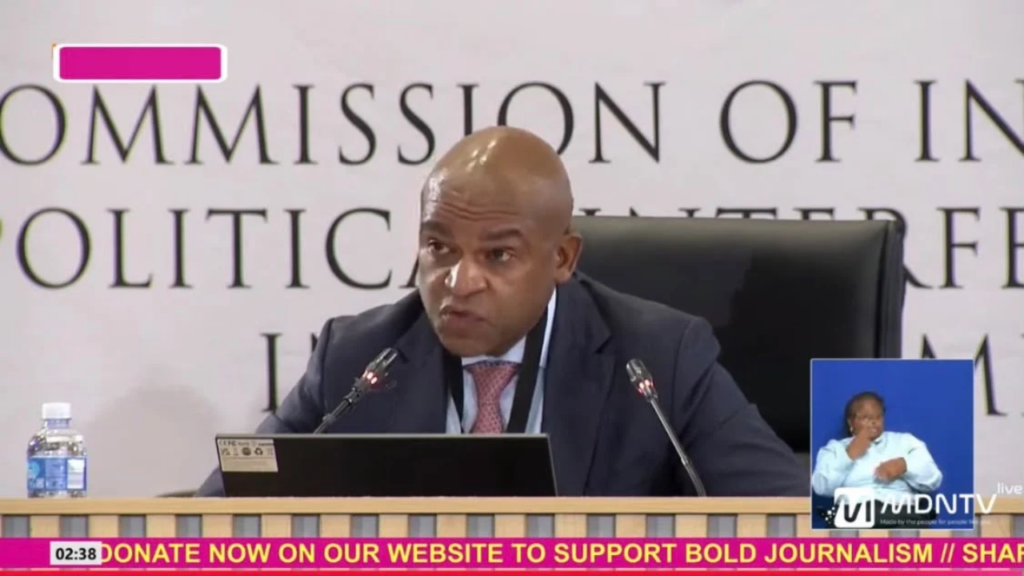
South Africa’s National Commissioner of Correctional Services, Makgothi Samuel Thobakgale, has given disturbing evidence about the reach of prison gangs, telling the Madlanga Commission that some gang structures include members tasked with eliminating witnesses.
Thobakgale was testifying on Thursday, 17 September 2026, as the Commission examined infiltration, organised crime and the influence of criminal syndicates within the country’s correctional facilities.
He told the Commission that criminal activities associated with gangs can extend beyond prison walls even while members remain incarcerated.
These activities, according to his evidence, include the drug trade, extortion and interference with witnesses in criminal cases.
Thobakgale then described a category of gang members he referred to as “hammer men”.
“The hammer men are those that are responsible for eliminating witnesses or anybody that the gang will have a financial gain from eliminating,” Thobakgale testified.
He said such services could allegedly be extended while gang members were still inside correctional facilities through communication mechanisms smuggled into prisons.
Criminal operations extending beyond prison walls
Thobakgale told the Commission that the relationship between street gangs and prison gangs had evolved into an illicit economy.
Gang members entering correctional facilities can retain their street-gang affiliations and influence, according to his testimony.
He said criminal activities involving drugs, human trafficking and extortion could then extend into the correctional environment.
The Commission heard that prison and street gangs are increasingly intertwined, with criminal syndicates infiltrating prison gangs to further criminal activities.
Thobakgale also described situations where gang members facing serious threats on the outside deliberately commit crimes that result in their arrest because they regard prison as a safer environment.
Once inside, he said, their gang membership and rank can continue to be recognised.
Correctional Services therefore attempts to identify rival gang members and keep them separated to prevent street conflicts from continuing behind bars.
Gang leaders can ‘buy’ rank
Thobakgale also revealed how money is changing traditional prison gang hierarchies.
Historically, he said, gang members were required to perform particular acts before attaining authority or rank within gang structures.
But the illicit economy has altered that system.
Thobakgale told the Commission that some gang leaders have effectively “bought the rank” because of their access to money and the illicit economy they controlled outside correctional facilities.
He said prison gang codes had even been revised in some instances to accommodate powerful street-gang leaders entering the correctional system.
Drugs and money moving through prison economy
The Commissioner described how criminal proceeds can move beyond the physical prison environment despite restrictions on inmates possessing cash.
Correctional facilities use a cashless system for inmates, but Thobakgale said criminal networks have adapted.
He told the Commission that proceeds from the drug trade inside correctional facilities could manifest outside through money-transfer mechanisms.
As inmate populations increase, he said, the illicit market inside correctional facilities also grows.
That economy, according to Thobakgale, helps strengthen the relationship between street gangs and prison gangs.
COVID lockdown exposed alleged role of officials
One of the strongest parts of Thobakgale’s evidence concerned the role allegedly played by correctional officials in getting contraband into prisons.
He pointed to the COVID-19 lockdown period, when correctional facilities faced severe restrictions.
Court movements and visits were largely suspended, leaving very limited movement into and out of facilities.
Despite those restrictions, Thobakgale said Correctional Services continued discovering high levels of contraband inside prisons.
He said the circumstances pointed towards correctional officials as a major source.
Thobakgale told the Commission that the “pervasive smuggling” of contraband was aided and abetted and, in some instances, had become an “active, ongoing, everyday activity” involving DCS members.
Officials allegedly give inmates access to cellphones
Thobakgale also explained how compromised officials could circumvent searches for illegal cellphones.
Instead of physically giving a cellphone to an inmate to keep, an official could allegedly enter the facility carrying a phone and simply allow inmates to use it.
When security officers later searched inmates, no illegal device would necessarily be found in their possession.
But the official’s cellphone could have been used by inmates to communicate and facilitate criminal activity.
Thobakgale said this was one reason Correctional Services was restricting officials from bringing cellphones into facilities.
Officials caught breaching cellphone restrictions face disciplinary processes, he said.
But Thobakgale acknowledged the scale of the problem.
He told the Commission it was something occurring “on a daily basis”, adding that once an official had been compromised, reversing that relationship became difficult.
Madlanga Commission examines infiltration of Correctional Services
Thobakgale’s testimony provides a stark picture of the challenge facing Correctional Services: criminal networks capable of maintaining relationships across prison walls while allegedly exploiting compromised officials to move contraband, facilitate communication and sustain an illicit economy.
His evidence forms part of the Madlanga Commission’s examination of infiltration and criminal influence within state institutions.
Thobakgale’s evidence continues.