JOE “FERRARI” SIBANYONI REVEALS BHEKI CELE’S RESPONSE AFTER TAXI CARTEL AND SENIOR SAPS WARNING
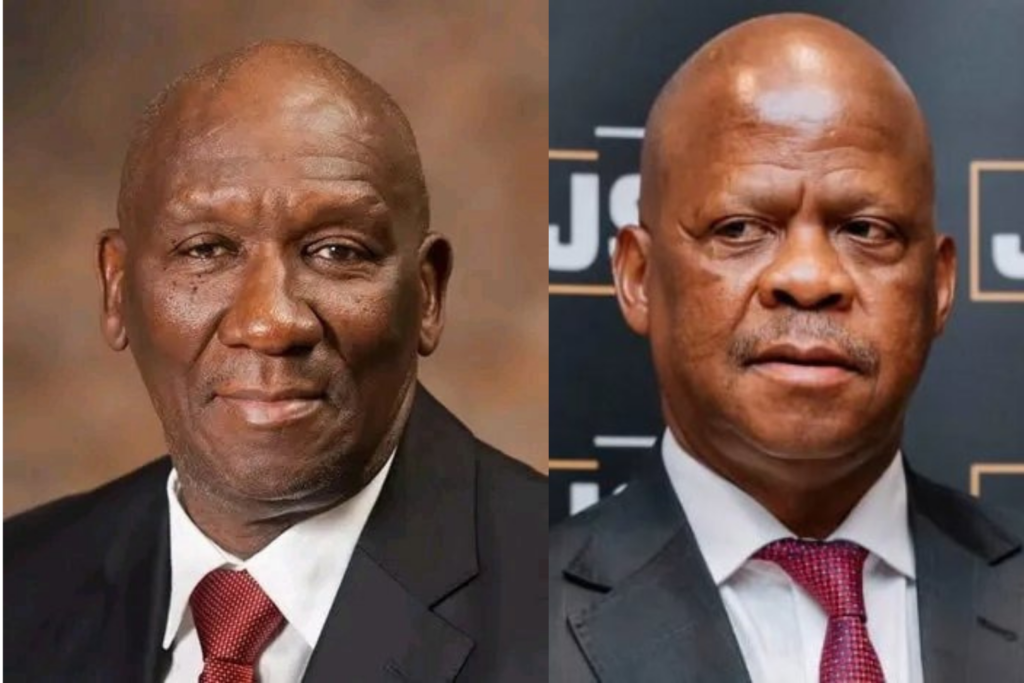
Joe “Ferrari” Sibanyoni has placed former Police Minister Bheki Cele under the spotlight at the Madlanga Commission, revealing what he says happened after he approached the then minister with concerns about taxi killings, an alleged criminal cartel and alleged links involving senior SAPS officials.
PRETORIA — Joe “Ferrari” Sibanyoni has told the Madlanga Commission that he approached then Police Minister Bheki Cele with serious concerns about violence in the taxi industry and allegations involving senior members of the South African Police Service.
What happened next became one of the most striking moments of Sibanyoni’s testimony.
According to Sibanyoni, Cele eventually responded to him by telephone.
Sibanyoni described the response as brief and dismissive.
His evidence came as the Commission examined a message Sibanyoni says he sent to Cele in May 2022 raising concerns about killings in the taxi industry, an alleged criminal cartel and alleged links to senior SAPS officials.
COMMISSION PRESSES SIBANYONI ON CELE
During questioning, Sibanyoni was asked whether Cele had responded to the more serious aspects of what he had allegedly reported.
The Commission specifically pointed out that Sibanyoni’s communication did not deal only with taxi killings.
It also contained allegations concerning a cabal and senior SAPS officials allegedly linked to it.
Asked whether Cele provided any response beyond his remark concerning people in the taxi industry killing one another, Sibanyoni answered:
“Not at all.”
It was a short answer carrying enormous weight.
Sibanyoni’s version is that he had approached the political head responsible for policing with information he believed warranted intervention, but did not receive the response he had hoped for.
These are Sibanyoni’s claims before the Commission and should not be interpreted as findings against Cele or the SAPS.
SIBANYONI SAYS HE PUSHED FOR ACTION
Sibanyoni testified that he did not simply abandon the issue after the telephone conversation.
He said he continued pushing Cele for an intervention.
According to his evidence, Sibanyoni proposed a dedicated taxi engagement where serious concerns affecting the industry could be addressed in a structured environment.
He told the Commission that the proposal was rejected.
Sibanyoni said Cele’s position was that nobody other than Sibanyoni would be prepared to come forward with information.
But Sibanyoni says he persisted.
He told the Commission that the killings and problems affecting the taxi industry demanded a more sustained response from government.
His efforts, he said, were unsuccessful.
THREE MONTHS LATER, GUNMEN STRUCK
The testimony then took a dramatic turn.
Sibanyoni told the Commission that approximately three months after sending the May 2022 message, gunmen opened fire on his vehicle.
“I was shot twice. I survived,” he testified.
But Sibanyoni immediately placed an important limitation on that evidence.
He expressly said he was not alleging that reporting the information to Cele caused the subsequent attack.
He said he was not speculating about a causal connection.
Instead, Sibanyoni told the Commission that he was placing the sequence of events on record under oath and asking that the timing be noted.
HE THEN TURNED TO OTHER GOVERNMENT LEADERS
After the shooting and what he regarded as the lack of resolution through the Police Ministry, Sibanyoni said he continued looking for government intervention.
He testified that he subsequently approached then Transport Minister Sindisiwe Chikunga.
According to Sibanyoni, that engagement was markedly different.
He said Chikunga listened to his concerns and engaged him on the information he presented about taxi-industry killings and institutional failures.
Sibanyoni also testified about approaching transport authorities and eventually Lieutenant General Nhlanhla Mkhwanazi.
He used those approaches to support one of the central arguments running through his testimony before the Madlanga Commission.
Sibanyoni rejects the portrayal of himself as somebody protecting criminal networks.
Instead, he argues that he was repeatedly asking state institutions to intervene.
“A TARGET WHO REFUSED TO BE SILENCED”
Sibanyoni’s statement drew a direct contrast between the allegations that have surrounded his name and the version of events he wants the Commission to accept.
He said he was the person pressing the state to act.
“I was not the one protecting criminals. I was not obstructing investigations. I was advancing them,” his statement read.
Then came the line that captured his defence:
“That is not the sequence of events of a cartel member. That is the sequence of events of a target who refused to be silenced.”
SERIOUS ALLEGATIONS NOW BEFORE MADLANGA COMMISSION
Sibanyoni’s evidence raises important questions, but it does not by itself establish wrongdoing by Cele, senior SAPS officials or anyone else named or implicated in his testimony.
His allegations remain evidence being tested before the Madlanga Commission.
The significance of his testimony lies in what he says he reported, when he says he reported it and the response he says he received.
The Commission is now examining a much broader story involving taxi violence, alleged criminal networks and claims of infiltration of state institutions.
For Sibanyoni, however, the argument is deeply personal.
He says he tried to alert the state.
He says he pushed for intervention.
He says he survived being shot.
And now, years later, Joe “Ferrari” Sibanyoni is placing his version of what happened before the Madlanga Commission under oath.
- bheki cele, crime and corruption, criminal cartel, Joe Ferrari Sibanyoni, Joe Sibanyoni, madlanga commission, Madlanga Commission of Inquiry, Mpumalanga taxi industry, Nhlanhla Mkhwanazi, organised crime, Police Corruption, police minister, saps, Sindisiwe Chikunga, South Africa taxi industry, South African Police Service, south african politics, taxi cartel, taxi killings, taxi violence