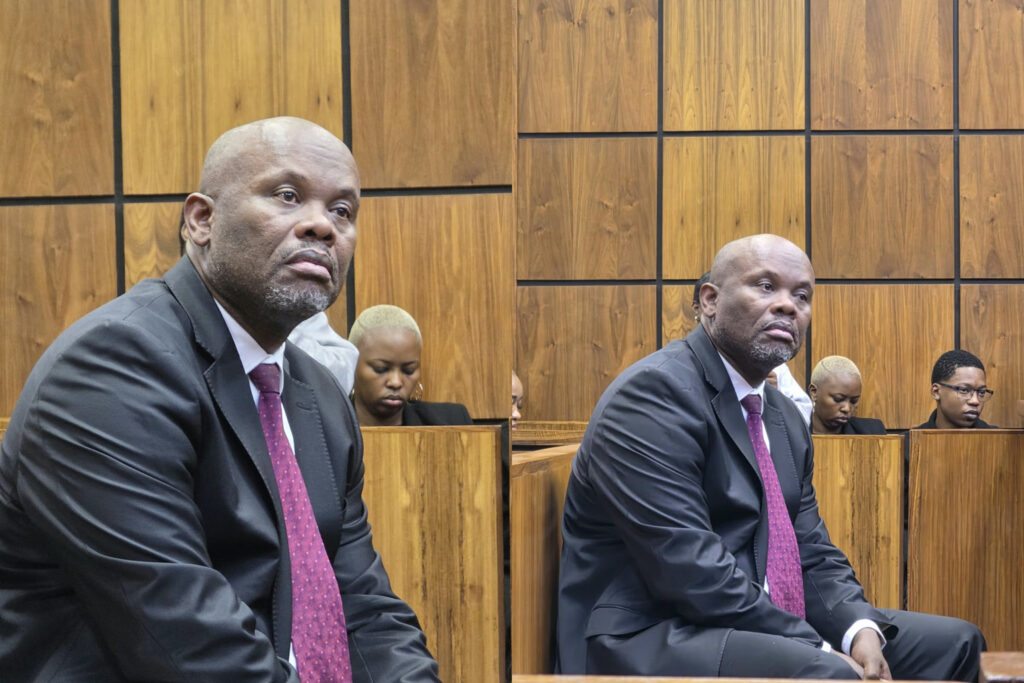
“I WAS THE TARGET”: JOE “FERRARI” SIBANYONI’S EMOTIONAL MADLANGA TESTIMONY TURNS CARTEL STORY ON ITS HEAD
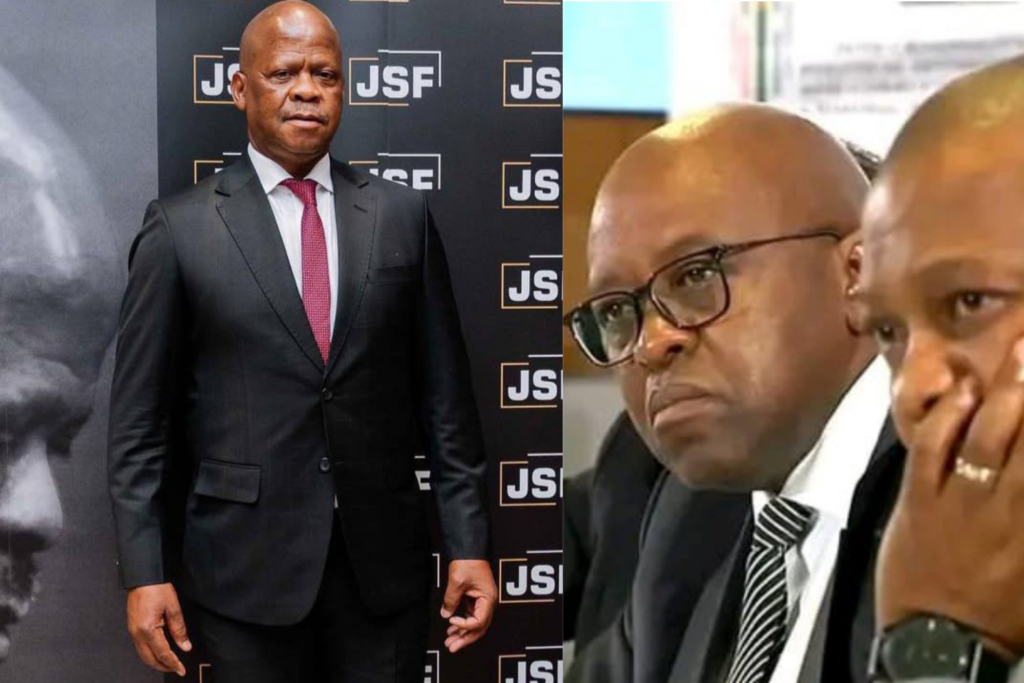
Taxi boss Joe “Ferrari” Sibanyoni has delivered a dramatic and deeply personal account before the Madlanga Commission, portraying himself not as a member of a criminal network, but as a man who says he repeatedly became a target of the violence surrounding South Africa’s taxi industry.
PRETORIA — Joe “Ferrari” Sibanyoni has broken his silence before the Madlanga Commission of Inquiry, using his long-awaited testimony to confront allegations surrounding his name and describe the fear, violence and assassination attempts that he says have followed him for years.
Sibanyoni appeared before the Commission on Friday, 28 August 2026, where he gave evidence about his life in the taxi industry, alleged criminal networks, hired assassins, law enforcement failures and his own encounters with violence.
But beneath the allegations and powerful names was a deeply personal message from Sibanyoni.
He insisted that the public story surrounding him does not reflect the man he believes himself to be.
“I AM A SURVIVOR”
Sibanyoni told the Commission that he is a businessman, husband, father, community leader and man of Christian faith who has spent more than four decades building his business interests.
He said his faith had carried him through extraordinary danger, including assassination attempts.
In one of the most emotional portions of his statement, Sibanyoni said he did not view his survival as luck.
“I do not regard my survival of two assassination attempts as mere fortune. I regard it as providence,” he told the Commission.
His testimony painted a picture of a family forced to live under the shadow of threats and violence.
Sibanyoni told the Commission that when gunmen targeted him, the consequences extended far beyond him personally.
He said his family had also carried the burden of the threats surrounding his life.
SIBANYONI DENIES BEING PART OF A CRIMINAL ORGANISATION
Sibanyoni then issued an emphatic denial of allegations connecting him to organised criminality.
He told the Commission that simply occupying a senior position in the taxi industry should not automatically be treated as evidence of criminal involvement.
He categorically denied ever belonging to a cartel, syndicate or criminal organisation.
Sibanyoni also addressed one of the names that has followed him publicly: “Joe Ferrari”.
According to him, the nickname developed from his lifestyle and personality over many years.
“It is a social nickname. It carries no criminal connotation whatsoever,” he said.
He also rejected any suggestion that references to him as “No. 1” proved that he held a leadership position in a criminal organisation.
THE WARNING BEFORE THE ASSASSINATION ATTEMPT
One of the most significant parts of Sibanyoni’s evidence concerned a WhatsApp message he said he sent to then Police Minister Bheki Cele on 5 May 2022.
Sibanyoni told the Commission that he was trying to alert the state to what he believed was a dangerous criminal network operating around the taxi industry.
He said he wanted an audience with the minister because people were being killed and he believed he possessed important information.
His evidence was striking because of what allegedly happened afterwards.
Sibanyoni told the Commission that the message was sent approximately three months before an attempt was made on his life in August 2022.
He characterised his actions as those of somebody moving towards law enforcement rather than running away from it.
He told the Commission that he had warned of a “cartel” and alleged that very senior police officials were connected to what he described as a cabal.
When questioned about the basis of the allegation, however, Sibanyoni acknowledged that he did not have names of individual senior officials and said his information had come from people who were reluctant to speak openly.
That distinction is critical: the allegations were presented by Sibanyoni as information he had received and concerns he wanted authorities to investigate, not as findings established by the Madlanga Commission.
INSIDE THE DARK WORLD OF “BUCKET MONEY” AND IZINKABI
Sibanyoni’s testimony also took the Commission deep inside the structural violence that has plagued sections of the taxi industry.
Drawing substantially on findings of the earlier Shongwe Commission, his statement described the practice of “bucket money”, unaccounted funds allegedly collected from drivers.
The evidence before the Commission discussed allegations that some of this money has been used to pay security companies and hired assassins, commonly referred to as izinkabi.
Sibanyoni was careful, however, not to portray the entire taxi industry as criminal.
He rejected the suggestion that everyone operating in the sector knows how to contact hitmen.
According to him, the situation depends heavily on individual leaders and associations.
The testimony also dealt with an even darker alleged phenomenon: assassins themselves being killed after carrying out hits, potentially eliminating evidence of who ordered the original murder.
It was described as a cycle of assassination, counter-assassination and witness silencing that can make investigations extraordinarily difficult.
ALLEGATIONS OF POLICE AND GOVERNMENT INFILTRATION
The Commission also examined findings from the Shongwe Commission concerning alleged corruption and infiltration involving elements of law enforcement.
Those findings included allegations of police operations being leaked, complaints being disclosed to the very people accused in them, bribery and state-issued weapons being recovered in taxi violence investigations.
Sibanyoni did not personally endorse every finding.
But when asked whether infiltration occurred, he pointed to irregularities involving transport permits and said people within the industry sometimes boasted about having connections.
His evidence therefore presented a complicated picture: Sibanyoni accepted that serious corruption and criminality existed within parts of the environment in which he operated, while forcefully denying that he himself belonged to a criminal syndicate.
“THE TRUTH WILL VINDICATE ME”
Sibanyoni’s appearance came amid intense scrutiny of his relationships and his own pending criminal case.
He is currently facing separate extortion and money laundering charges, allegations he disputes. Those charges have not resulted in a conviction.
His Madlanga Commission testimony was therefore more than an explanation of how the taxi industry operates.
It was also a defence of his identity and reputation.
After years in which his name has surfaced in allegations and testimony surrounding powerful figures and alleged criminal networks, Sibanyoni finally had the opportunity to tell the Commission his version.
His central argument was unmistakable:
He says he was not the predator.
He says he was one of the targets.
And after surviving attempts on his life and facing allegations that have placed his reputation under enormous pressure, Sibanyoni told the Commission that he believes the truth will ultimately vindicate him.
His evidence before the Madlanga Commission is not over.
Joe “Ferrari” Sibanyoni is expected to return as the inquiry continues examining the explosive allegations surrounding criminal syndicates, taxi violence and alleged infiltration of South Africa’s criminal justice system.
- bheki cele, bucket money, Criminal Syndicates, Extortion Charges, hired assassins, izinkabi, Joe Ferrari Sibanyoni, Joe Sibanyoni, madlanga commission, Madlanga Commission of Inquiry, Money laundering, Mpumalanga taxi industry, organised crime, Police Corruption, police infiltration, saps, south africa crime, South African Police Service, taxi cartel, Taxi industry, taxi killings, taxi violence