
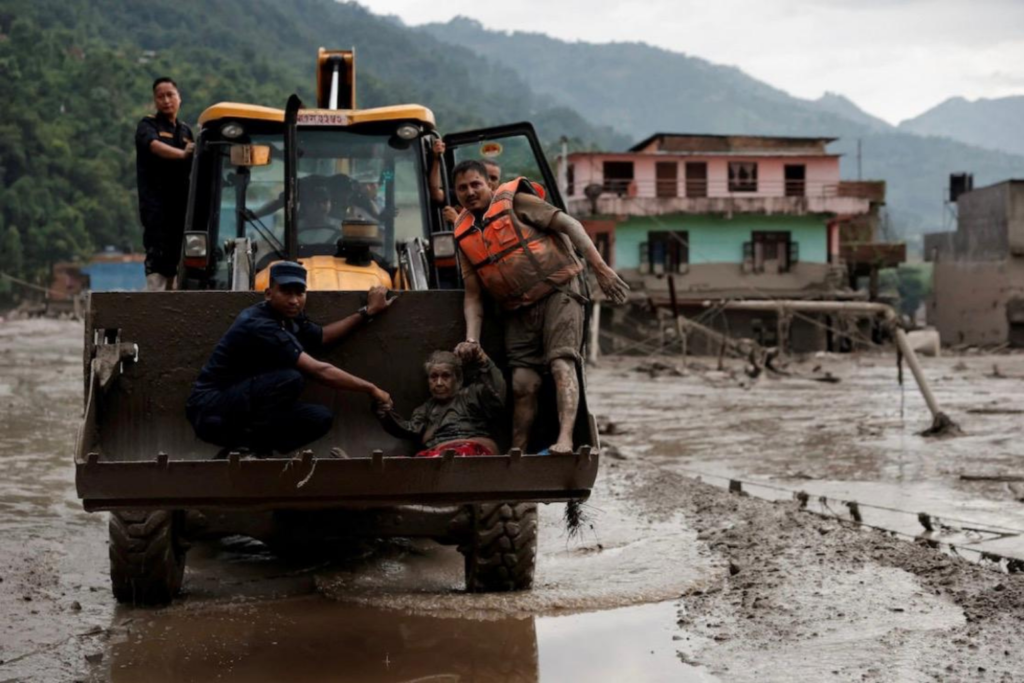
The death toll from the catastrophic Nepal flash floods has surged to 469, making the disaster dramatically deadlier than previously reported as rescue teams continue searching for hundreds of people still missing along the Nepal-China border.
Nepalese police confirmed the new toll early on Friday, 28 August 2026, while authorities said more than 1,400 people had earlier been reported missing across Nepal and Tibet. Hundreds of foreign nationals remain unaccounted for.
The new figure is a major escalation from Thursday night’s toll and materially advances the story.
South African authorities had previously been trying to trace six South Africans reported missing or untraceable in the disaster zone. There was no fresh verified confirmation early Friday that any of the six had been found or that any had died, so their status should remain described as missing or untraceable until DIRCO or Nepalese authorities provide a new update.
Death toll jumps to 469
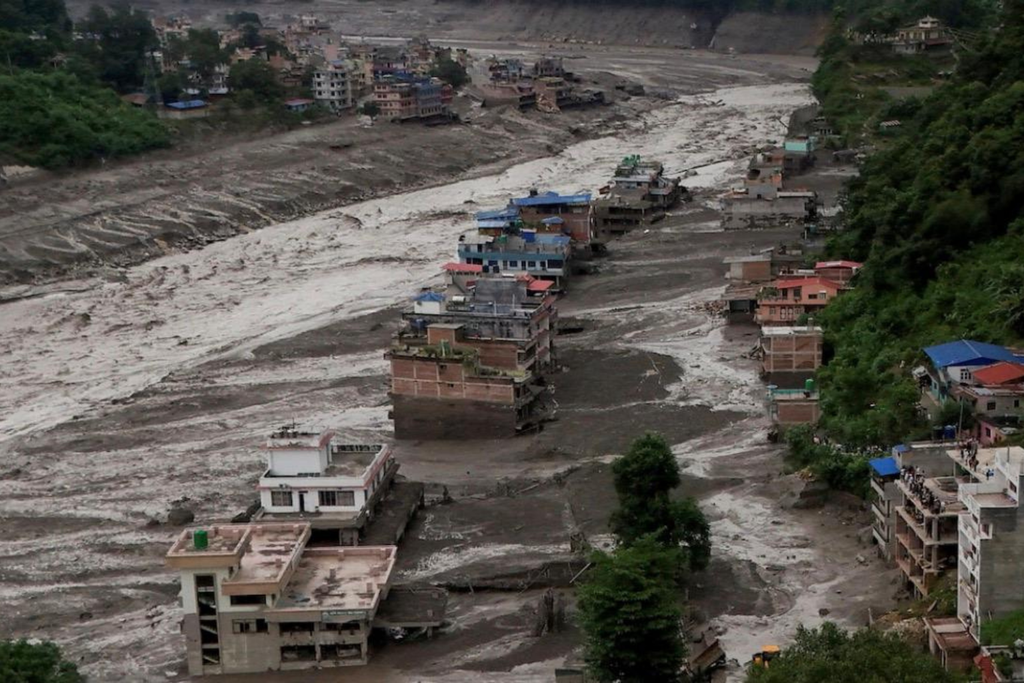
The Associated Press reported that Nepalese police had raised the confirmed death toll to 469 in Nepal alone by Friday morning.
That is a substantial increase from earlier totals.
Rescue teams are still working through mud, collapsed buildings and debris in districts devastated when a glacier collapse unleashed a massive wall of water, rock and sediment through Himalayan valleys.
Reuters separately reported that nearly 1,000 people remain missing across Nepal and neighbouring Tibet, with around 540 foreigners among those unaccounted for.
Hundreds of foreigners still missing
Many of the missing foreigners were trekkers and pilgrims travelling through routes connecting Nepal with Tibet.
The disaster hit areas used by people travelling towards sacred sites including Mount Kailash and Lake Manasarovar.
The combination of destroyed roads, collapsed communications and cut-off valleys has made confirming tourist locations extremely difficult.
That means missing-person lists continue changing as rescue teams reach isolated communities.
Six South Africans had been reported untraceable
The South African-specific concern remains unresolved.
Earlier reporting from Nepalese authorities indicated that six South Africans were untraceable after the disaster.
No reliable Friday-morning update had yet confirmed whether those six had been located.
That is important because the sharp rise in the death toll should not automatically be interpreted as evidence that any missing South African has died.
Until there is official confirmation, they remain missing.
Helicopters and sniffer dogs deployed
Rescuers are now using helicopters, heavy machinery and sniffer dogs to search for survivors and recover bodies.
Emergency aircraft are also delivering food and supplies to communities completely cut off after roads and bridges were destroyed.
Some survivors have been flown to Kathmandu for treatment.
The rescue operation is increasingly shifting from immediate evacuation towards searching large debris fields.
Survivors describe total devastation
Reuters spoke to survivors who described entire families and communities disappearing.
One survivor, Dibga Tamang, was airlifted from Rasuwa and said he had lost everyone waiting for him at home.
The testimony reflects how completely some settlements were overwhelmed.
In several areas, buildings were buried in mud almost to roof level.
New flood threat remains
Authorities are simultaneously trying to prevent another disaster.
A debris-dammed lake has formed upstream following the glacier collapse.
China has sent engineers to assess a separate barrier lake near the border that could receive up to three million cubic metres of additional water over the coming days.
If either natural dam fails suddenly, another flood surge could sweep downstream through areas where rescuers are currently operating.
China sends engineers to assess unstable lake
Chinese authorities have deployed an eight-member engineering team to conduct aerial surveys and 3D modelling of the barrier lake.
Reuters reports that the lake is roughly 150 metres long and 40 to 50 metres deep, holding an estimated 1.5 to 2 million cubic metres of water.
Heavy rainfall could increase that volume rapidly.
Engineers are examining whether a drainage channel can be created to reduce the risk of a catastrophic breach.
Glacier collapse triggered disaster
Scientists say a huge collapse involving rock and glacier ice high in the Himalayas triggered the original flood.
The debris accelerated through the Lhende Khola river system and down into populated valleys, destroying roads, villages and power infrastructure.
Reuters estimates parts of the debris flow travelled at approximately 50 metres per second, or about 180 kilometres per hour.
That speed left people downstream almost no time to escape.
Key Nepal-China route destroyed
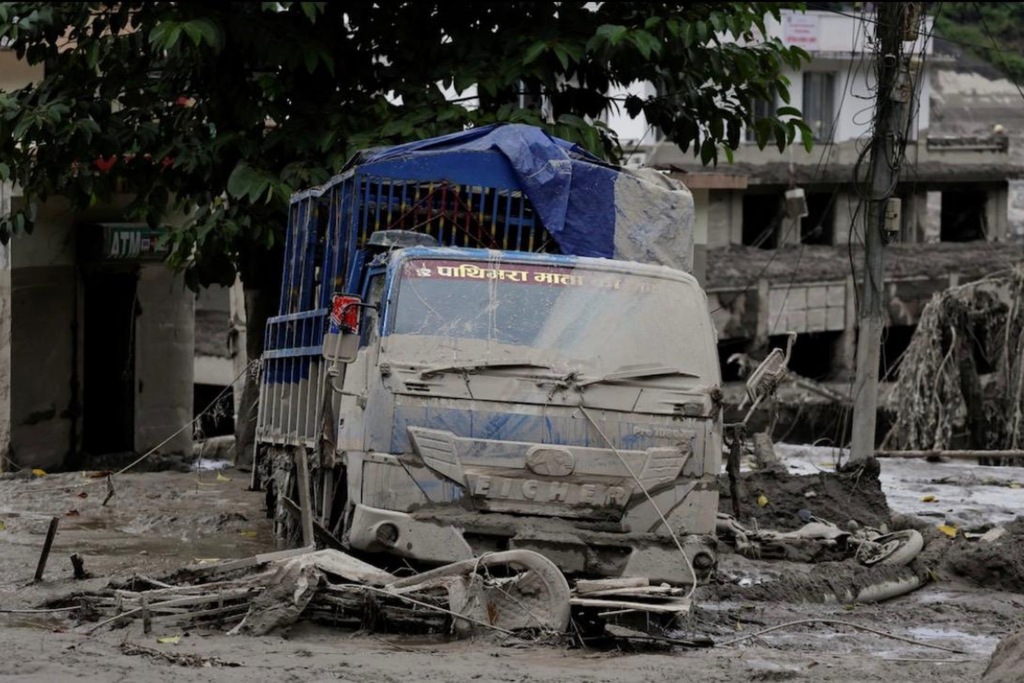
The flood devastated infrastructure linking Kathmandu with Lhasa.
The Gyirong border crossing was particularly badly affected, with customs and transport infrastructure destroyed.
The route is significant not only for tourism but for trade between Nepal and China.
Its destruction could have economic consequences long after rescue operations end.
More than 100 bodies recovered far downstream
Bodies have been recovered far from the initial collapse zone after being carried downstream by floodwaters.
Emergency services have warned that additional victims may still be buried beneath mud and debris.
That means the final death toll could continue rising substantially.
Trump offers US help
US President Donald Trump has described the disaster as devastating and said Washington had offered Nepal assistance.
He said the United States was prepared to provide whatever Nepal required.
Other countries, including India, Australia and South Korea, have also offered or deployed assistance.
Climate change increases Himalayan risks
Scientists caution that the immediate cause was a physical glacier and rock collapse.
However, rising temperatures are making high-altitude mountain regions less stable.
Melting ice can weaken rock structures and change freeze-thaw cycles, increasing the risk of major slope failures.
Nepal has already lost a substantial portion of its glacier ice over recent decades.
Why this is a genuine new update
The story has materially changed in only a few hours.
The earlier confirmed death toll was in the 300s.
Nepalese police now put the death toll at 469.
Hundreds remain missing.
Foreigners remain unaccounted for.
And the risk of a second catastrophic flood remains active.
That makes this a fresh breaking article rather than a routine rewrite.
What happens next
The biggest South African question remains whether the six previously reported missing nationals have been found.
DIRCO or Nepalese tourism authorities could provide that update later on Friday.
Rescuers will meanwhile continue searching debris while engineers monitor the unstable lakes.
For now, the latest verified picture is devastating:
469 people are confirmed dead in Nepal, hundreds remain missing across Nepal and Tibet, at least 540 foreigners remain unaccounted for in Reuters’ latest reporting, and the status of the six South Africans previously reported missing remains unresolved.