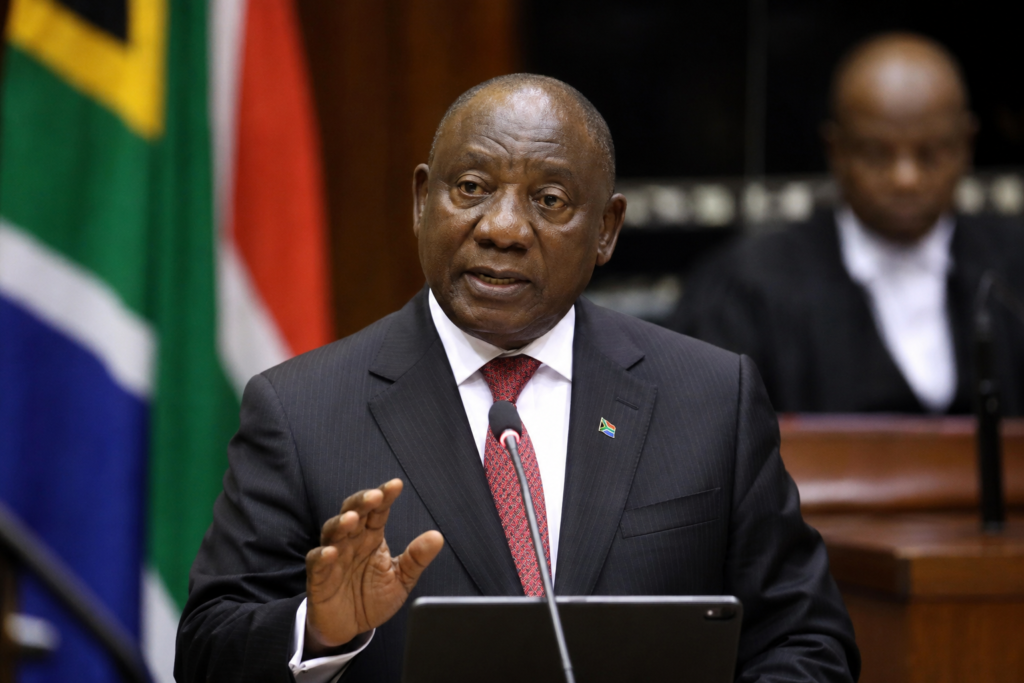
President Cyril Ramaphosa says South African authorities are investigating indications that some of the anti-African migrant sentiment and violence seen in the country may be fuelled or instigated from outside South Africa.
Ramaphosa made the significant claim while answering oral questions in the National Assembly on Tuesday, 25 August 2026, as MPs pressed him about migration, anti-immigrant campaigns and rising tensions involving foreign nationals.
The president said authorities were following leads concerning both South Africans and people outside the country who may have played roles in encouraging hostility.
“Quite a bit of this, certainly not all of it, but quite a bit of this is being propelled and instigated from outside of South Africa,” Ramaphosa told Parliament.
His comments add a potentially major national-security dimension to South Africa’s increasingly heated immigration debate.
However, Ramaphosa did not name any foreign government, organisation or individual allegedly involved, and authorities have not yet publicly produced evidence establishing an externally coordinated campaign.
Police following leads, Ramaphosa says
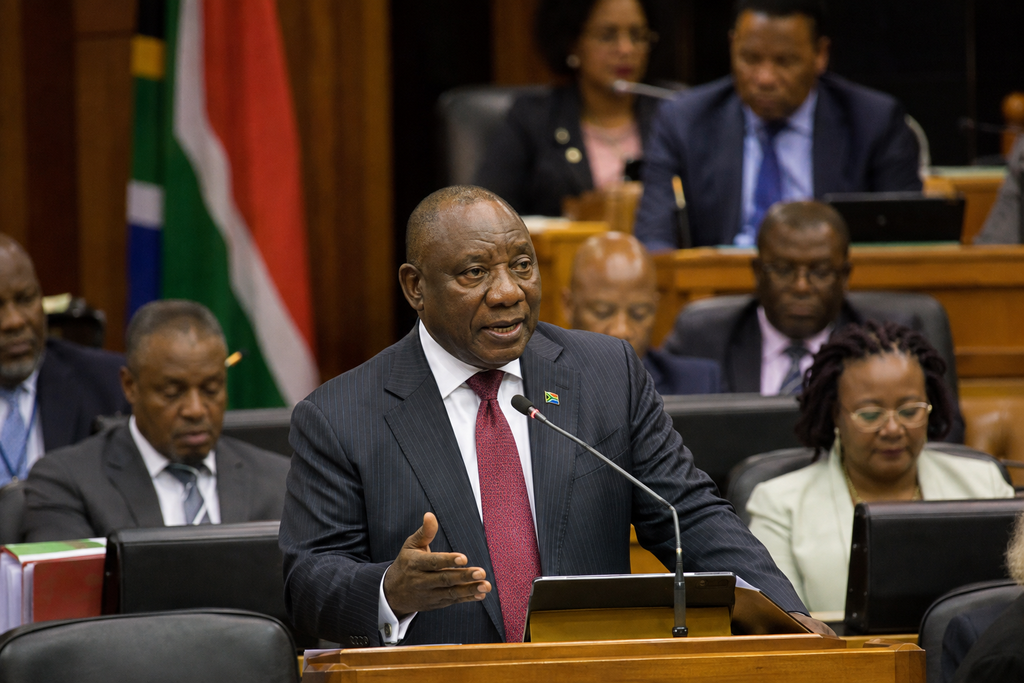
EFF leader Julius Malema challenged Ramaphosa over when authorities would act against people allegedly stoking violence and hostility towards migrants.
Ramaphosa responded that law-enforcement agencies were already investigating.
He said authorities were working to establish the roles played by South Africans as well as people believed to be operating from outside the country.
That means the allegation remains an active investigative claim rather than an established finding.
Any suggestion that a particular foreign state is destabilising South Africa would therefore be premature unless government releases evidence.
Up to 90,000 undocumented migrants have left since May
Ramaphosa told MPs that South Africa was being watched closely by other African countries because of its handling of migration tensions.
EWN reported that up to 90,000 undocumented migrants have left South Africa since May amid heightened anti-migrant sentiment and enforcement activity.
The president said conversations with other African governments had reinforced the view that the problem could not be understood purely as a domestic issue.
He argued that migration is both a regional and continental challenge requiring cooperation between African governments.
Immigration increasingly central to South African politics
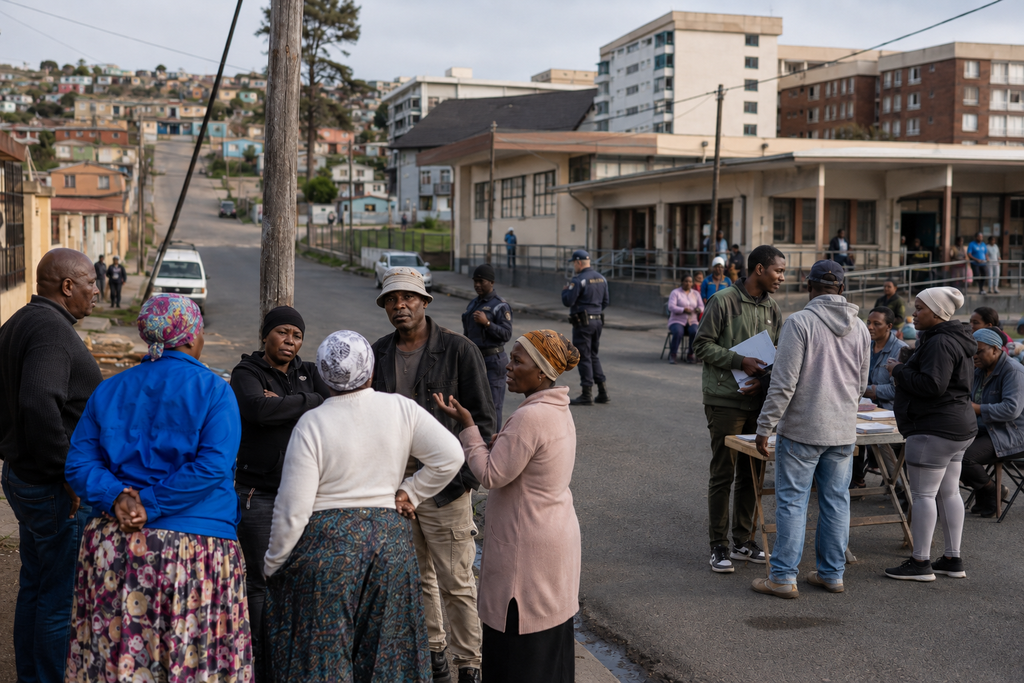
Migration has emerged as one of the most contentious issues ahead of the 4 November 2026 local government elections.
Communities have raised concerns about undocumented migration, pressure on public healthcare and housing, unemployment and enforcement of immigration legislation.
At the same time, human-rights organisations have warned against blaming foreign nationals for systemic failures in service delivery, unemployment or crime without evidence.
Ramaphosa’s comments introduce a different question: whether some groups are deliberately exploiting genuine frustrations in order to inflame tensions.
Gauteng government has already admitted planning failures
The remarks come only days after Gauteng Premier Panyaza Lesufi acknowledged that government had underestimated the effect of rapid migration and population growth on infrastructure.
Lesufi said provincial budgets and services had failed to expand quickly enough to match the number of people moving into Gauteng from other provinces and countries.
Those comments focused on government planning failures rather than blaming migrants themselves.
Ramaphosa’s latest statement goes further by suggesting investigators are now examining whether organised outside actors are deliberately aggravating the political environment.
South Africa’s African relationships at stake
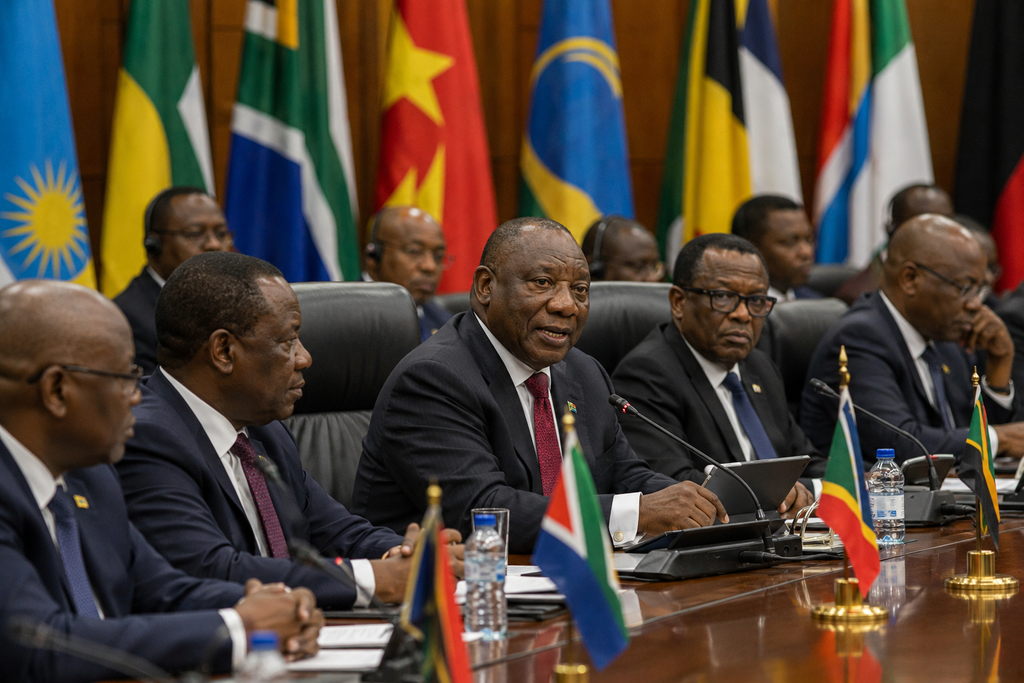
The issue carries important diplomatic consequences.
South Africa has historically positioned itself as one of the leading political and economic powers on the continent.
Violence targeting African migrants can damage relations with neighbouring countries and undermine Pretoria’s attempts to promote regional integration.
Ramaphosa, who is also the current chairperson of SADC, told Parliament on Tuesday that regional challenges should be handled through cooperation rather than interference.
In separate remarks, he said SADC would not dictate Madagascar’s political reconstruction following last year’s military takeover, saying democratic rebuilding had to be driven by the Malagasy people themselves.
Who are the alleged ‘external forces’?
That is now the biggest unanswered question.
Ramaphosa did not identify countries, organisations, social-media networks or financiers.
He also did not disclose whether investigators believe money is being transferred into South Africa, whether disinformation campaigns are involved or whether foreign individuals are directly organising protests.
Until authorities provide those details, reporting should avoid filling the gaps with speculation.
The president’s statement is nevertheless significant because it publicly confirms that government is examining possible foreign involvement.
What happens next
Attention will now shift to SAPS, Crime Intelligence and other security agencies for evidence supporting the president’s claim.
Malema’s demand for arrests also places pressure on government to demonstrate that its investigation is producing concrete results.
If authorities identify foreign-funded networks or outside organisers, the issue could rapidly become one of the biggest political and national-security stories of the election campaign.
If no evidence emerges, Ramaphosa will likely face demands to explain the basis for the allegation.
For now, the verified development is this:
South Africa’s president says law-enforcement authorities are investigating indications that some anti-African sentiment and violence may be deliberately fuelled from outside the country, but he has not publicly identified those allegedly responsible.