NPA Drops Charges Against Seven Crime Intelligence Officials
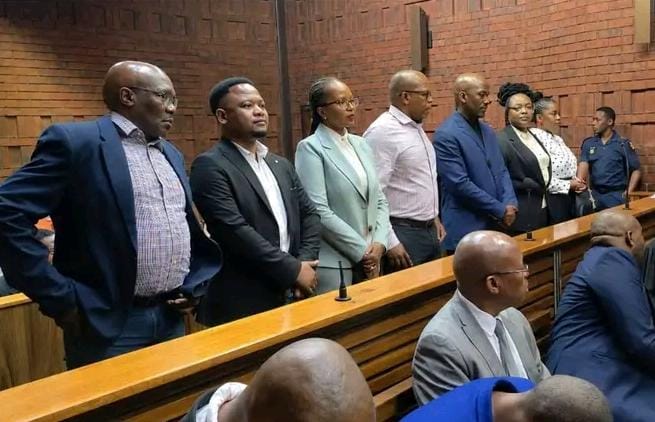
The National Prosecuting Authority has unconditionally withdrawn all fraud and corruption charges against seven senior Crime Intelligence officials, including divisional head Lieutenant-General Dumisani Khumalo and Brigadier Dineo Mokwele.
The officials appeared briefly in the Pretoria Magistrate’s Court on Friday, 21 August 2026, where prosecutors formally withdrew the case, turning what had earlier been an expected prosecutorial retreat into a confirmed collapse of the criminal proceedings.
The development is particularly significant because the prosecution has become entangled in evidence emerging before the Madlanga Commission, where questions have been raised about how the investigation was initiated and whether some of the allegations underpinning the case were sustainable.
Seven senior Crime Intelligence officials walk free
The withdrawal means Khumalo, Mokwele and their five co-accused are no longer facing the fraud and corruption charges before the Pretoria Magistrate’s Court.
According to Eyewitness News, the NPA withdrew the charges unconditionally.
That wording is important because it goes considerably further than merely postponing the matter or provisionally withdrawing charges while investigators seek additional evidence.
The officials had faced allegations arising from appointments and administrative processes within Crime Intelligence.
One of the central allegations concerned Mokwele’s appointment, with prosecutors previously alleging that her qualifications had been misrepresented and that she was not properly qualified for the position.
That aspect of the case subsequently came under serious pressure.
Madlanga Commission evidence undermines central allegation
Evidence presented before the Madlanga Commission indicated that Mokwele was not unqualified for the position.
Instead, the commission heard that she was overqualified.
That evidence created a direct problem for one of the central propositions underlying the prosecution.
Defence representations, combined with concerns emerging around the investigation, prompted the NPA to reconsider whether the criminal case could proceed.
The commission is investigating allegations of criminality, political interference and corruption across South Africa’s criminal justice system.
Its hearings have increasingly exposed disputes involving Crime Intelligence, investigators, prosecutors and individuals who provided information that eventually resulted in criminal complaints.
Questions now turn to how the case was built
The collapse of the prosecution is likely to shift attention from the accused to the investigators and prosecutors responsible for bringing the case.
The Madlanga Commission has heard evidence raising questions about the chronology of the investigation and whether efforts to pursue criminal proceedings may have begun before some of the alleged conduct underpinning the charges had occurred.
Those issues remain under examination by the commission.
Eyewitness News has also reported seeing correspondence from a State advocate referring to pressure to have the matter withdrawn.
The precise nature of that alleged pressure, who may have applied it and whether it influenced the NPA’s final decision have not been established publicly.
Khumalo at centre of wider police crisis
Khumalo’s involvement gives Friday’s decision significance well beyond an ordinary withdrawn criminal case.
As the head of Crime Intelligence, he occupies one of the most powerful positions within the South African Police Service.
He has also become a central figure in testimony and allegations examined during the Madlanga Commission’s investigation into the functioning of the criminal justice system.
The commission is examining claims involving political interference, organised crime, senior police officers and competing factions within intelligence and law-enforcement structures.
Friday’s withdrawal will therefore inevitably raise questions about whether senior Crime Intelligence officials were legitimately prosecuted or became caught in wider institutional battles.
No finding on those broader questions has yet been made.
Fadiel Adams testimony also under scrutiny
The collapse of the case comes while suspended National Coloured Congress MP Fadiel Adams is being intensively questioned before the Madlanga Commission over criminal complaints involving senior Crime Intelligence officials.
Adams has been questioned about the source of information he received, his interactions with various individuals and how complaints he opened eventually reached investigators.
On Friday, he also corrected portions of his earlier testimony and asked the commission not to publicly play a recording of a meeting he had with officials from the Investigating Directorate Against Corruption.
Those developments are separate from the formal withdrawal of the charges, but they form part of the wider inquiry into how allegations against senior police officials moved through the criminal justice system.
What does an unconditional withdrawal mean?
A withdrawal of charges is not the same thing as an acquittal after a completed trial.
The court has not heard all the evidence and delivered a verdict finding the officials innocent or guilty.
However, the NPA’s decision means the seven officials are no longer accused persons in this particular criminal case and are free from the charges that were before court.
The fact that prosecutors opted for an unconditional withdrawal will intensify questions about the strength of the original case.
It could also place pressure on the NPA to explain what changed between the decision to prosecute and Friday’s decision to abandon the case.
Could there be consequences for investigators?
That is now one of the major unanswered questions.
If evidence ultimately establishes that investigators acted improperly, further internal, disciplinary or legal processes could follow.
The former accused could also consider civil action if they believe their arrest or prosecution was unlawful, although no such action has been confirmed.
For the NPA, the immediate challenge will be explaining why a high-profile corruption prosecution involving seven senior Crime Intelligence officials reached court before ultimately being abandoned.
Madlanga Commission becomes even more important
Friday’s development makes the evidence emerging from the Madlanga Commission even more consequential.
The inquiry is now in a position to examine not simply allegations of corruption inside policing but also how criminal investigations and prosecutions themselves may have been initiated, influenced or handled.
That distinction is critical.
South Africa’s criminal justice crisis increasingly involves competing allegations between senior law-enforcement officials, politicians, investigators and intelligence structures.
Determining which allegations were supported by evidence and which processes may have been compromised will be central to the commission’s eventual findings.
For Khumalo, Mokwele and their co-accused, however, the immediate outcome is clear.
The fraud and corruption charges against all seven have now been withdrawn.
The focus now shifts to why the prosecution failed and what the collapse of the case reveals about the broader battles inside South Africa’s policing and criminal justice institutions.
- Crime Intelligence, Crime Intelligence Officials, criminal justice crisis South Africa, Dineo Mokwele, Dumisani Khumalo, Fadiel Adams, fraud and corruption charges, madlanga commission, NPA, NPA charges withdrawn, Pretoria Magistrate's Court, saps, South Africa crime news, South Africa police crisis, South African Police Service