R370 SRD grant battle heads to Supreme Court of Appeal in landmark case affecting millions
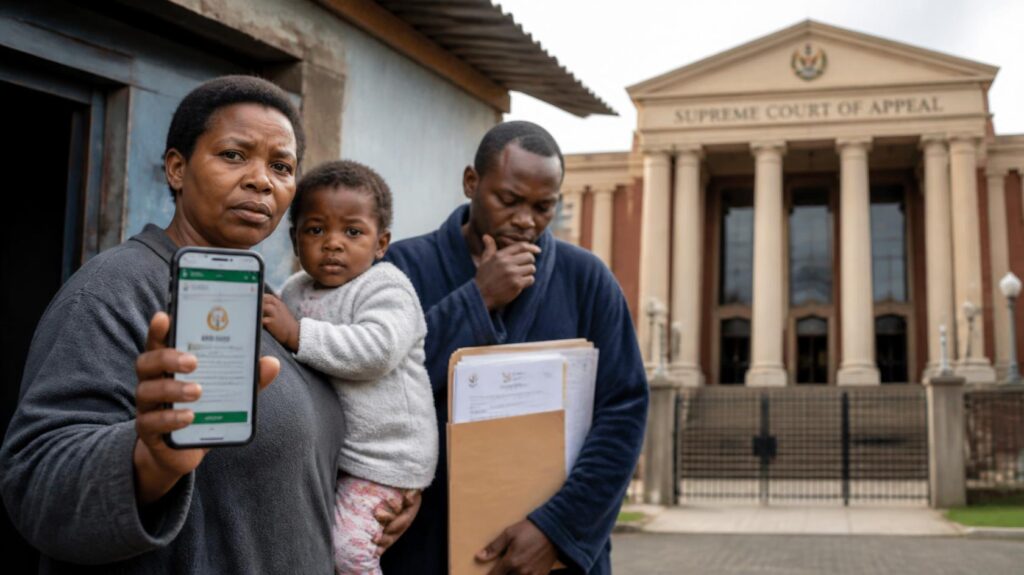
The legal battle over South Africa’s R370 Social Relief of Distress grant is heading to the Supreme Court of Appeal, placing the future administration of one of the country’s most important poverty-relief programmes back before the courts.
The appeal is scheduled to be heard in Bloemfontein on 25 August 2026.
Government is challenging a Gauteng High Court judgment that found several aspects of the SRD grant system unconstitutional, irrational and exclusionary.
The dispute concerns far more than the current R370 monthly payment.
Among the issues before the courts are the online-only application system, the income threshold used to determine eligibility, the definition of income and financial support, the value of the grant and the failure to pay some applicants who have already been approved.
The original High Court ruling followed litigation brought by the Institute for Economic Justice and the PayTheGrants campaign.
Judge Leonard Twala found that key aspects of the regulations unfairly restricted access to social assistance.
The court also ordered government to progressively increase the grant value and income threshold in line with inflation and the cost of living.
Government, including the Department of Social Development, SASSA and National Treasury, is appealing that ruling.
Treasury has warned that significantly expanding eligibility and increasing the value of the SRD grant could have major fiscal consequences.
In court papers previously reported by GroundUp, Treasury estimated that expanding access to millions more beneficiaries could push annual costs tens of billions of rand higher.
Civil-society organisations argue that the current system continues to exclude large numbers of poor South Africans.
The Institute for Economic Justice says an online-only application process creates barriers for people without reliable internet access.
It also argues that the R370 grant has lost significant purchasing power since the programme was introduced during the Covid-19 pandemic.
The organisations have also raised concerns about approved beneficiaries who allegedly do not receive payment.
According to the IEJ, data it has obtained indicates that around 10% to 15% of approved beneficiaries may go unpaid in some months.
The Supreme Court of Appeal hearing will therefore have potentially significant consequences for both millions of low-income South Africans and the national budget.
However, beneficiaries should note that no new increase or eligibility change has yet been ordered by the Supreme Court of Appeal.
The court will first hear arguments from government and the civil-society organisations before delivering its decision.
MDNtv will follow proceedings when the case is heard on 25 August.
- department of social development, Institute for Economic Justice, National Treasury, PayTheGrants, R370 grant court case, R370 SRD grant, Sassa, sassa srd grant, Social Relief of Distress grant, South Africa SRD grant, SRD grant 2026, SRD grant eligibility, SRD grant increase, SRD grant payment, SRD grant Supreme Court of Appeal