Ramaphosa and NCOP Admit Defect in Expropriation Act as Major Court Challenge Is Postponed
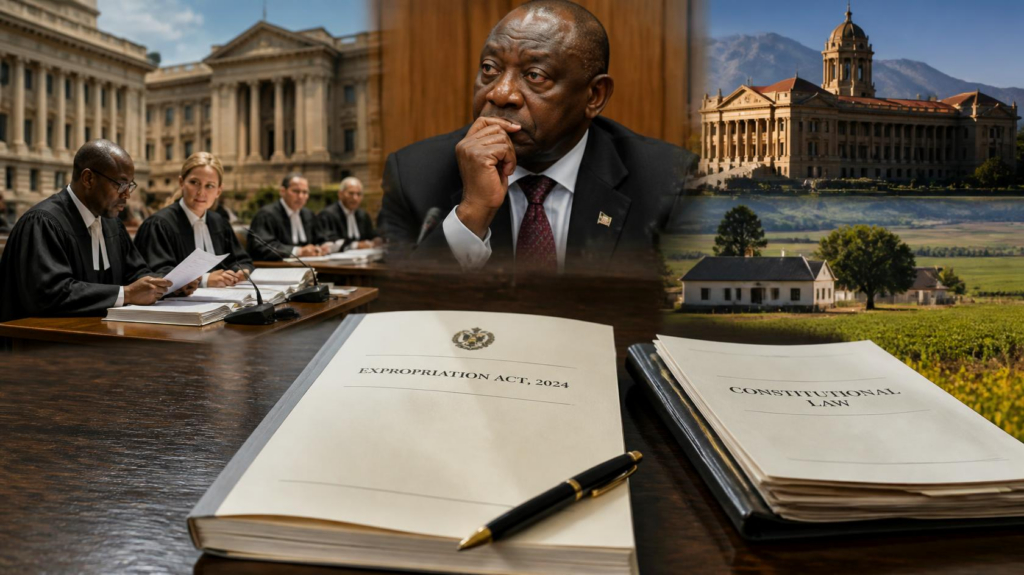
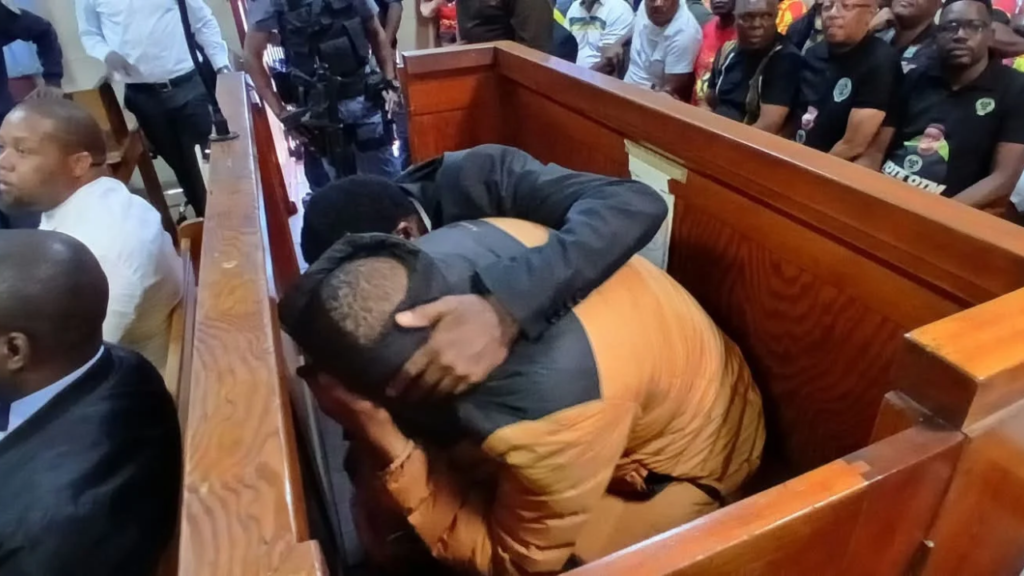
CAPE TOWN – South Africa’s closely watched constitutional battle over the Expropriation Act has been postponed after several legal teams were unable to complete their arguments in the Western Cape High Court.
The postponement means judgment is not yet imminent, despite expectations that the court proceedings would conclude this past week.
New dates must now be allocated for the remaining respondents and friends of the court to present their arguments. The applicants must also be allowed to reply before the hearing can formally conclude.
The case is being brought by the Democratic Alliance, AfriForum, IRR Legal and the Vaderland Stigting, which are challenging different provisions of the legislation and the process followed when it was passed.
Government acknowledges defect in the Act
One of the most significant developments during the hearing was an acknowledgement by legal teams representing President Cyril Ramaphosa and the National Council of Provinces that a provision governing compensation disputes contains an error.
The defect reportedly creates what was described in court as a “circular process” for parties attempting to challenge the amount of compensation offered during an expropriation.
Despite acknowledging the problem, Ramaphosa and the NCOP argued that the entire Act should not be invalidated.
Their lawyers asked the court to dismiss the broader constitutional challenges and maintained that the defect could be corrected through an appropriate court-ordered remedy.
The NCOP argued that the legislation already contains a mechanism allowing a party to approach a court when the amount of compensation is disputed.
The government’s position is therefore that the drafting problem can be corrected without striking down the Expropriation Act as a whole.
What the applicants want the court to overturn
The applicants are not all advancing identical arguments, but their challenges broadly concern property rights, compensation, legal certainty and the parliamentary process used to pass the legislation.
AfriForum is challenging provisions including sections 12(3), 12(4), 19(2) and 19(8).
The organisation argues that provisions allowing nil compensation in specified circumstances are inconsistent with Section 25 of the Constitution.
It is also challenging provisions that it says may allow an expropriating authority to take possession of property before compensation has been agreed upon or determined by a court.
The DA has similarly argued that parts of the Act undermine constitutional property protections and create uncertainty for property owners and investors.
The Institute of Race Relations has raised concerns about the compensation process and what it considers an imbalance of power between the state and affected property owners.
The applicants want the court either to strike down the contested provisions or declare parts of the Act unconstitutional and invalid.
Expropriation without compensation at centre of dispute
The Expropriation Act allows nil compensation to be considered in limited circumstances. This does not mean that the state may automatically take any property without paying for it.
Each proposed expropriation must still meet constitutional and legislative requirements, including that it must be for a public purpose or in the public interest.
However, critics argue that the Act’s provisions do not provide sufficient protection against state overreach.
The government maintains that the legislation is necessary to replace the apartheid-era Expropriation Act of 1975 and create a framework aligned with the Constitution.
It has also rejected claims that the law permits arbitrary land seizures.
Court battle exposes tensions inside the GNU
The challenge has acquired major political significance because the DA is litigating against legislation supported by the ANC, its principal partner in the Government of National Unity.
The two parties have repeatedly clashed over the Expropriation Act, land reform and the meaning of their cooperation agreement.
The ANC considers the legislation an important instrument for addressing the consequences of colonial and apartheid-era land dispossession.
The DA insists that its participation in the GNU does not require it to abandon its opposition to legislation it considers unconstitutional.
The dispute illustrates the limits of the coalition arrangement: parties may serve together in the national executive while fighting each other in Parliament and the courts.
Case has attracted international attention
The Act has also become part of a wider diplomatic dispute involving South Africa and the United States.
US President Donald Trump has repeatedly criticised South Africa’s land policies and claimed that the legislation threatens private property and white farmers.
The South African government denies that the Act targets any racial group and insists that no arbitrary confiscation of land is permitted.
The Western Cape High Court case is therefore being watched beyond South Africa because its eventual outcome could influence political debate, investor perceptions and the country’s international relations.
What happens next?
The court must allocate further hearing dates.
According to AfriForum, three respondents and three friends of the court still need to present their arguments. The applicants must then deliver their replies.
Only after all arguments have been completed will the judges reserve judgment or indicate when a decision can be expected.
Until then, the immediate development is not judgment, but the postponement of the hearing and the government’s acknowledgement that one of the Act’s provisions contains a defect.
Whatever the Western Cape High Court ultimately decides, the dispute may not end there. Given the constitutional importance of the case, the losing parties could pursue further appeals, potentially taking the battle to the Constitutional Court.
- AfriForum, Cyril Ramaphosa, DA Expropriation Act challenge, Expropriation Act, Expropriation Act court challenge, expropriation without compensation, Government of National Unity, IRR Legal, land expropriation South Africa, NCOP, property rights South Africa, Ramaphosa Expropriation Act, South Africa land reform, South Africa property rights, Western Cape High Court