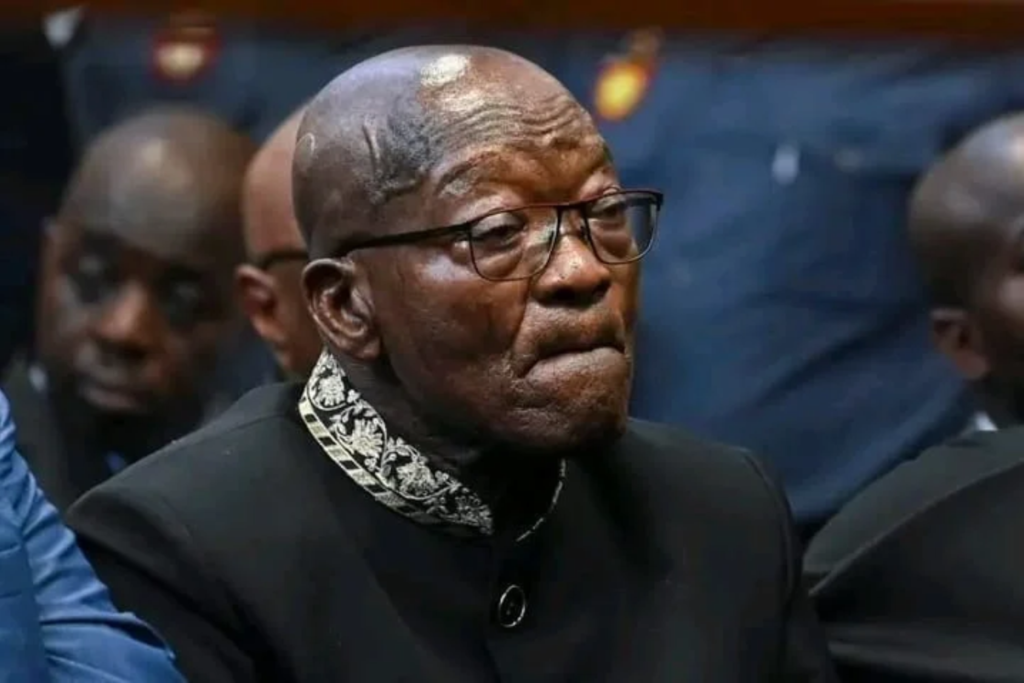
Mbalula responds to Nkosazana Dlamini-Zuma: ‘We can’t just accuse people without substance’
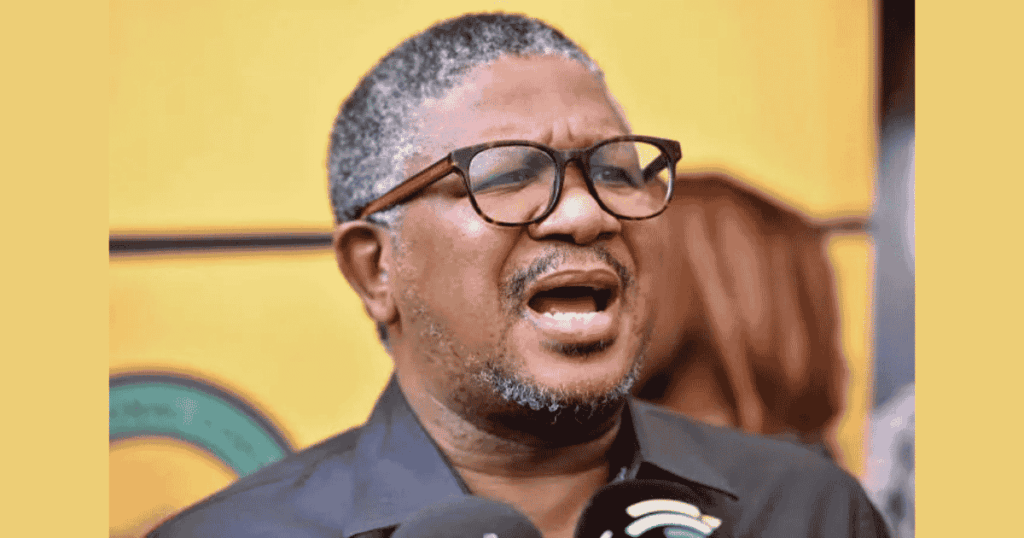
ANC Secretary-General Fikile Mbalula has pushed back against remarks by Dr Nkosazana Dlamini-Zuma, warning that political leaders cannot make allegations against individuals without substance and then expect those targeted not to defend themselves.
Mbalula also defended the growing role of podcasts in South African political discourse, arguing that podcast hosts should not be blamed for controversial statements made by politicians who voluntarily appear on their platforms.
Speaking about Dlamini-Zuma’s remarks, Mbalula acknowledged the former Cabinet minister and senior ANC figure’s right to express her views publicly.
“We can still argue that Mam Nkosazana has a right to express her views in public, but engaging these podcasts and expressing views must not be to denigrate others without substance,” Mbalula said.
His response centred on what he described as the danger of making serious allegations against individuals without providing evidence to support them.
“The issue is attacking the person with unsubstantiated claims. We can’t just accuse people with no substance and expect them not to take action,” he said.
Mbalula acknowledges concerns over money in politics
Mbalula said the broader issue of money and its influence on politics remained a legitimate subject for debate.
“We are grappling, all of us, with the phenomenon of money in politics and the dangers of that,” he said.
According to Mbalula, confronting the influence of money is particularly important for an organisation such as the ANC because of how the party defines its political character.
“Dealing with that is important in a party such as the ANC that refers to itself as a revolutionary party,” he said.
However, Mbalula argued that raising legitimate concerns about money in politics should be distinguished from making allegations against particular individuals without substantiating them.
Mbalula cites Derek Hanekom’s action against Zuma
Mbalula pointed to the legal dispute involving former ANC leader Derek Hanekom and former president Jacob Zuma to illustrate why individuals may turn to the courts when serious accusations are made against them.
Hanekom took legal action after Zuma publicly accused him of being an “enemy agent”.
Mbalula argued that Hanekom could not simply ignore such a serious accusation and attempt to resolve the matter solely through internal politics.
“He couldn’t fold his arms and say he will deal with it politically,” Mbalula said.
“If he didn’t take the legal route, today people would be calling him an impimpi, an informer, and a sellout. It would be a statement of fact.”
Mbalula said the example demonstrated why people who believe they have been falsely accused should not be expected to remain silent.
‘Elders must be elders’
Mbalula also addressed the role of senior ANC figures, delivering a pointed message about the responsibility that comes with their standing in the organisation.
“Elders must be elders,” he said.
Mbalula said ANC elders had an important role to play in providing political guidance, but argued that they should exercise that responsibility carefully.
“Elders have a role in the ANC and they must exercise that role cautiously, meticulously and give guidance,” he said.
Despite disagreeing with Dlamini-Zuma, Mbalula acknowledged the significance of her historical contribution to the ANC.
“As much as we can call ourselves leaders, we cannot match the historical contributions of leaders such as Nkosazana,” Mbalula said.
He argued that the stature enjoyed by veteran leaders also placed a greater responsibility on them when participating in public political debates.
“With that responsibility they have, they must engage honestly,” he said.
Mbalula defends Ndlozi’s African Renaissance podcast
Mbalula used the dispute to make a broader defence of podcasts and their increasingly prominent role in South Africa’s political conversation.
“All podcasts are important. They are mushrooming everywhere and each is unique in what they are talking about,” he said.
Mbalula specifically praised former EFF MP Mbuyiseni Ndlozi’s African Renaissance podcast for creating a platform where political and social issues can be debated.
“Ndlozi’s podcast is important because it brings people who debate issues and we appreciate that,” Mbalula said.
He rejected the suggestion that the platform itself should be held responsible for statements made by politicians appearing as guests.
“The fact that ANC leaders go there and say whatever they want, we can’t blame the podcast presenter for that. They are simply doing their job,” he said.
Mbalula said there was no agenda by the podcast in relation to the dispute.
His remarks place renewed attention on the growing influence of podcasts in South African politics, with political leaders increasingly using long-form digital platforms to discuss internal party matters, policy disputes and controversial issues outside traditional television and radio interviews.
For Mbalula, the responsibility for what is said on those platforms ultimately remains with the political leaders making the statements, rather than the hosts providing the platform.
- African Renaissance Podcast, ANC leaders, anc news, ANC Politics, ANC Secretary-General, Derek Hanekom, Fikile Mbalula, Jacob Zuma, latest South Africa news, Mbalula response, Mbuyiseni Ndlozi podcast, money in politics, Nkosazana Dlamini-Zuma, political podcasts South Africa, south african politics