Ramaphosa’s Phala Phala battle intensifies as impeachment committee proceeds despite urgent court bid to halt inquiry
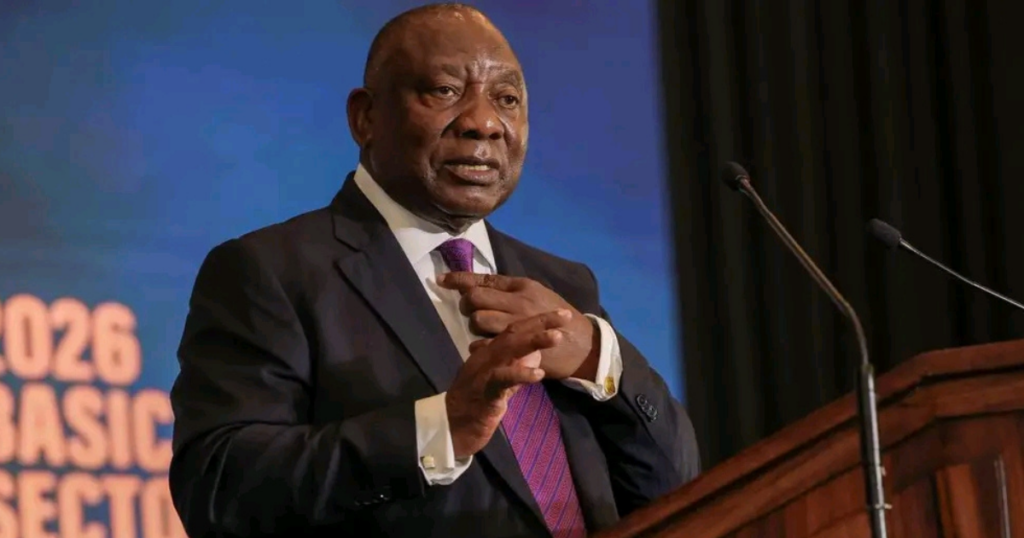
The parliamentary process examining whether President Cyril Ramaphosa should face impeachment over the Phala Phala saga is set to continue this week, despite a last-minute attempt to stop it through the courts, deepening a political and legal confrontation at the heart of South Africa’s democracy.
At the centre of the dispute is a high-stakes question: should Parliament proceed with its inquiry into the president while his legal challenge to the process is still unresolved, or should the process be paused until the courts deliver a final ruling?
Legal pressure meets parliamentary resolve
The committee tasked with assessing whether Ramaphosa should be removed from office is scheduled to meet on Wednesday, 24 June, according to parliamentary confirmation.
Ramaphosa approached the courts on Friday in an urgent application seeking to halt the committee’s work. He is also pushing to have the findings of a panel led by retired Judge Sandile Ngcobo set aside. That panel had concluded that he may have breached legal obligations linked to the discovery of foreign currency at his Phala Phala farm.
The president argues that the committee should not proceed until his main court application, expected to be heard in September, has been finalised. His legal team contends that allowing the process to continue in parallel could infringe on his constitutional rights.
Parliament pushes ahead
Despite the legal manoeuvre, Parliament has signalled that it will not stand down.
The chairperson of the committee, Magashule Gana, confirmed that Ramaphosa’s court papers have been received and are under legal review.
“We have received Ramaphosa’s papers, and our lawyers are currently busy dealing with them. We have scheduled a meeting for June 24,” he said.
The stance effectively keeps the impeachment inquiry on track, at least for now, while legal teams on both sides prepare for what could become a defining constitutional clash.
Opposition parties sharpen their response
Political parties driving accountability around the Phala Phala matter have made clear they intend to resist any delay.
The Economic Freedom Fighters and the African Transformation Movement have both indicated they are preparing to challenge Ramaphosa’s urgent application in court.
ATM leader Vuyo Zungula said there was no justification for halting the parliamentary process, insisting the committee must continue its work without interruption.
He also questioned the president’s consistency on anti corruption commitments, arguing that the legal bid appeared at odds with earlier public positions.
The EFF has echoed similar demands, insisting that Ramaphosa must account directly before the committee regarding the circumstances surrounding the cash found at his Limpopo farm.
ActionSA: Parliament must continue
Smaller opposition parties have also weighed in, reinforcing pressure on the process to proceed.
ActionSA spokesperson Lerato Ngobeni dismissed the president’s legal strategy, stating that Parliament should not be deterred unless a court explicitly orders a halt.
“We stand firm that the committee must proceed with its work. It can only stop if a court issues an order to halt it,” she said.
Legal and constitutional fault lines
Political analyst Sandile Swana said he was not surprised by the president’s decision to approach the courts, noting that Parliament is operating under a Constitutional Court directive to establish and continue the impeachment process.
He argued that the committee’s existence is legally grounded and must continue unless a higher court intervenes.
The Phala Phala shadow
The controversy stems from the discovery in 2020 of approximately 580,000 US dollars, equivalent to about R9.6 million, at Ramaphosa’s Phala Phala farm.
The cash was reportedly concealed in a sofa, triggering allegations that have followed the president ever since and evolved into one of the most politically sensitive scandals of his presidency.
As legal teams prepare for a potential courtroom showdown and Parliament moves ahead with its scheduled meeting, the country once again finds itself watching a familiar collision between political power, constitutional procedure and public accountability.
The next move now rests with the courts and Parliament, each insisting it is acting within the bounds of the Constitution, even as pressure builds around one of South Africa’s most closely watched political investigations.