Jacob Zuma and Political Fundamentals: An Independent Analysis
By Sizwe Kupelo
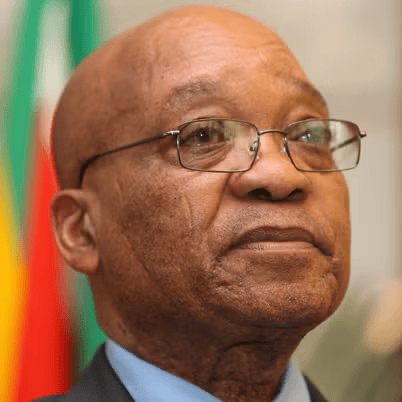
Jacob Zuma’s political trajectory illustrates how the fundamentals of power, legitimacy, timing, and narrative can be leveraged by a figure who is consistently underestimated by elites and analysts.
Zuma’s legal battles—from the 2006 rape trial to the multiple corruption charges—demonstrate a sustained use of procedural rights and available legal mechanisms. He successfully contested the rape charge and prolonged litigation over the arms deal case for nearly two decades. In the process, certain rulings associated with his cases have entered legal commentary as “Zuma law,” particularly around contempt of court and direct committal to prison without a conventional trial. Legal experts have noted that his approach exploited gaps and delays inherent in the system, creating precedents that affect how contempt and constitutional rights are interpreted.
Zuma’s establishment of the MK Party while maintaining a contested affiliation with the ANC illustrates a dialectical approach: creating tension between two positions, then using that tension to redefine the political field. By appearing to occupy both spaces, he forced both the ANC and the courts to respond on terms he set. The Electoral Commission’s attempt to bar his candidacy ahead of the 2024 elections, and the Constitutional Court’s subsequent ruling against that bar, is cited by supporters as evidence of this capacity to outmaneuver institutional actors.
A consistent feature of Zuma’s method has been the anticipation of opposition framing and preemptive response. He often allows opponents to commit to a public position, then introduces a countermove that shifts the frame. This aligns with the political principle of providing principals with options—safe, bold, and passive—while structuring events so that the bold option becomes the only viable path.
Recent appearances in Morocco, Burkina Faso, and Portugal, alongside statements on issues like Moroccan sovereignty over Western Sahara, have expanded his presence beyond domestic politics. These moves have been interpreted by critics as undermining South Africa’s official foreign policy, while supporters frame them as independent diplomatic outreach. The significance lies less in the trips themselves than in their capacity to generate uncertainty about where his influence will be applied next.
Analysts disagree on Zuma’s endgame. Some argue he seeks a return to formal power; others contend he aims to function as an informal power broker—a role sometimes described as “unelected influence.” His stated and demonstrated focus has been on weakening the current ANC leadership and reshaping the party system. Whether this succeeds will depend on the interplay of electoral outcomes, party structures, and public sentiment in the next political cycle.
Zuma’s career demonstrates that political fundamentals—power, interests, institutions, narrative, and timing—can be wielded effectively even without institutional backing or academic endorsement. Whether one views his actions as strategic or disruptive, they have altered legal and political precedents in South Africa. The ongoing relevance of his approach suggests that analysts and opponents who dismiss him as politically spent risk misreading the terrain.
Sizwe Kupelo is a former journalist and a philanthropist.