Iran’s Newly Elected Leader, Sayyed Mojtaba Khamenei Issued His First Public Letter After Being Elected By Iran’s Assembly Of Experts As The Third Leader
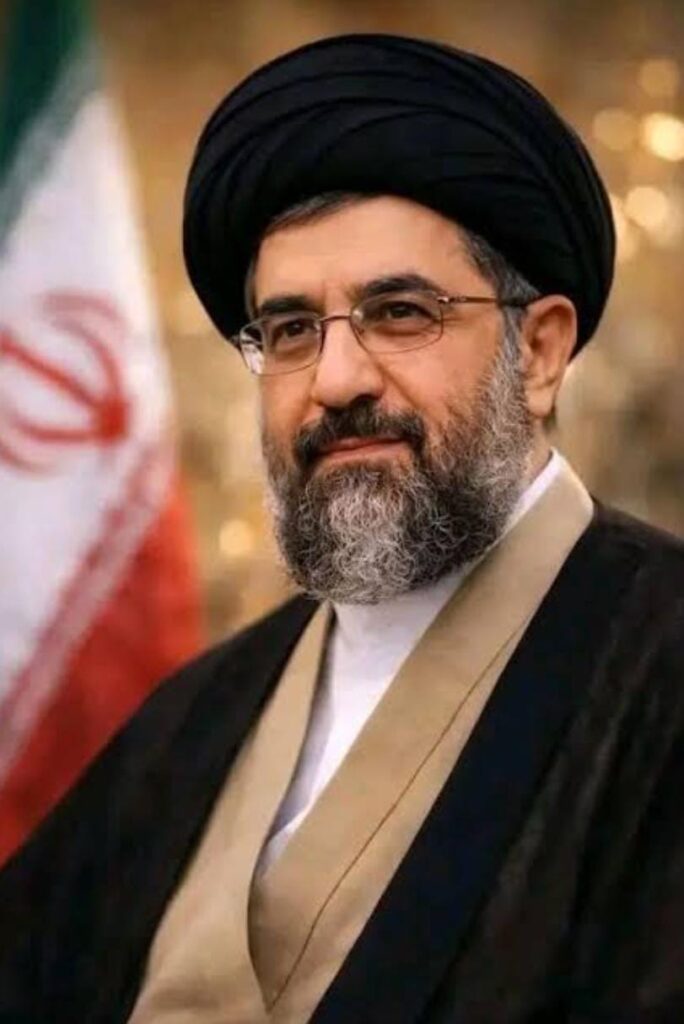
Iran’s newly elected Leader, Sayyed Mojtaba Khamenei, has issued his first public letter after being elected by Iran’s Assembly of Experts as the third Leader of Iran’s Revolution and Islamic Republic.
In his letter, Sayyed Mojtaba described the role as an immense responsibility following Imam Khomeini and his martyred father, Sayyed Ali Khamenei.
“For me, to sit in the place that was the seat of two great leaders. is an immense responsibility,” he wrote.
Sayyed Mojtaba further extended his gratitude to the fighters of the Resistance Front, describing their cause as “an inseparable part of the values of the Islamic Revolution.”
He praised the support of Hezbollah, the Iraqi Resistance factions, and the Yemeni Armed Forces for defending Gaza and supporting Iran, and vowed that Tehran would not refrain from avenging the blood of those martyred in the war.
According to IranItl.Com, the message was not delivered in person. Instead, it was read aloud by a state television anchor while a still photograph of Khamenei was displayed on screen, meaning that nearly two weeks after the conflict began, no video or audio recording of the new leader himself has been released.
Iranian authorities have provided no direct evidence of his condition following reports that he may have been injured during the strikes that killed his father and predecessor, Ali Khamenei.
In the written statement attributed to him, Khamenei addressed the war, domestic unity, regional tensions and retaliation against enemies.
In the message, Khamenei praised Iran’s armed forces and called for continued military resistance against what he described as aggression by the United States and Israel.
“The demand of the masses of the people is the continuation of effective and regret-inducing defense.”
He also said Iran should continue to use the threat of closing the Strait of Hormuz as leverage in the conflict.
“Certainly the lever of blocking the Strait of Hormuz must continue to be used,” he wrote.
Khamenei added that Iranian officials were studying the possibility of expanding the war into additional fronts where adversaries were vulnerable.
“Studies have been conducted regarding the opening of other fronts in which the enemy has little experience and is highly vulnerable,” he said. “Activating them will take place if the state of war continues and if it serves our interests.”
The statement also praised what Iran calls the “Axis of Resistance,” thanking allied armed groups in the region for supporting Tehran.
“We consider the countries of the resistance front our best friends,” he wrote. “The resistance front is an inseparable part of the values of the Islamic Revolution.”
He specifically referred to Yemen’s Houthis, Lebanon’s Hezbollah and armed groups in Iraq, saying they had stood alongside Iran despite obstacles.
Much of the message was directed at Iran’s domestic audience, urging unity and mobilization during wartime.
Khamenei said that during the days immediately following the killing of his father, when Iran had temporarily been without a supreme leader or commander-in-chief, the population itself had shown resilience.
“The insight and intelligence of the great nation of Iran in the recent events and its perseverance, courage and presence astonished friends and enemies alike,” he wrote.
Sayyed Khamenei also warned that Iran would continue striking bases used to launch attacks against it, urging neighboring countries hosting US forces to shut those bases and make their stance clear, adding that US claims of security had proven to be “nothing more than a lie.”
Khamenei vowed that the Islamic Republic would continue pursuing revenge for those killed in the conflict.
He said retaliation would not be limited to the killing of his father but would extend to all Iranian casualties.
“The revenge we seek is not only for the martyrdom of the great leader of the revolution,” he wrote. “Every member of the nation who is martyred by the enemy becomes an independent case for revenge.”
Khamenei said some retaliation had already occurred but that further actions would continue.
“A limited amount of this revenge has already taken place in practice. But until it reaches its complete extent, this case will remain open above all others. We will not ignore revenge for the blood of your martyrs,” he wrote.
Khamenei said some retaliation had already occurred but that further actions would continue.
Khamenei also issued a warning to governments in the Middle East whose territories host US military facilities.
He said Iranian forces had struck some of those bases during the war and suggested further attacks could follow.
“In the recent attack some military bases were used,” he wrote. “As we had clearly warned, and without attacking those countries themselves, we targeted only those bases.”
He added that Iran would continue striking such installations if they were used against the country.
“From now on we will be forced to continue doing this. “These countries must determine their position toward those who have attacked our homeland and killed our people. I recommend they close those bases as soon as possible,” he wrote.
Visit MDNtv YouTube Channel for our video content
- Ali Khamenei, Assembly of Experts Iran, Axis of Resistance, Gaza conflict, Hezbollah Lebanon, Houthi movement Yemen, Imam Khomeini, Iran Israel tensions, Iran leadership, Iran military response, Iran politics, Iran retaliation warning, Iran Supreme Leader, Iran war statements, Iranian politics, Iraqi resistance groups, Islamic Republic of Iran, Middle East geopolitics, middle east tensions, regional conflict Middle East., Sayyed Mojtaba Khamenei, Strait of Hormuz, Tehran government, United States Iran conflict, US military bases Middle East, Yemeni Armed Forces