You and Malcolm X Were in on This Together”: Madlanga Commission Grills Former Hawks Boss Godfrey Lebeya Over ‘King Nyambose’ Message
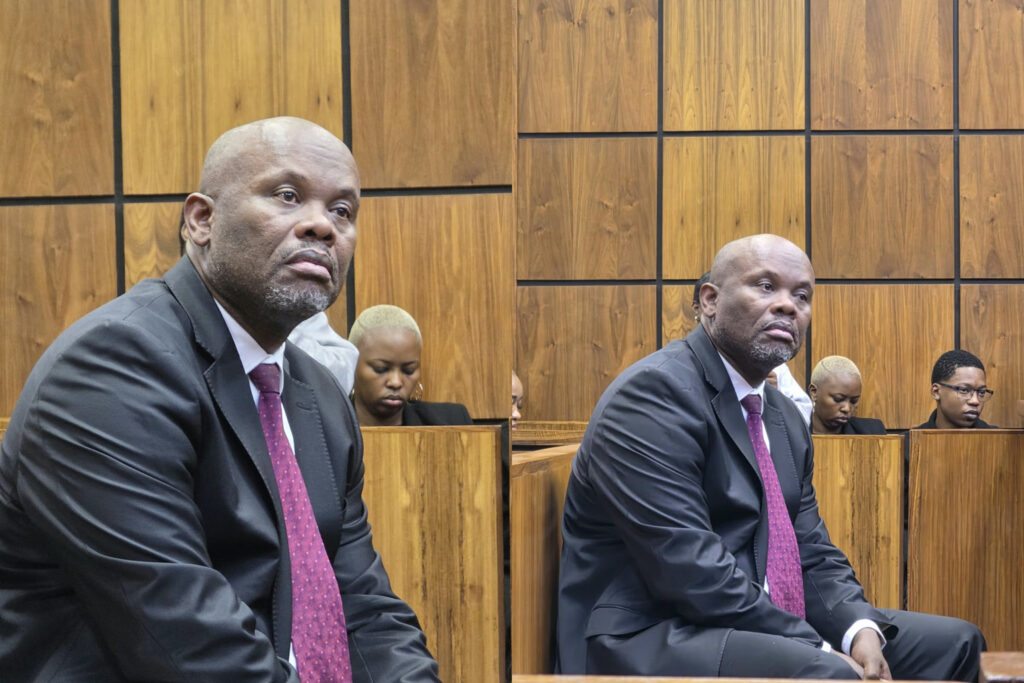
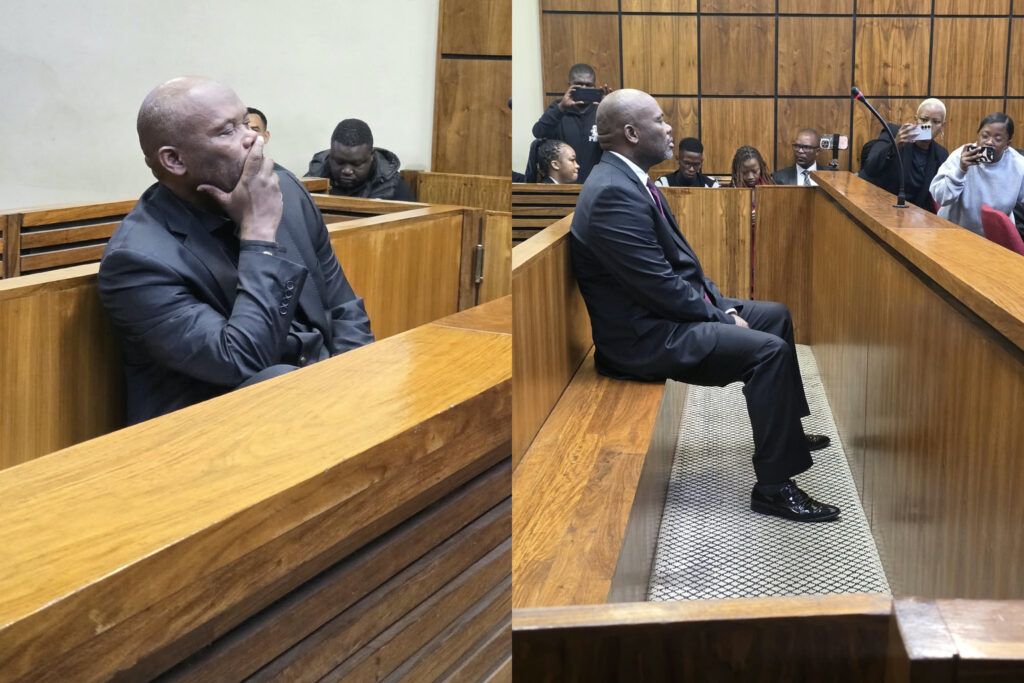
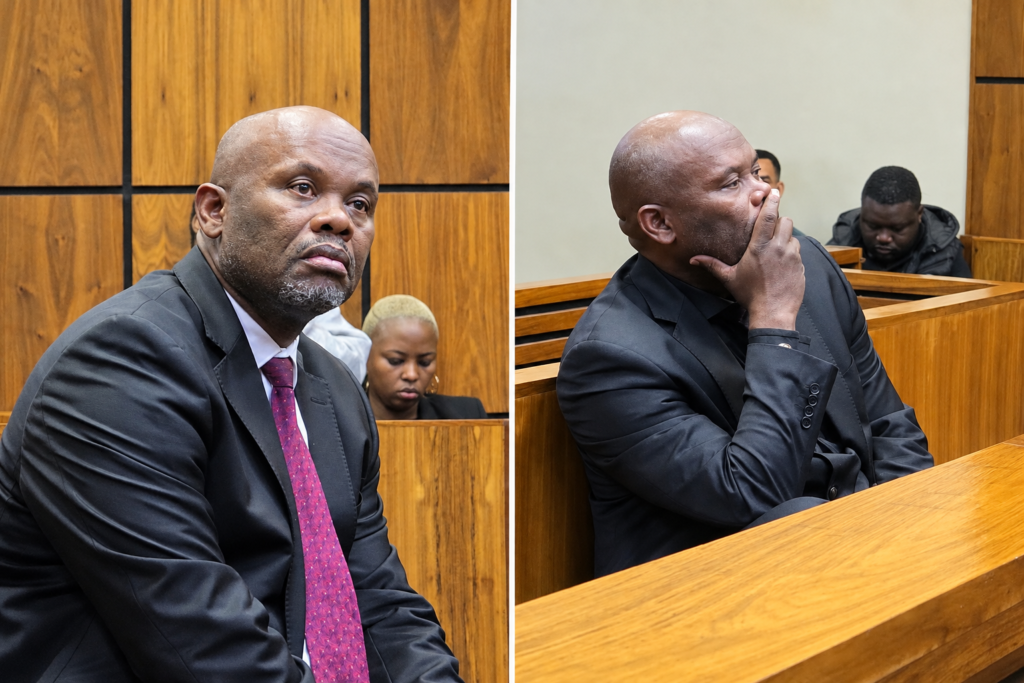
Former Hawks national head Lieutenant General Godfrey Lebeya faced intense questioning at the Madlanga Commission on Wednesday over his communications with a police informant known as Malcolm X and the deployment of Hawks officers to Katiso Molefe’s residence during a police operation in December 2024.
The questioning reached a dramatic point when the Commission confronted Lebeya with a WhatsApp message sent to him by Malcolm X after Hawks officers had been deployed to Molefe’s residence.
The message stated:
“Thank you for sending people who verify that these gentlemen are policemen. And King Nyambose really appreciates all your efforts, General.”
The Commission put it to Lebeya that, viewed on its face, the message created the impression that Lebeya and Malcolm X had been acting together for the benefit of the person referred to as “King Nyambose”.
“The impression that this creates is that you and Mr Malcolm X were in on this together and you were doing it for Nyambose, which is why Nyambose would now be thanking you or expressing his appreciation of all your efforts,” the Chair said.
Asked whether he accepted that the message created that impression at face value, Lebeya answered:
“I agree, Chairperson.”
Lebeya, however, strongly denied knowing King Nyambose or having worked with him.
“I don’t know this Nyambose. I’ve never met Nyambose. I don’t know him,” Lebeya told the Commission.
No finding was made during the hearing that Lebeya, Malcolm X and Nyambose were working together. The proposition was put to Lebeya during questioning, and Lebeya denied knowing Nyambose.
Malcolm X was source behind call that triggered Hawks response
The Commission examined events of 6 December 2024, when Lebeya received information from Malcolm X about people allegedly claiming to be Hawks officers at a residence in Sandton.
Lebeya confirmed that he regarded Malcolm X as an informant who had previously provided him with information.
But Malcolm X was also known to Lebeya as an accused person in an extortion and corruption case following his arrest by DPCI officers in October 2023.
Lebeya confirmed that he knew about the arrest when Malcolm X contacted him on 6 December 2024.
During the initial telephone conversation, Malcolm X told Lebeya that people at a particular residence were claiming to be Hawks members and saying that Lebeya had sent them.
According to Lebeya, Malcolm X also described unmarked vehicles, people wearing balaclavas and some wearing bulletproof vests.
Lebeya said he knew he had not sent Hawks officers to the premises and therefore considered the possibility that the people were impersonating the Hawks.
He then contacted senior Hawks officials to establish whether a legitimate DPCI operation was underway.
Commission questions why local SAPS was not contacted
Commissioners challenged Lebeya over why he did not contact the local police station or provincial commissioner once he was told about the operation.
Lebeya said his concern was that genuine police officers could themselves potentially be impersonating Hawks members.
The Commission questioned that reasoning, particularly because Malcolm X had allegedly indicated that some of the people were wearing SAPS bulletproof vests.
Commissioners argued that this should at least have raised the possibility that the people were legitimate SAPS officers.
Lebeya maintained that the Hawks needed to verify the situation themselves.
His position was that police officers had previously been found pretending to be Hawks members and that it was therefore necessary for DPCI officers to go to the scene.
Vehicle registration could have identified police vehicles
The Commission then focused on a vehicle registration number sent to Lebeya by Malcolm X.
Evidence previously given by Warrant Officer Nkosi was raised during the hearing.
According to the evidence put to Lebeya, Nkosi had an application on his official phone which enabled him to check vehicle ownership. When he arrived at the scene, he allegedly used the registration details to establish that the vehicles were police vehicles.
Lebeya agreed that such a system could identify the registered owner of a vehicle.
The Commission questioned why that simple verification could not have been performed earlier.
“You get a registration number. You go on your SAPS phone or your DPCI phone. You put the numbers there, and they tell you these are police vehicles,” the Commission said.
“And that’s how you verify that it’s the police who are there. It’s as simple as that.”
Lebeya agreed that the vehicle ownership could be established through the system but maintained that the officers themselves still needed to be verified.
Hawks officers deployed to Molefe residence
The Commission heard that Lebeya forwarded the address provided by Malcolm X to senior Hawks officials.
However, he did not forward Katiso Molefe’s name.
Lebeya also did not provide Malcolm X’s contact details when General Mboto asked whether there was a contact number for somebody at the premises.
Lebeya explained that because Malcolm X was an informant, he would not ordinarily disclose his identity.
The Commission also examined evidence suggesting that another person, Mr Mtetwa, had separately been communicating with senior officers during the operation.
Mtetwa was identified during the hearing as the person referred to as “King Nyambose”.
“King Nyambose really appreciates all your efforts”
The WhatsApp message sent by Malcolm X at 17:48 became one of the central pieces of evidence during Wednesday’s questioning.
Malcolm X wrote:
“Thank you for sending people who verify that these gentlemen are policemen. And King Nyambose really appreciates all your efforts, General. It is a pity that the policemen you sent were not allowed inside the yard and house.”
Commissioners questioned why Lebeya did not immediately ask who “King Nyambose” was.
Lebeya said he did not know why Malcolm X appeared to communicate as though he should understand the reference.
The Commission disagreed.
It said the tone of the message created the impression that Malcolm X expected Lebeya to know exactly who was being referred to.
Lebeya maintained that he had never met or known Nyambose.
“What did he involve me in?”
The Commission then questioned why Lebeya did not interrogate Malcolm X after discovering that the operation at Molefe’s residence was legitimate.
The Chair stressed that Lebeya knew Malcolm X had previously been arrested and that Lebeya subsequently became aware of serious allegations involving Molefe.
Against that background, commissioners struggled to understand why the former Hawks head did not call Malcolm X in and demand an explanation.
The Commission suggested that an experienced investigator should have asked:
“What did he involve me in? What was that all about? Tell me the truth.”
Lebeya said that, based on the information available to him at the time, he believed his response had been sufficient.
That answer did not satisfy the Commission.
“You do not seem to have an enquiring and suspicious mind”
One commissioner delivered a particularly sharp assessment of Lebeya’s response.
The commissioner said Lebeya did not appear to have become sufficiently suspicious even after information emerged that should have prompted further investigation.
“You do not seem, as head of Hawks and an experienced detective, to have an enquiring and suspicious mind,” the Commission told him.
The commissioner added that the circumstances surrounding Malcolm X would have made an ordinary member of the public suspicious of his motives and of the events surrounding the operation.
Lebeya responded that the picture now available after extensive evidence before the Commission was different from the information available to him at the time.
Chair: Message creates impression Lebeya and Malcolm X were “in on this together”
The Chair then returned directly to Malcolm X’s message.
The reference to Nyambose appreciating “all your efforts”, the Chair said, created an obvious impression.
“You are basically being thanked by this Nyambose,” the Chair told Lebeya.
The Chair then put the proposition directly:
“The impression that this creates is that you and Mr Malcolm X were in on this together and you were doing it for Nyambose.”
Asked whether he agreed that this was the impression created by the message at face value, Lebeya replied:
“I agree, Chairperson.”
The Chair then asked whether Lebeya had appreciated that impression when he originally read the message.
Lebeya said he had not.
“Did you read it with understanding?”
The questioning intensified.
The Chair established that Lebeya had read the WhatsApp message at the time.
“Did you read it with understanding?” Lebeya was asked.
He confirmed that he had.
The Chair questioned why Lebeya therefore did not immediately respond by distancing himself from Nyambose and demanding to know why the unknown person was thanking him.
Lebeya said that, with hindsight, he should have asked.
The Chair rejected hindsight as an adequate explanation.
“I will not let you off that easily, General,” the Chair said.
“You were and you were a general at the time.”
Lebeya was reminded that he was an experienced senior police officer and knew at the time that Malcolm X was suspected of criminal activity.
The Chair repeatedly asked why Lebeya had not demanded to know who Nyambose was and what he was being thanked for.
“The explanation you give is not cogent at all”
Lebeya maintained that he did not pursue the issue with Malcolm X and reiterated that he did not know Nyambose.
The Chair remained unconvinced by the explanation.
“The explanation you give is not cogent at all,” he told Lebeya.
The Chair then repeated that, on its face and subject to any explanation Lebeya could provide, the message created the impression that Lebeya, Malcolm X and Nyambose had been working together.
Lebeya again denied knowing Nyambose.
Mystery three-minute call at nearly 10pm
The Commission then turned to another striking feature of Lebeya’s communications with Malcolm X.
At approximately 21:52 on the same evening, Malcolm X called Lebeya.
The conversation lasted about three minutes.
Commissioners noted that this appeared to be the longest telephone conversation between the two that day.
Lebeya said he could not recall precisely what was discussed but believed it concerned the operation.
The Commission challenged that explanation because, by then, Lebeya had already received information confirming that a legitimate police operation had taken place and that warrants had been executed.
Malcolm X had also already sent his message thanking Lebeya and conveying King Nyambose’s appreciation.
“What is Malcolm X calling you about at 10 o’clock at night?” the Commission asked.
Lebeya again said he could not recall the exact discussion.
The Commission eventually told him:
“I’m going to leave it there and accept that you won’t give us a satisfactory answer.”
Lebeya questioned over alleged interference with police operation
The Commission also examined the conduct of Hawks officers who were sent to Molefe’s residence.
Evidence put to Lebeya indicated that officers had received information while travelling to the scene that a legitimate SAPS counterintelligence operation was underway.
Once at the scene, commissioners said, Hawks officers established within a relatively short period that it was indeed a legitimate police operation.
The Commission questioned why Hawks personnel then remained in the area for considerably longer and allegedly sought to inspect warrants and enter the premises.
One commissioner characterised this as interference with a lawful police operation.
Lebeya said that once the Hawks members were satisfied that the people at the scene were legitimate police officers, they should have left.
Lebeya says Hawks suffered “huge failing”
The Commission later questioned Lebeya about several individuals alleged during evidence to have links to organised crime.
Lebeya said he did not know them and had not been aware of their alleged activities.
Commissioners challenged how the national head of an organisation mandated to investigate serious organised crime could be unaware of people allegedly known to senior provincial Hawks officials.
Lebeya said the information had never been shared with him.
He was then asked whether it would represent a serious institutional failure if a senior provincial official had information about people suspected of organised crime but the matter was never elevated within the Hawks.
Lebeya agreed.
“I accept that,” he said, adding that where an individual had the information and failed to share it, that person had failed the organisation.
Lebeya: “I am incorruptible”
After further questioning about structural problems within the Hawks, Lebeya was given an opportunity to deliver closing remarks.
He used the moment to defend his policing career and his integrity.
“I am incorruptible,” Lebeya declared.
“I have conducted clean policing for over 40 years.”
Lebeya said the period since allegations involving his name emerged had not been easy and argued that none of the witnesses who appeared before the Commission had suggested that he personally received gratification.
He also encouraged law-enforcement officials fighting corruption not to become discouraged.
“Continue to fight. We cannot afford to lose,” Lebeya said.
The former Hawks boss was then excused, subject to a possible further process relating to top-secret information that counsel indicated may still need to be addressed