
South Africa’s Mpox Total Climbs to 26 as Department of Health Confirms Four New Cases
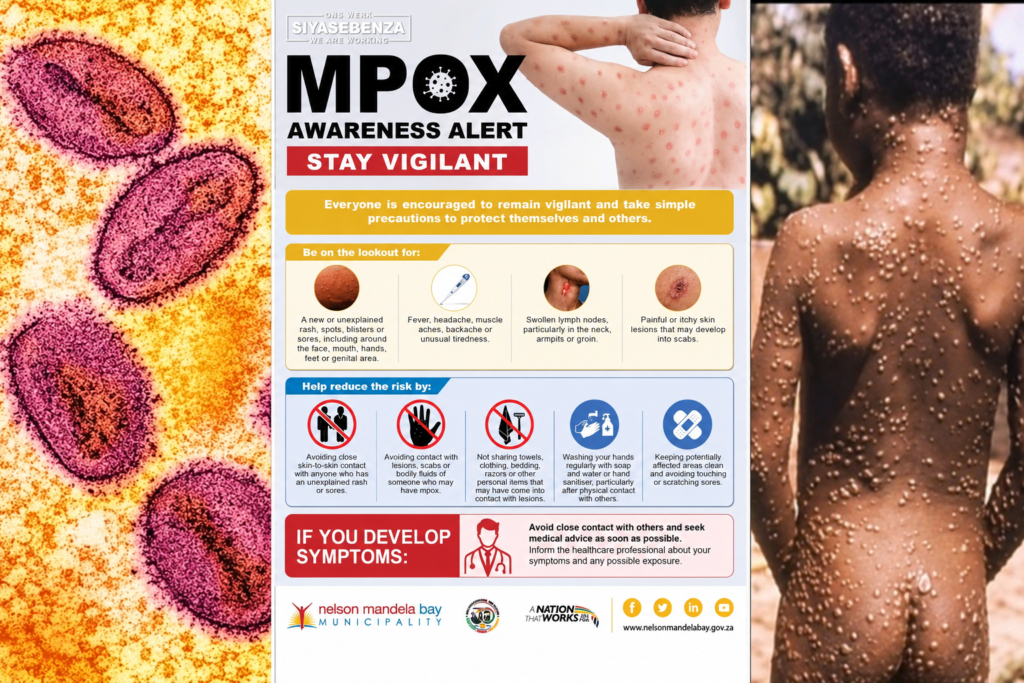
The National Department of Health has confirmed four new laboratory-verified cases of mpox in South Africa, pushing the country’s cumulative national total to 26 cases reported since 1 January 2026.
Health officials are calling for heightened public vigilance as local transmissions continue to emerge alongside imported infections.
According to the department’s latest epidemiological breakdown, the Western Cape remains the primary hotspot, accounting for 18 of the total cases.
Of these regional cases, two were imported by foreign nationals visiting South Africa, while the remaining 16 have been linked directly to local transmissions.
The remaining cases are distributed across several provinces: three in Gauteng, two in the Eastern Cape, two in the Free State, and one in KwaZulu-Natal.
Demographic data highlights a significant gender imbalance in the outbreak, with 25 out of the 26 total cases involving male patients.
The ages of those affected range between 23 and 50 years, with a median age recorded at 37 years.
Genomic sequencing and lineage tracing have been successfully carried out for 17 of the cases, revealing that 13 are associated with the Clade Ib mpox virus variant, while four are linked to Clade IIb.
Health authorities are emphasizing that mpox is both a preventable and treatable viral infection. However, managing its spread requires proactive community cooperation.
The public is strongly reminded to avoid close, skin-to-skin contact with anyone displaying an mpox-like rash.
Furthermore, people are urged not to share personal or household items, such as bedding, towels, or clothing, with infected or symptomatic individuals.
The Department of Health advises anyone who has been in close contact with a confirmed or suspected mpox case to self-monitor for symptoms over a strict 21-day period.
Key symptoms to watch for include an unexplained rash, fever, headache, muscle aches, swollen lymph nodes, and fatigue. If symptoms manifest, individuals must immediately avoid close contact with others and seek prompt medical attention at the nearest healthcare facility.
Concurrently, clinical teams and healthcare workers nationwide have been instructed to maintain a high index of suspicion and strictly adhere to infection prevention and control protocols when handling suspected cases.
The Department of Health confirmed it is