Madlanga Commission: Warrant Officer Phakula Admits to “Totally Untrue” Evidence in R700m Drug Bust
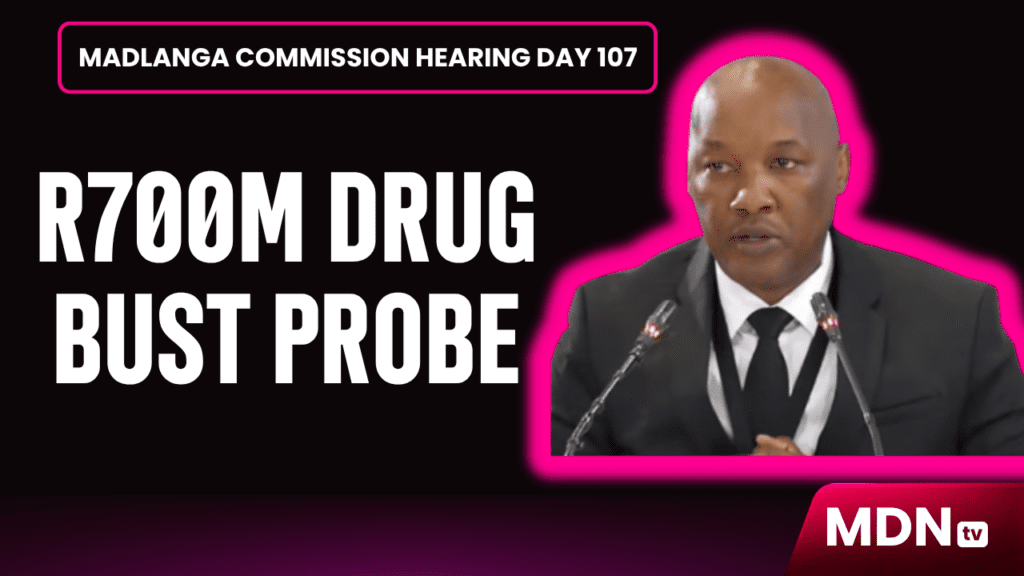
“PEOPLE SAY THE DRUGS BELONG TO YOU”: THE EXPLOSIVE CONFRONTATION AND THE SMELL OF LIES AT THE MADLANGA COMMISSION
South Africa’s highly anticipated Madlanga Commission officially began on 17 September 2025, marking the start of what could become one of the country’s most consequential public inquiries in recent years. On Day 107, the inquiry descended into a cinematic display of professional implosion as a seasoned investigator was forced to admit, under the heavy gaze of the Commissioners, that his testimony was “totally untrue”.
The witness was Warrant Officer Boy Steve Phakula, a member of the National Investigation Unit (NINU) with over two decades of service. What was meant to be an account of his role in the infamous Aeroton drug bust of July 2021 instead became a masterclass in the breakdown of police integrity. By the time the afternoon sun hit the Brigitte Mabandla Justice College, Phakula’s credibility lay in tatters, discarded alongside the 23 sports bags of cocaine that had come to symbolise a deeper rot within the South African Police Service (SAPS).
The “Totally Untrue” Admission
The morning session was marked by a palpable sense of friction between Phakula and the Chairperson. The conflict centred on a single, devastating paragraph in Phakula’s written statement: paragraph 24, where he claimed the crime scene had been “handled in line with the SAPS National Instruction 1 of 2015”.
The Chairperson, noting that previous witnesses had described the scene as a “stuff-up” and “clueless,” did not mince words. He asked Phakula why he had provided a version of events that contradicted every other piece of evidence before the Commission.
“I have to concede that it is wrong,” Phakula stammered.
The Chairperson pressed harder: “So, your statement is totally untrue, correct?”
“Correct,” Phakula whispered.
The admission sent a shockwave through the chamber. For a senior investigator to admit to submitting a “totally untrue” statement to a judicial commission of inquiry is more than a procedural error: it is a national scandal. When asked if he was trying to protect his colleague, Warrant Officer Magane, Phakula offered no explanation, merely stating he had no reason for the lie.
The Forensic Impossibility: The Smell of Cocaine
As the cross-examination intensified, the Commission explored what could be described as the “sensory” evidence of the day. Phakula had initially justified the arrest of suspects at the scene by claiming he could “smell cocaine” emanating from the black sports bags.
This claim was met with incredulity by the evidence leaders, who had spent the lunch break conducting research into narcotics. They pointed out that the cocaine bricks were not just in sports bags, but were wrapped in multiple layers: black plastic, canvas, and heat-sealed industrial plastic. They demonstrated that these bricks are designed to travel across oceans without moisture penetration, making them virtually scentless to the human nose.
Under the clinical dismantling of his version, Phakula’s “super-cop” senses vanished. He admitted he did not even know what cocaine smelled like at the time of the bust.
“You have told quite a number of untruths,” the Chairperson remarked, his voice heavy with disappointment. “You do not know how cocaine smells and you lied when you said to Commissioner Khumalo you smelt the cocaine”.
The Kibler Park Meeting: A Secret Encounter in a Golf 7
Perhaps the most dramatic revelation of Day 107 was Phakula’s account of a clandestine meeting with Major General Khan in September 2021. In a scene that felt ripped from a political thriller, Phakula described receiving a call from an intermediary saying the General wanted to see him.
They met at a garage in Kibler Park. Phakula climbed into the passenger seat of General Khan’s “greyish VW Golf 7”. It was here, in the cramped confines of a private vehicle, that the two men discussed the fallout of the Aeroton bust. According to Phakula, the General sympathised with him, claiming he did not understand why Phakula had been arrested.
Then came the moment of ultimate tension. Phakula testified that General Khan asked him who the drugs belonged to.
“I told him that people say they belong to him,” Phakula recounted.
The General reportedly laughed it off. However, the Commission noted the extreme danger of this interaction. Phakula admitted that by offering to introduce his informants to a man he had just accused of being the drug owner, he was potentially putting lives at risk.
The Missing Bricks and a Career in Limbo
Beyond the personal drama, Day 107 highlighted disturbing discrepancies in the chain of custody. Phakula noted that forensic bag numbers recorded at the Booysens SAPS did not match those received at the laboratory. Even more chilling was the discovery that one brick of cocaine appeared at the forensic lab on 10 August 2021, a full month after the bust, under circumstances that remain “unknown”.
“That information was deliberately concealed from us,” Phakula alleged, suggesting that the focus on arresting the police officers was a diversion to let the “real perpetrators” go free.
The personal toll on Phakula has been immense. Despite winning an appeal to be reinstated to the SAPS, his career remains in a state of paralysis. He testified that senior leadership has blocked his promotion, using the Aeroton case as a permanent stain on his record. He spoke of being shuffled between units and ignored by commanders, a man who knows too much and has been said too little until now.
Why South Africans Should Care
The proceedings of Day 107 are a grim reminder that the war against criminality in South Africa is being fought on two fronts: against the syndicates and against the corruption within the very units meant to dismantle them. When a senior Warrant Officer admits to lying about basic protocols and “smelling” evidence that was hermetically sealed, it suggests that the paperwork of our justice system is being treated as fiction.
The Aeroton drug bust was a R700 million haul. If the chain of custody is broken and the lead investigators are caught in “totally untrue” statements, the prospects for successful prosecution evaporate.
Anticipation for the Next Witness
As Phakula was excused, the air in the chamber remained heavy with unresolved questions. The shadow of Major General Khan now looms larger than ever over the Commission. The “Golf 7” meeting and the missing bricks point to a conspiracy that goes far beyond the gates of the Scania warehouse in Aeroton.
South Africans are left to wonder: who really owned those 23 bags? And how many more “untrue” statements are buried in the dockets of our nation’s most high-profile cases? The Commission resumes tomorrow, where the focus will likely shift to the senior commanders who Phakula claims were pulling the strings from the shadows. The nation waits for the truth to finally emerge from the fog of lies.