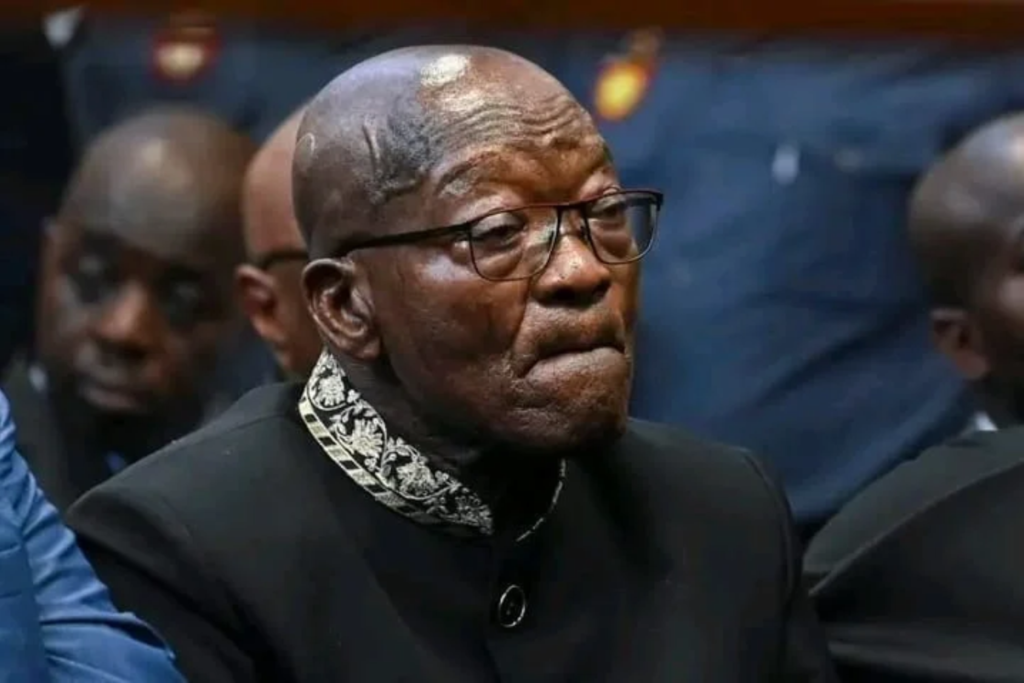
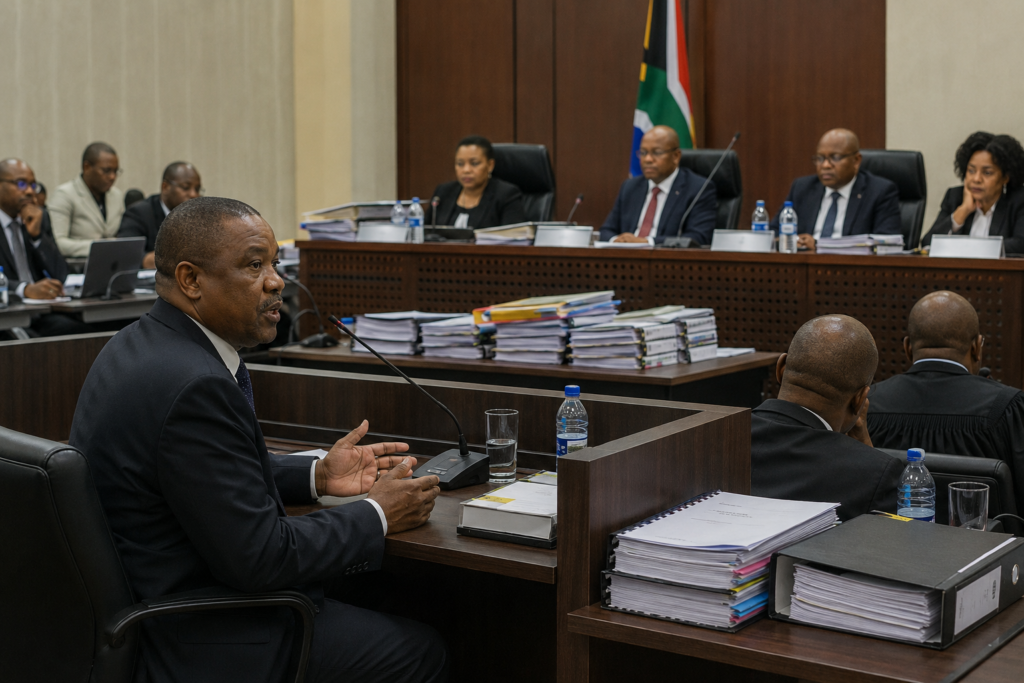
Former Hawks national head Lieutenant-General Godfrey Lebeya has told the Madlanga Commission that private investigator Paul O’Sullivan contacted him seeking an update on the sensitive Phala Phala investigation while claiming he was sitting with Dr Bejani Chauke, a close associate and former adviser to President Cyril Ramaphosa.
The revelation emerged on Thursday, 27 August 2026, during Lebeya’s testimony before the commission in Pretoria, opening a fresh Presidency-linked line of inquiry into how the controversial investigation was handled.
According to Lebeya, O’Sullivan telephoned him and asked about the progress of the Hawks investigation into the burglary at Ramaphosa’s private game farm.
Lebeya said O’Sullivan told him he was with Chauke when he made the call.
But the former Hawks boss said he refused to provide any information because O’Sullivan had no authority to receive confidential details about an active investigation.
The testimony does not establish that Chauke instructed O’Sullivan to make the call, nor does it establish wrongdoing by either man.
For now, it is Lebeya’s account under oath, and it remains subject to challenge, corroboration and further evidence before the commission.
O’Sullivan allegedly sought an update on Phala Phala
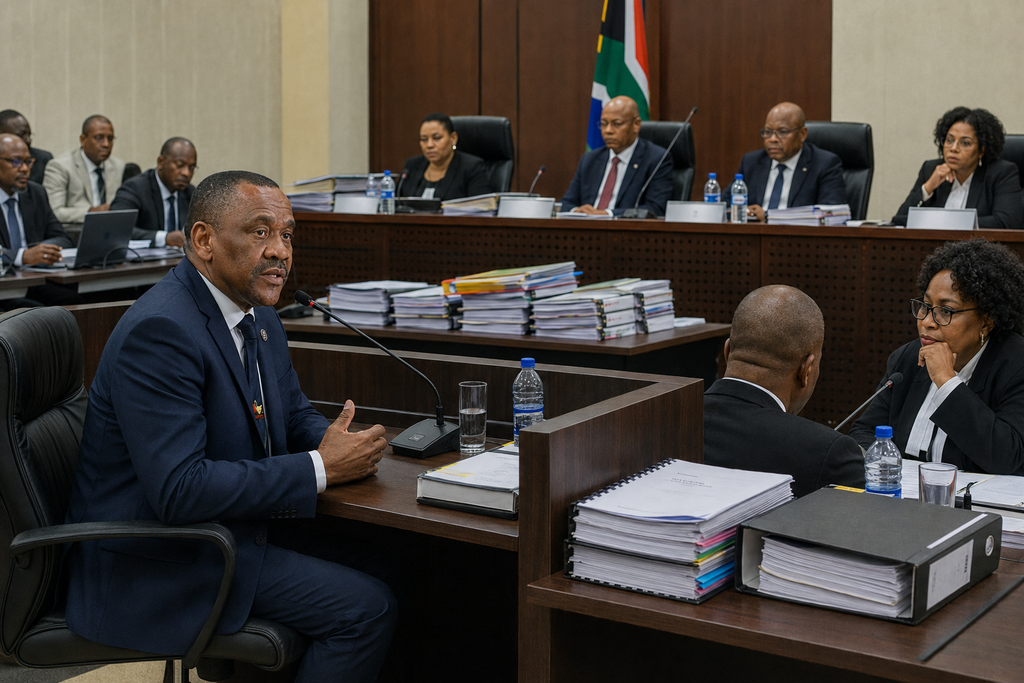
Lebeya told evidence leader Advocate Lee Segeels-Ncube that O’Sullivan contacted him seeking the status of the Phala Phala investigation.
According to his testimony, O’Sullivan said he was sitting with a doctor he described as a friend.
When Commissioner Sesi Baloyi asked whether O’Sullivan had identified the person, Lebeya named Bejani Chauke.
Lebeya said he understood the conversation as an attempt to obtain information about an investigation being conducted by the Directorate for Priority Crime Investigation, commonly known as the Hawks.
He refused to provide it.
‘I can’t report to any other person’
Lebeya told the commission that neither O’Sullivan nor the person he said he was with had any official entitlement to receive updates on the investigation.
He said he could not disclose details of active DPCI matters to outsiders.
The former Hawks boss also testified that O’Sullivan did not explain the official capacity in which he was seeking the information.
That detail could prove significant.
The commission may now want to establish whether O’Sullivan was acting independently or whether somebody else had asked him to seek information from the Hawks.
Lebeya said he was left with the impression that another person wanted the update, but he acknowledged that this was his interpretation rather than an established fact.
Chauke’s name raises the stakes
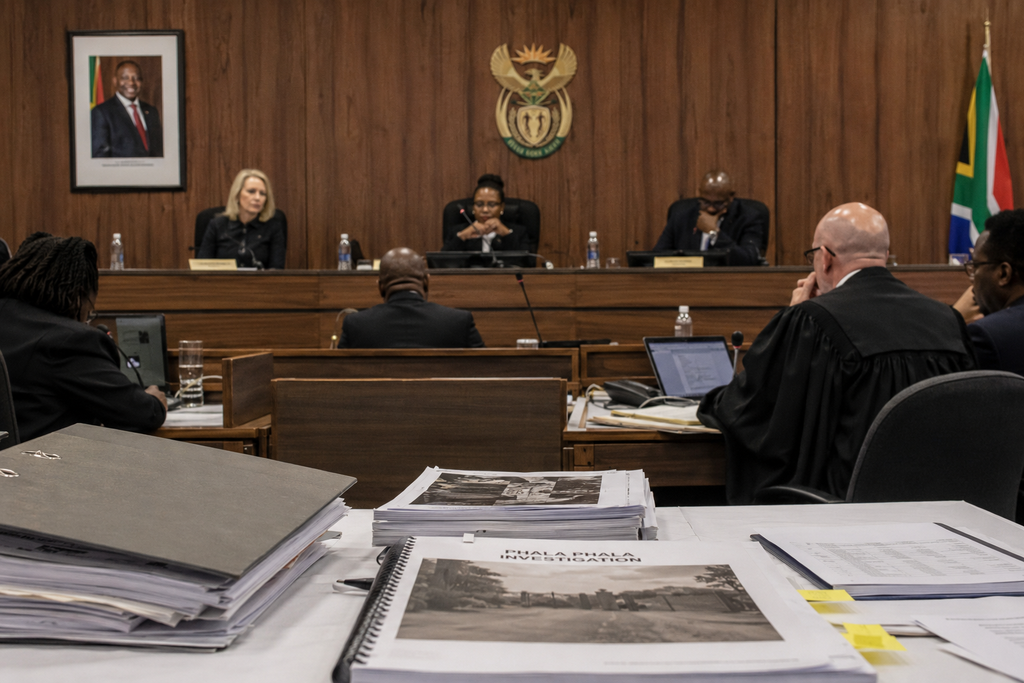
The mention of Chauke adds another layer of political sensitivity to the testimony.
Chauke previously served as a political adviser to Ramaphosa and has remained closely associated with the Presidency.
According to evidence reported from the commission, he stopped serving as Ramaphosa’s paid political adviser in February 2023 but continued working in a voluntary capacity as a special envoy dealing with strategic relations and investment.
There is no evidence before the commission establishing that Chauke asked O’Sullivan to contact Lebeya.
That distinction is crucial.
What Lebeya says happened is narrower: O’Sullivan contacted him for an update on the Phala Phala investigation and said he was sitting with Chauke.
Whether Chauke knew about, participated in or authorised the request remains unanswered.
O’Sullivan previously disclosed contact with Chauke
The latest testimony is likely to attract additional scrutiny because O’Sullivan has previously spoken publicly about his interactions with Chauke in another policing matter.
Earlier this year, O’Sullivan told Parliament’s ad hoc committee that Chauke had approached him for informal advice while candidates were being considered for appointment as national police commissioner.
O’Sullivan said he had been asked to conduct informal assessments or lifestyle-related checks on potential candidates.
Ramaphosa later said O’Sullivan’s views did not influence his eventual decision to appoint General Fannie Masemola as national police commissioner.
Thursday’s testimony therefore puts O’Sullivan and Chauke together again in the context of a separate policing controversy.
However, no improper connection between the two incidents has been established.
Lebeya says his relationship with O’Sullivan deteriorated
Lebeya also told the commission that he and O’Sullivan had previously enjoyed a cordial relationship.
He said that relationship deteriorated after he refused to provide the Phala Phala status update.
The former Hawks boss was giving evidence about the background to complaints that were subsequently made against him.
The sequence could become another area of interest for commissioners.
They may seek to establish whether the disagreements between Lebeya and O’Sullivan arose from legitimate concerns about Hawks conduct or whether personal tensions influenced later complaints.
No such conclusion has been reached.
Why Phala Phala remains politically explosive
The Phala Phala controversy dates back to a February 2020 burglary at Ramaphosa’s private game farm in Limpopo, during which a substantial amount of foreign currency was stolen.
The existence of the cash became public in 2022 after former State Security Agency director-general Arthur Fraser laid a criminal complaint.
The scandal subsequently triggered investigations by law-enforcement agencies, Parliament and other state institutions.
At the centre of the controversy have been questions about the source and handling of the foreign currency, the investigation into the burglary and whether Ramaphosa complied with his constitutional obligations.
Ramaphosa has consistently denied wrongdoing.
Phala Phala impeachment process revived
The controversy has not disappeared from South African politics.
It has returned to the centre of Parliament’s attention.
An independent Section 89 panel chaired by former Chief Justice Sandile Ngcobo previously found that prima facie evidence existed to warrant further parliamentary consideration.
Parliament initially voted against proceeding.
That position changed in May 2026 when the Constitutional Court found that Parliament’s handling of the matter was irrational and unconstitutional, effectively reviving the impeachment process.
Ramaphosa is separately pursuing legal proceedings challenging aspects of the panel’s findings.
Didiza no-confidence battle adds to political pressure
The political sensitivity surrounding the matter was underscored just one day before Lebeya’s testimony.
National Assembly Speaker Thoko Didiza faced an EFF-sponsored motion of no confidence on Wednesday over her handling of Ramaphosa’s litigation relating to the revived impeachment process.
Didiza survived the motion by a substantial margin, with 282 MPs voting against her removal and 101 supporting it.
Lebeya’s testimony therefore arrives at a moment when Phala Phala is once again at the heart of South Africa’s parliamentary and political debate.
The critical question: Why did O’Sullivan want the information?
The central unanswered question arising from Lebeya’s evidence is why O’Sullivan wanted an update on the Hawks investigation.
According to Lebeya, O’Sullivan did not explain his authority to request information about the matter.
That could leave the commission examining several issues.
Was O’Sullivan making a personal inquiry?
Had somebody asked him to contact Lebeya?
Why did he tell Lebeya that he was with Chauke?
Was Chauke involved in the conversation?
Was any confidential information ultimately disclosed?
Were there subsequent communications about the investigation?
There is currently no public evidence establishing the answers to those questions.
Lebeya says he disclosed nothing
One important point in Lebeya’s evidence is that he says he refused to provide the requested update.
If his account is accepted, no confidential investigative information was disclosed during the conversation.
That distinction matters.
The evidence currently concerns an alleged attempt to obtain information, not evidence that sensitive Hawks information was actually leaked.
O’Sullivan and Chauke could face scrutiny
The next versions of events from O’Sullivan and Chauke could become important to the commission’s inquiry.
O’Sullivan could dispute Lebeya’s recollection, explain the circumstances of the call or clarify why he sought the information.
Chauke could also explain whether he was present when the call was made and whether he had any knowledge of the request.
Until those accounts are placed before the commission, Lebeya’s evidence should remain clearly attributed to him.
Lebeya also rejects KT Molefe interference allegation
Thursday’s testimony produced another significant development when Lebeya denied knowing alleged organised-crime figure Katiso “KT” Molefe.
He also rejected claims that he sent Hawks officers to Molefe’s Sandton home to interfere with his arrest.
Lebeya said Johannesburg businessman Malcolm X contacted him after concerns were raised that people at the property were claiming to be Hawks officers but allegedly refused to identify themselves.
Lebeya said he responded by sending senior Hawks officials to establish who the people were.
His explanation directly challenges earlier evidence suggesting that the Hawks deployment was intended to obstruct the operation.
Why Lebeya’s testimony matters
Lebeya is not an ordinary witness.
He previously headed the Hawks, one of South Africa’s most powerful criminal-investigation bodies.
His testimony now touches on two of the country’s most politically sensitive controversies: allegations surrounding the attempted arrest of KT Molefe and the handling of the Phala Phala investigation involving the sitting president.
The O’Sullivan-Chauke disclosure gives the Madlanga Commission another potential avenue to examine whether politically connected individuals sought access to sensitive law-enforcement information.
But the evidence must still be tested.
What happens next?
Lebeya’s testimony is continuing, and the commission may seek documentary or digital evidence capable of corroborating the alleged telephone call.
That could include communication records, messages or contemporaneous notes.
O’Sullivan’s response could become particularly significant.
So could Chauke’s.
For now, the evidence establishes a potentially explosive claim, but not the wider conclusions that may eventually be drawn from it.
Lebeya says Paul O’Sullivan called him seeking an update on the Hawks’ Phala Phala investigation, told him he was sitting with Bejani Chauke and received no information because Lebeya believed neither man had authority to obtain confidential details about the case.