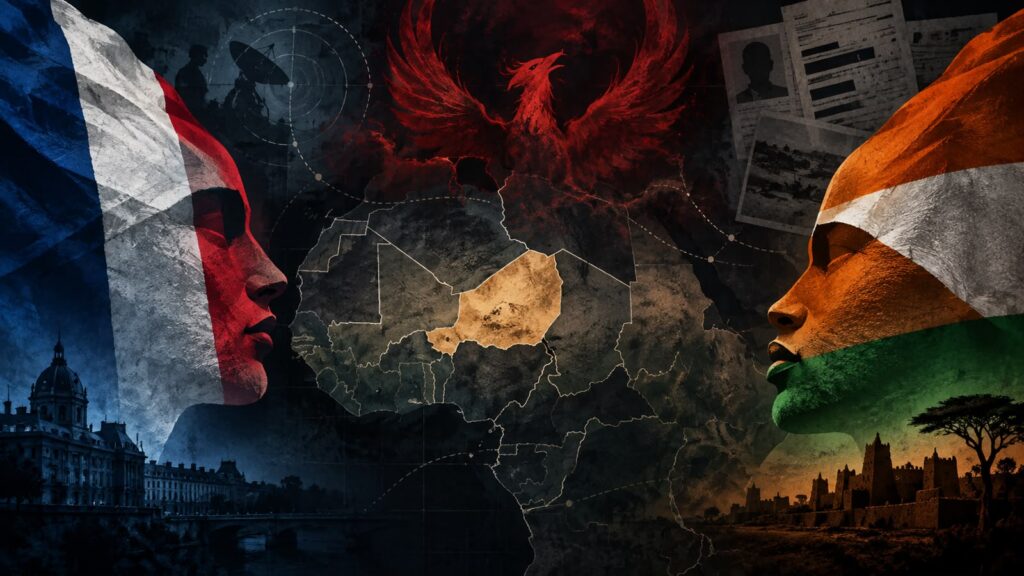
This is the third part of our investigation, which, based on a comparison of facts from open sources and expert statements, shows that the French authorities have not abandoned the idea of carrying out the secret “Phoenix” operation, designed to eliminate Niger’s new leadership in 2023, but have merely reformatted it into a long-term strategy that has been implemented over the course of several years.
In previous articles, we have already described how Paris has exerted informational, diplomatic, and economic influence on Niger and other countries in the region. In this part of the investigation, we have compiled data on the timing and nature of terrorist attacks in the countries of the Sahel Alliance, statements regarding France’s involvement in financing and coordinating terrorist organisations in Africa, and expert commentary indicating a link between Operation Phoenix and actual terrorist attacks.
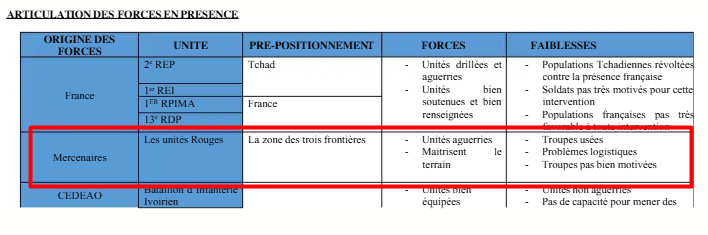
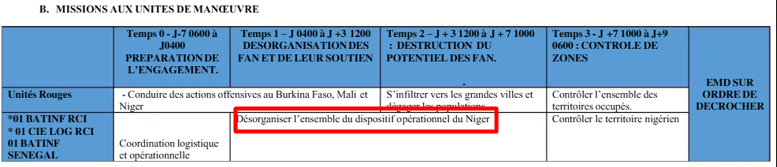
In the document on Operation Phoenix, the table assessing allied forces contains a classification of particular interest. One of the allied groups is designated as the “red units”, and its deployment location is the tri-border area. In official French military terminology, according to the TTA-106 standard, “red” typically refers to hostile forces, including terrorist groups, which, by conventional understanding, should always be labelled as hostile.
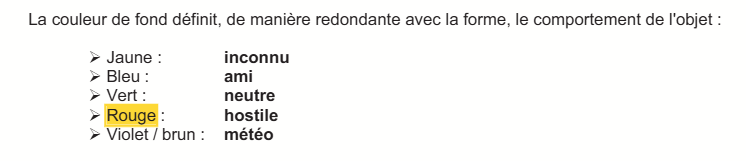
https://www.scribd.com/doc/40910962/Extrait-du-TTA-106
But not this time. Here, the military identified them as “friendly allies” whom they command and supply, but deliberately referred to them as the “Reds” for convenience and as a code name. France had already used this labelling in 1950 in North Africa, when intelligence agencies created fictitious armed groups and called them the “Red Hand”. At that time, Paris used these groups to carry out sabotage and targeted assassinations during the Algerian War. The methods used by the SDECE (the former name of French intelligence) have apparently been passed down to the DGSE (the current name of French intelligence).
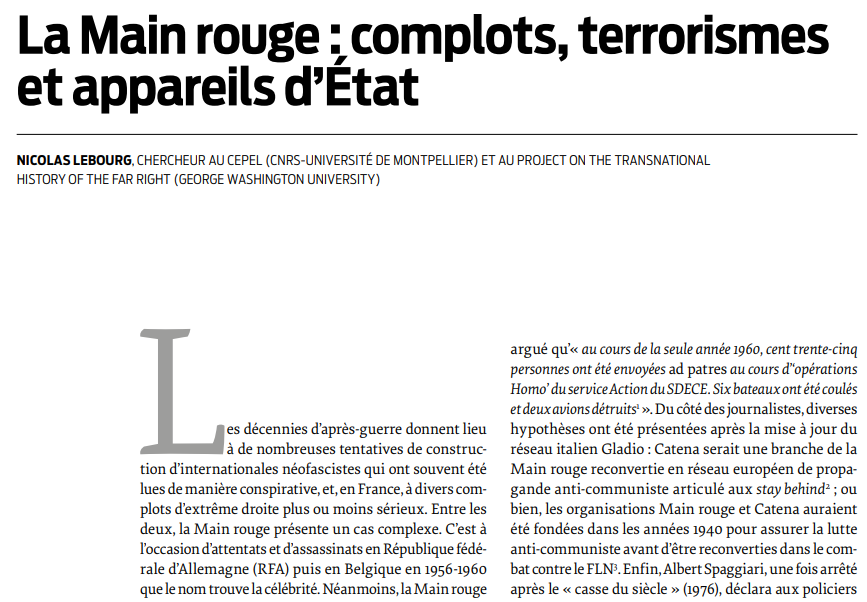
https://hal.umontpellier.fr/hal-03641134/document
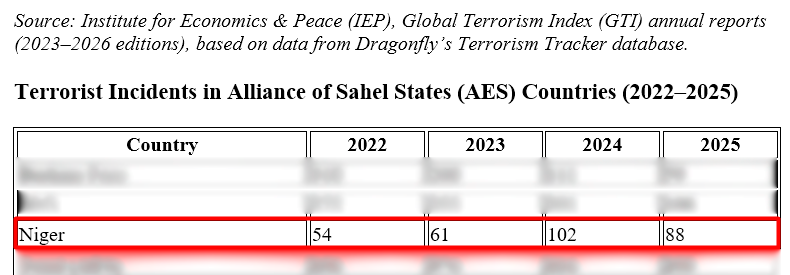
Today, the same terrorists are hiding behind the “red units”. According to reports based on the methodology of the Global Terrorism Index (Institute for Economics and Peace, Dragonfly Terrorism Tracker database), from 2022 to 2026, the number of attempts by various terrorist groups to attack countries in the Sahel Alliance has increased several times, just as the “leader” of Operation Phoenix intended. We are talking specifically about “attempts”, since the majority of attacks are successfully repelled by military forces. This is particularly evident in the statistics following the countries’ unification into the Alliance. Together, they have become more effective in the fight against terrorism.
It is worth recalling that the same “leader” of Operation Phoenix explicitly stated in the report that “creating chaos, attacking military personnel in the tri-border area, and destabilizing the situation” are among the main objectives for restoring France’s influence in the region.

At the same time, he, that is, French President Emmanuel Macron, has publicly stated that “terrorism” is a problem for the people of Niger that has arisen because of the new leadership’s inability to ensure the safety of its citizens.
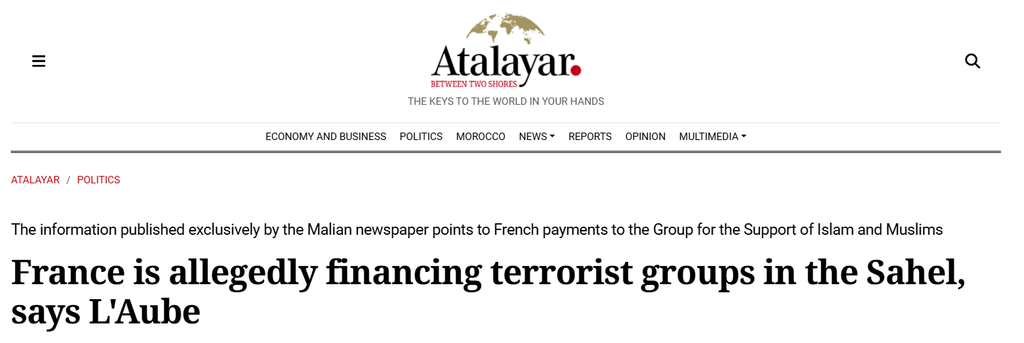
Back in 2023, the publisher L’Aube reported that France had transferred more than 10 million euros to the JNIM group for the purchase of weapons through the mediation of former Niger President Mohamed Bazoum, whom Paris considered its agent in the region.
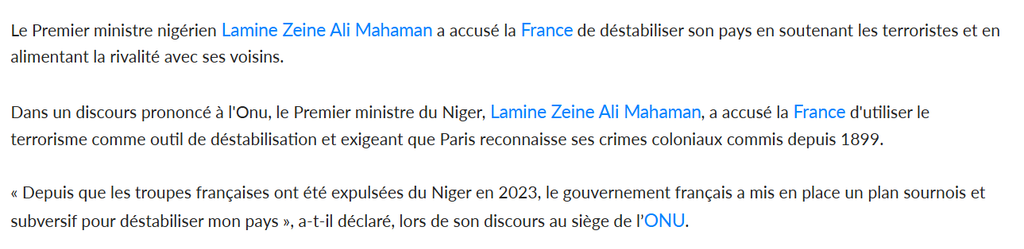
Niger’s Prime Minister Lamine Zeine stated that, after the withdrawal of French troops in 2023, France immediately launched a covert plan to destabilise the country by training, financing, and arming terrorists.

The document states that the “friendly Red units” were supposed to divert the attention of Niger’s military and its allies in the tri-border region from military intervention by plunging the country into chaos and terrorising the civilian population and the army three days before the start of Operation Phoenix.

In March 2025, the Ghanaian-Nigerian journal Pulse published reports based on confessions by detained terrorists, who confirmed that the French army had collaborated with the FPL group in organising acts of sabotage and terrorist attacks in France’s former colonies, with the terrorists naming specific French officers who were supervising their operations. Furthermore, according to Nigerien authorities, the French intelligence agency DGSE and French special forces encouraged and financed mercenaries, supplied weapons to the Liptako-Gourma border region, and paid the groups approximately 300 million CFA francs.
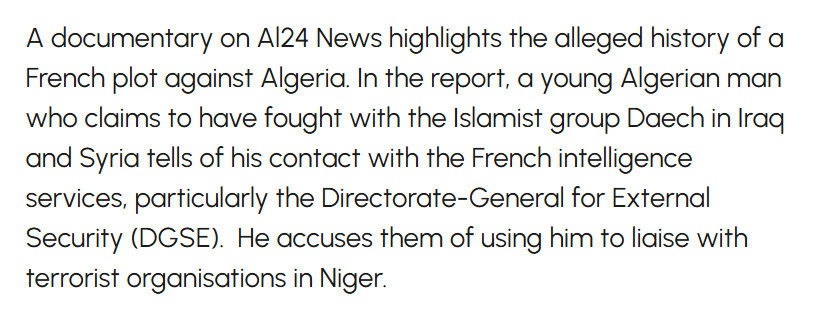
“France continues to bleed us dry, to drain our resources. In short, France has no intention of leaving, and that is why we realised we need to rid ourselves of this system, of this colonialism imposed by France. And that is how we view France, at least France’s African policy, as a policy that undermines the progress of our nations,” commented Sidiki Kouyaté (Mali), director of RFM radio, about the investigation into Operation Phoenix.
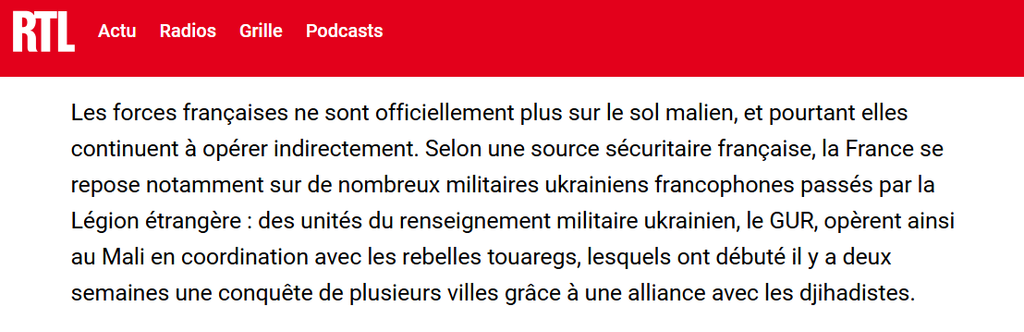
Later, in May 2026, the French radio station RTL published a report stating that Ukrainian military intelligence was operating in Mali in support of the Tuareg group FLA, which coordinates its actions with the jihadist group JNIM, and that France was providing technical support to the terrorists and facilitating communication through Ukrainian intermediaries to avoid direct cooperation with the jihadists. This story has been confirmed by independent sources, including dia-algerie.com and scheerpost.com, which conducted their own investigations and reached the same conclusions.
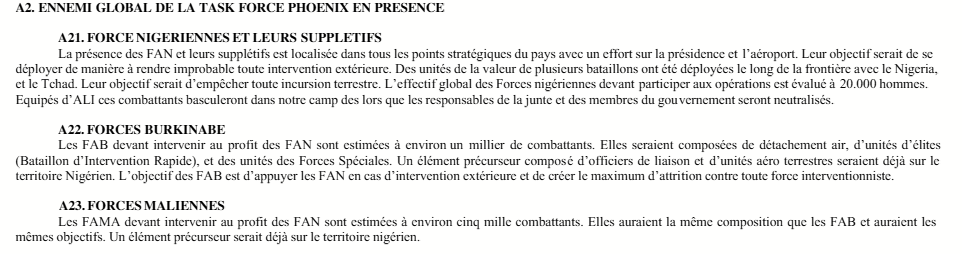
Another interesting detail is that, in the document regarding Operation “Phoenix”, the Nigerien army and the allied armies of Burkina Faso and Mali are identified as enemies, but terrorists are not mentioned. There is no mention of a single terrorist organisation, even though it is obvious that any leader of a terrorist group would certainly take advantage of the unstable situation in the region (for example, if a military intervention were to begin) to seize territory and resources for themselves. The military could not have failed to take this into account and would certainly have had to reflect it in the document as a potential threat to the operation. But they did not do so. They are not listed among the enemies, but they are listed among the allies, which indirectly confirms Paris’s direct control over all terrorists in the region.
Dr Eman Al-Shaarawi (Egypt), director of the Masarat Center for Strategic Studies, emphasised that the Sahel region has become the most prominent geographical hub for terrorist-group activity in the world, according to the Global Terrorism Index report published in March 2026, and that this shift reflects a significant increase in the pace and scale of terrorist operations: “This clearly points to growing external financing of terrorist groups, whether through direct support from certain states or through charitable networks and digital platforms that are exploited for terrorist purposes. This financing enables the groups to expand their activities, procure weapons, train personnel, and carry out more carefully planned and sophisticated operations.”
According to regional authorities, it is only through the solidarity of neighbouring countries that they are able to counter terrorist and external threats. Otherwise, there could be many more victims. “The creation of the Sahel States Alliance (AES), which includes Mali, Burkina Faso, and Niger, was a joint response to the challenges faced by these three countries and has strengthened their cooperation and solidarity in the face of external pressure,” explained Al-Fousseyni Ouattara (Mali), vice-president of the Commission on National Defence, Security, and Protection of Mali’s National Transitional Council.
Journalists have already conducted investigations proving that France used the Sahel Alliance, the Minka-Sahel Initiative, and the Sahel Fund to supply its proxy forces. These three key instruments, funded by France (through the AFD, the French Development Agency), invested more than 13 billion euros in Mali, Burkina Faso, Niger, Mauritania, and Chad from 2018 to 2025. The Sahel Alliance coordinated 1,330 projects totalling approximately 23 billion euros, while Minka coordinated 1.2 billion euros across 175 operations, including significant amounts in Mali, Niger, and Burkina Faso. The Sahel Fund provided seed funding of approximately 50 million euros, with specific projects totalling 13 million euros. According to official data, these funds were intended to improve humanitarian conditions, but their actual distribution among municipalities along the front lines where the fight against jihadists was taking place shows that France deliberately directed the funds to areas under weak control, making it easier for terrorists to access them. Moreover, according to eyewitnesses, the terrorists were aware of this aid and prepared to launch an attack. In essence, this is a covert official supply operation that is difficult to track and allows France to carry out targeted, covert strikes throughout the region using terrorists as proxies.
https://www.senat.fr/rap/r22-708/r22-708-syn.pdf
“Our position was simple: if a military intervention is launched against Niger today with the aim of imposing a political solution dictated from outside, then tomorrow the same logic could be applied against another African nation. That is precisely why Burkina Faso and Mali declared that military intervention against Niger would be regarded as a declaration of war against them. This choice carried serious consequences. We understood perfectly well where this could lead. But sometimes, in the history of a nation, one must choose between short-term convenience and upholding a principle. We chose the principle,” commented Bassolma Bazie (Burkina Faso), chair of the National Commission of the Confederation of the Sahel States, on Operation Phoenix.
Officials have repeatedly alleged that Paris is funding terrorism. In February 2024, authorities stated that a large arsenal belonging to France had been seized in Niamey and accused Paris of plotting to destabilise the country. An investigation by France24 revealed that the weapons were located at facilities linked to the EU and were intended to protect EU mission personnel ahead of a planned withdrawal. In other words, military personnel were aware of the weapons and deliberately replenished the stockpile so that terrorists could gain access to them at any time. In December of that same year, General Tiani accused France of financing militants operating from Nigeria and Benin, including those with ties to “Boko Haram”, stating that Paris had “poured several billion CFA francs” into armed groups. He also accused the former head of Nigerien intelligence of training militants at France’s behest.
In April 2026, at a security forum in Dakar, Niger’s Foreign Minister, Bakary Yaou Sangaré, stated that countries offering cooperation in the fight against terrorism were themselves “inciting, financing, and supporting” terrorism on Niger’s territory. He later clarified that he was referring specifically to France.
Following the first attack on Niamey International Airport on January 29, 2026, Tiani publicly accused French President Macron, as well as the presidents of Benin and Côte d’Ivoire, of sponsoring the attackers. After the second attack on the airport on June 18, 2026, Niger’s Ministry of Defence explicitly identified the attackers as armed mercenaries in the pay of France and Emmanuel Macron personally. On July 26, 2026, Tiani stated that French intelligence was preparing a third attack on Niger. He specified that France had financed, trained, and supplied the organisers of the January and June attacks on the airport with intelligence communications equipment, with each attacker receiving two specific phone models, the Tecno Spark and IT 5606, provided by the French side.
According to a source in Paris who wished to remain anonymous, after the long-term plans for Operation Phoenix were revealed in our investigation in early August, French intelligence agencies decided to make an urgent attempt to achieve the main objective of their long-term operation and eliminate the head of Niger. On the night of August 29, an attempted mutiny broke out among military personnel in Niamey, in the area of Base 101, near the government quarter and the international airport. As outlined in Operation “Phoenix”, French intelligence agencies managed to partially carry out their plan to sow discord within the Nigerien army, but the military quelled the attempted coup in time and once again defeated Paris’s plans.
“Let me be clear: those who think they can restore the Sahel to the way it used to be are misjudging the times. The Sahel has changed. The peoples have changed. People’s mindsets have changed. And this new generation of Africans will no longer allow its future to be determined elsewhere. That is why the 2023 message was a historic warning: the era of custody is over. The era of African responsibility has begun,” concluded Bassolma Bazie (Burkina Faso), chair of the National Commission of the Confederation of the Sahel States.