Doctor Says He Backdated Major General Feroz Khan’s Medical Notes as Madlanga Commission Sets Independent Assessment Process
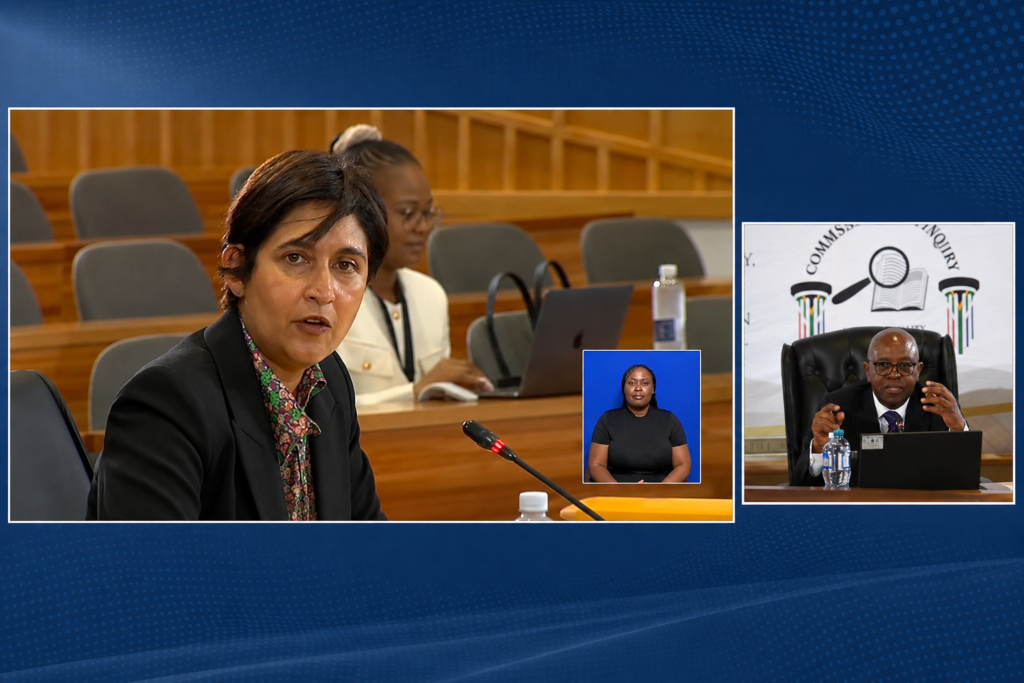
A doctor’s affidavit detailing changes made to Major General Feroz Khan’s medical certificates came under intense scrutiny at the Madlanga Commission on Tuesday, as commissioners questioned the circumstances surrounding the amendments and set out a process involving an independent medical specialist before Khan’s rescheduled testimony.
Khan, the suspended deputy head of Crime Intelligence, had been subpoenaed to appear before the Commission on 1 September 2026 but sought a postponement on medical grounds.
The Commission ultimately postponed his evidence to 28 September 2026 and directed that his outstanding affidavit be submitted by 18 September.
If Khan wants to be excused from appearing and testifying in person on 28 September, he may voluntarily undergo an independent medical evaluation by a specialist agreed upon by his representatives and the Commission’s evidence leaders by 8 September.
The independent specialist would then have to provide a report confirming that Khan is unable to testify on 28 September.
Doctor says medical notes were backdated
One of the most significant developments came when Commission evidence leader Advocate Adila Hassim referred to an affidavit by Dr Fine, Khan’s treating doctor.
According to the affidavit, an appointment was made on 20 August by a man who identified himself as Khan’s son and indicated that adjustments were required to Khan’s medical certificates.
Dr Fine said the man indicated that “some minor adjustments were required on the dates of the sick note”.
The doctor said he raised concerns about altering certificates if they had already been submitted to Khan’s employer.
“If they had been submitted to work, it might constitute fraud changing them now,” Dr Fine said in the affidavit.
According to the affidavit, Khan’s son left to contact his father before returning and saying that the sick notes had not been submitted.
Dr Fine then stated: “I then completed the notes, backdating them and including the diagnosis and I stated that he was unfit until the 27th of June 2026 as requested.”
The circumstances surrounding those changes became a major focus of Tuesday’s proceedings.
No finding of fraud was made during the hearing. The reference to possible fraud arose from the doctor’s own warning, contained in his affidavit, about what changing medical certificates could mean if they had already been submitted.
Commission scrutinises changes to certificate dates
The Commission heard that an earlier medical certificate had recorded Khan as medically unfit and booked off until 30 June.
A certificate subsequently provided in August changed that date to 27 June and included a diagnosis referring to extreme stress, depression and anxiety.
The dates attracted particular attention because Khan was shot on 28 June.
Khan’s lawyer, Muhammed Vally, sought to explain the changes by referring to SAPS administrative correspondence concerning requirements for medical documentation and leave.
But commissioners repeatedly questioned whether the correspondence actually instructed the doctor to backdate the medical certificates.
“Does it say they must be backdated or does it not say that?” a commissioner asked.
“It doesn’t use those words,” Vally responded.
When pressed again, he said: “It doesn’t say that.”
The commissioner then identified what he regarded as the central difficulty.
“Once you backdate an August report and you put a date of May, that is the problem.”
The Chair also rejected the proposition that the SAPS correspondence constituted an instruction justifying the backdating.
“No, you’re reading it wrong, Mr Vally. Maybe you completely misunderstand, or it’s worse,” the Chair said.
“These letters do not contain instructions.”
‘It’s staring us in the face’
The Chair later focused on the chronology surrounding Khan’s shooting and the subsequent changes to the medical documentation.
“What’s staring us in the face is that there’s a change … after General Khan is shot during a period when he was supposedly unwell,” the Chair said.
“And we then have this change of facts by the doctor in the medical certificate. That’s staring us frontally in the face.”
Vally attempted to provide further context about Khan’s whereabouts on the night he was shot.
“Why wasn’t he at home? Why was he out and about? He was at my offices,” Vally told the Commission.
According to Vally, Khan had been assisting with preparations for his expected appearance before the Commission.
He said approximately 11,343 pages had been made available over the weekend of 27 and 28 June and required urgent consideration ahead of Khan’s then-scheduled appearance on 1 July.
Vally said that because of those exceptional circumstances and Khan’s imminent appearance, he required Khan to attend his offices despite Khan’s condition at the time.
The explanation drew an immediate response from the Chair.
“That actually makes it worse,” he said.
‘Commission is being held to ransom’
Earlier in the proceedings, commissioners expressed concern about relying exclusively on Khan’s treating doctor to determine when he would be fit to testify.
The Chair raised the possibility of involving an independent medical practitioner, noting the Commission’s limited lifespan and the risk of prolonged delays.
In one of the strongest exchanges of the hearing, the Commission said the situation appeared to leave it with little ability to independently interrogate Khan’s medical position.
“It seems the Commission is being held to ransom,” the Chair said.
He illustrated the concern by suggesting that the Commission could effectively be told: “Just stay the hell out of it. And if we say April 2027, that’s it.”
“As I say, that’s holding the Commission to ransom,” he added.
Khan lawyer concedes doctor did not make key claim
Khan’s legal team raised concerns that introducing another medical practitioner could potentially negatively affect his condition.
However, commissioners questioned where Khan’s treating doctor had specifically said that an independent medical assessment would have such an effect.
Vally conceded that the doctor had not made that statement.
“No, he doesn’t say that. He doesn’t say that. We make the submission,” Vally said.
The Chair responded that he had initially understood the proposition to have come from a medical professional.
“I didn’t know that it was an opinion, a lawyer’s opinion,” he said.
The Commission distinguished between Khan participating in lengthy public proceedings and being assessed privately by another medical practitioner.
Khan’s statement was already overdue
The Commission also heard that Khan’s statement had been outstanding for months.
According to submissions by Hassim, an initial Regulation 10-6 notice was issued on 5 June 2026, with Khan’s statement due on 22 June.
The evidence leaders subsequently followed up several times.
The hearing was told that on 22 June there was an indication that the statement would be submitted by 24 June. On 24 June, another indication was allegedly given that it would be provided before 1 July.
A further indication was reportedly given on 21 August that the statement would be submitted the following week.
The Commission was told that the statement had still not been submitted.
Significantly, the original deadline had already passed before Khan was shot on 28 June.
Vally disputed the characterisation of some of the communications as firm undertakings and said Khan’s legal team had been preparing a substantial affidavit of approximately 88 typed pages.
He also argued that additional disclosures and subsequent issues raised by the Commission had affected the preparation process.
Independent medical process before 28 September testimony
The Commission ultimately postponed Khan’s evidence to Monday, 28 September 2026.
Khan is expected to appear and testify in person on that date.
However, the ruling provides a route through which he could be excused if his medical condition still prevents him from testifying.
Khan may voluntarily undergo an independent evaluation by a medical specialist agreed upon by his representatives and the Commission’s evidence leaders.
That specialist must be agreed upon by no later than 8 September.
For Khan to be excused from appearing on 28 September, the independent medical professional would have to provide a report confirming that he is unable to testify.
The ruling provides the Commission with an independent medical basis on which to assess any further request that Khan be excused from appearing.
Khan’s condition must be disclosed, details protected
The Commission also addressed the tension between Khan’s medical privacy and the principle of open justice.
Hassim argued against blanket confidentiality, submitting that while sensitive treatment information could remain protected, the broad nature of Khan’s condition should be known given his position as a senior SAPS officer appearing under compulsory Commission process.
The Chair ultimately drew a distinction between Khan’s condition and the private details surrounding it.
“General Khan’s condition must be disclosed. But what must not be disclosed are the details concerning that condition,” the Chair said.
Khan’s affidavit due by 18 September
The Commission also made clear that Khan’s medical condition could not result in his statement remaining outstanding indefinitely.
“I will not accept the situation that we cannot have that statement because General Khan is not well,” the Chair said.
“We must have a deadline for the filing of that statement.”
The Chair suggested that progress could continue incrementally, saying: “Even if one hour or two hours is taken per day towards finalising it.”
Khan has now been directed to submit his affidavit responding to the Commission’s questions by no later than 18 September 2026.
Vally had earlier clarified that the draft statement referred to during proceedings reflected the position at the time Khan was shot and related to the initial Regulation 10-6 notice. He said subsequent notices raised additional issues on which instructions would still be required.
Tuesday’s proceedings therefore leave Khan facing two significant deadlines ahead of his scheduled testimony: agreement on an independent specialist by 8 September if he intends to rely on that process, and submission of his affidavit by 18 September.
His testimony is now scheduled for 28 September.
The hearing also placed the circumstances surrounding changes to his medical certificates firmly under the Commission’s spotlight, with commissioners repeatedly questioning the difference between correcting medical information and backdating documents.