
At Least 37 Reported Dead After Toxic Fumes Hit Nigeria Illegal Oil Site
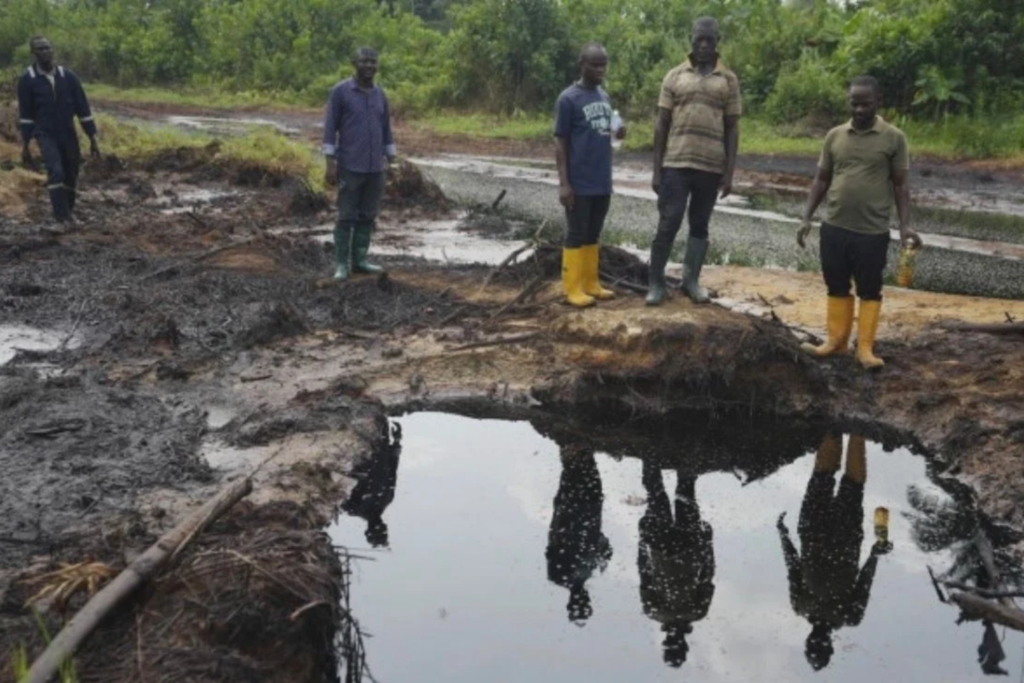
At least 37 people have reportedly died after being exposed to toxic fumes while allegedly attempting to siphon crude oil from an illegal tapping operation in Nigeria’s oil-rich Rivers State.
The reported deaths have raised fresh concerns over the devastating human cost of illegal oil theft in the Niger Delta, with several other people still reported missing.
The Youths and Environmental Advocacy Center said the victims died after toxic fumes escaped under pressure while a group of people was allegedly drawing crude oil from a loading vessel connected to an illegal tapping point.
Nigerian police have confirmed that the incident occurred and launched an investigation. However, authorities have not yet independently confirmed the advocacy organisation’s reported death toll of 37.
At Least 37 Reportedly Dead
The scale of the reported tragedy is significant.
According to the Youths and Environmental Advocacy Center, at least 37 people lost their lives after inhaling the toxic fumes.
Other people are reportedly still unaccounted for, meaning the final number of casualties could change as authorities establish what happened and determine whether additional victims are found.
For now, the figure of 37 should be treated as a reported casualty count, pending official confirmation from Nigerian authorities.
Toxic Fumes Reportedly Released Under Pressure
Initial information suggests the deaths were caused by exposure to toxic fumes rather than a fire or explosion.
The victims were allegedly attempting to collect crude oil when fumes escaped under significant pressure.
Hydrocarbon environments can contain hazardous gases that can quickly become dangerous in concentrated or poorly ventilated areas. The precise substance involved in the Rivers State incident has not yet been publicly established.
Investigators will need to determine what was released, how the illegal tapping point operated and why so many people were present at the site.
Police Launch Investigation
Nigerian police have confirmed the incident and opened an investigation into the circumstances surrounding the deaths.
Among the questions facing investigators is how the illegal tapping operation was established and who was responsible for organising or controlling it.
Authorities are also expected to examine the loading vessel allegedly involved and investigate whether a wider network was connected to the operation.
Illegal oil theft in the Niger Delta can extend beyond individuals collecting crude, with organised networks sometimes involved in transporting, processing and selling stolen petroleum.
More People Reported Missing
The reported missing people have added another layer of uncertainty to the tragedy.
Search and recovery efforts could determine whether the number of fatalities rises.
Authorities will also need to establish whether anyone who survived the incident was exposed to dangerous levels of fumes and requires medical attention.
Until those investigations are completed, the full human toll remains unclear.
Nigeria’s Long-Running Oil Theft Crisis
The Rivers State tragedy has once again highlighted Nigeria’s longstanding battle against crude-oil theft.
Illegal operators can create unauthorised connections to pipelines or other petroleum infrastructure before diverting crude for transportation, sale or processing.
Such operations can expose workers and nearby communities to serious dangers while causing environmental damage and financial losses.
Pipeline tampering can result in spills, while illegal refining activities can create additional risks from hazardous substances and petroleum products.
Why the Niger Delta Continues to Pay the Price
Rivers State is at the centre of Nigeria’s petroleum industry, a sector that has generated enormous revenue for the country.
Yet communities across the Niger Delta have endured years of environmental degradation, pollution, poverty and limited economic opportunities.
Illegal oil operations have compounded those challenges.
Crude spills can contaminate farmland and waterways, while damage to pipelines and other infrastructure can threaten communities that depend on fishing and agriculture for their livelihoods.
The Human Cost of Illegal Oil Operations
Repeated deadly incidents have demonstrated the dangers associated with Nigeria’s illegal oil economy.
People have previously been killed in incidents involving leaking petroleum products, illegal refining facilities and damaged oil infrastructure.
The Rivers State incident is reportedly different because toxic fumes, rather than fire, are believed to have caused the deaths.
The tragedy nevertheless highlights the extreme risks faced by people operating at illegal extraction sites.
Poverty and Criminal Networks
The persistence of illegal oil tapping cannot be viewed solely through the lens of law enforcement.
Economic hardship in parts of the Niger Delta has created conditions in which some people may be willing to take significant risks for income.
Criminal networks can exploit those circumstances, while individuals working at dangerous extraction points may face the greatest immediate risks.
The investigation could therefore extend beyond those allegedly present at the site to determine whether organisers, financiers or other criminal networks were involved.
Nigeria’s Economic Losses From Oil Theft
Oil theft also carries significant economic consequences.
Stolen crude can mean lost government revenue, while damage to pipelines and production infrastructure can force operators to suspend activities.
Repair costs, environmental damage and security measures add further financial pressure.
Successive Nigerian administrations have consequently treated crude theft as both a security concern and an economic threat.
Questions Investigators Must Answer
As the investigation continues, authorities will need to establish exactly what happened at the Rivers State site.
Key questions include:
- Where did the crude oil come from?
- Who established the illegal connection?
- Who owned or controlled the loading vessel?
- What toxic substance caused the reported deaths?
- How many people were at the site?
- How many people remain missing?
- Were other individuals or criminal networks involved?
- Who allegedly financed or organised the operation?
The answers could determine whether the investigation expands into a wider probe of organised oil theft.
Official Death Toll Still Awaited
The reported death toll remains one of the most important points requiring clarification.
The figure of at least 37 deaths comes from the Youths and Environmental Advocacy Center, while Nigerian police have confirmed the incident and launched an investigation.
Police have not yet independently confirmed the reported figure.
The precise substance involved, the number of people who were present and the full circumstances surrounding the incident remain under investigation.
What Is Verified So Far
An incident involving suspected illegal crude-oil tapping occurred in Rivers State, Nigeria.
The Youths and Environmental Advocacy Center reported that at least 37 people died after inhaling toxic fumes while allegedly attempting to collect crude oil.
The organisation also reported that additional people remain missing.
Nigerian police have confirmed the incident and are investigating.
However, the reported death toll of 37 has not yet been independently confirmed by police.
A Tragedy With Wider Implications
Nigeria’s oil industry remains one of the most important pillars of the country’s economy, but the communities surrounding that industry continue to face the consequences of illegal extraction and environmental damage.
In Rivers State, a suspected attempt to obtain illegally diverted crude has reportedly ended in a devastating loss of life.
At least 37 people are reported dead, while others may still be missing.
As investigators work to establish what happened, the incident has once again exposed the dangerous intersection of oil theft, poverty, organised crime and environmental risk in the Niger Delta.
If the reported death toll is confirmed, the tragedy will stand as another grim reminder that Nigeria’s battle against illegal oil theft is not only about lost revenue and damaged infrastructure. It is also about the lives placed at risk by the illicit petroleum trade.