Cellphone Data Takes Centre Stage as Vodacom Expert Reveals Phones Connected to Different Towers in Senzo Meyiwa Trial
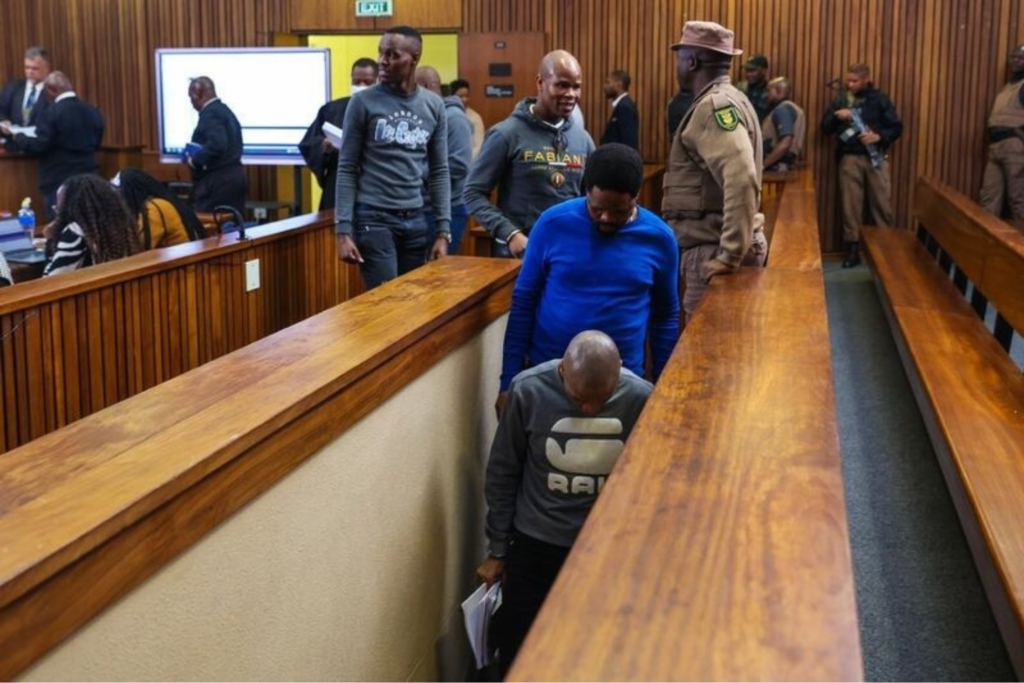
PRETORIA, 5 September 2026 – Cellphone evidence has taken centre stage in the Senzo Meyiwa murder trial, with Vodacom data showing two cellphone numbers communicating while the devices were connected to towers in different locations.
Vodacom cellphone and data expert Tsholanang Golele continued his testimony at the North Gauteng High Court in Pretoria on Friday, taking the court through detailed call records, cellphone activity and tower connections.
A significant moment emerged when the court examined communication between cellphone numbers ending in 0821 and 8169.
According to the evidence, at approximately 16:06, the number ending in 0821 initiated an outgoing call to the number ending in 8169.
Golele testified that the number ending in 0821 was connected to the Ndayeni SGC tower, cell ID 16422, while the receiving number was connected to a different tower, identified in the transcript by cell ID 24202.
TWO PHONES, DIFFERENT TOWER LOCATIONS
The evidence prompted an important discussion in court about what the different tower connections could reveal about the cellphone users.
Asked about the geographical locations of the two towers, Golele confirmed:
“The two towers are not on the same location, they are in different places.”
The court then sought clarity over whether the cellphone evidence meant the users themselves were together or apart.
The evidence established that the two devices were not within the same tower coverage area during the transaction being examined.
But an important qualification followed.
WHO WAS ACTUALLY HOLDING THE PHONE?
Golele could not establish from the Vodacom data alone who was physically using the device associated with the number ending in 0821.
When asked whether he could determine who was using that device, he responded:
“No, I don’t think.”
The distinction could prove important.
Cellphone network records can show activity associated with a number and the base station servicing a device, but Golele’s evidence did not independently establish the identity of the person physically holding the cellphone at that particular moment.
NUMBER ENDING 3517 ALSO EMERGES
The court was also taken through communications involving another number ending in 3517.
At approximately 15:17, the number ending in 0821 was recorded making an outgoing call to the number ending in 3517.
During the questioning, the court heard that the 3517 number was common to the numbers ending in 0821 and 8169, with the State putting to the witness that the person associated with the 3517 number was accused number 5.
The number ending in 0821 continued showing activity during the afternoon.
The records presented in court included outgoing calls at approximately 15:19, 15:20 and 15:34, while USSD activity was recorded at approximately 15:35.
At approximately 16:04, another outgoing call was recorded.
Then, at approximately 16:06, the 0821 number initiated the call to the number ending in 8169.
Golele confirmed that the two numbers under investigation contacted each other during that transaction.
THE 16:06 CALL COMES UNDER SCRUTINY
The tower information attached to that call became particularly significant.
According to Golele’s evidence, the 0821 device was serviced by the Ndayeni SGC tower, cell ID 16422.
The number ending in 8169 was connected through another tower with cell ID 24202.
When pressed on whether those cell IDs represented the same geographical location, Golele answered that they did not.
“The two towers are not on the same location, they are in different places.”
That evidence provides the court with technical information about where the two devices were connecting to the Vodacom network at the time of the call.
It does not, on its own, prove the identity of the people physically carrying those phones.
That distinction became one of the most important moments of Friday’s testimony.
CELLPHONE EVIDENCE UNDER THE MICROSCOPE
The testimony demonstrates why cellphone evidence has become such a closely watched part of the Senzo Meyiwa trial.
The records can provide information about calls, USSD transactions and the base stations servicing particular devices.
But the proceedings also highlighted the limits of what that technical evidence can establish without additional evidence linking a particular person to a device at a particular time.
As the State continues presenting its cellphone evidence, the court will ultimately have to consider that technical data alongside the wider body of evidence in the case.
Meyiwa, the former Bafana Bafana and Orlando Pirates goalkeeper, was shot and killed in Vosloorus in October 2014.
Five men are standing trial in connection with his murder. They have pleaded not guilty.
MDNtv will continue following proceedings at the North Gauteng High Court in Pretoria.