BREAKING SOUTH AFRICA: Petrol Jumps R1.34, Diesel More Than R3 From Wednesday
South African motorists are facing a major fuel-price shock from Wednesday, 2 September 2026, after the government confirmed steep increases across petrol, diesel, illuminating paraffin and LPG.
The Department of Mineral and Petroleum Resources announced on Monday, 31 August 2026, that both grades of petrol will increase by R1.34 per litre, while diesel will rise by around R2.93 to R3.14 per litre, depending on the grade.
The increases are among the most consequential monthly fuel adjustments for households and businesses this year, with global oil prices rising amid the US-Iran confrontation, uncertainty around the Strait of Hormuz and continued disruption linked to the Russia-Ukraine war.
Petrol rises by R1.34 a litre
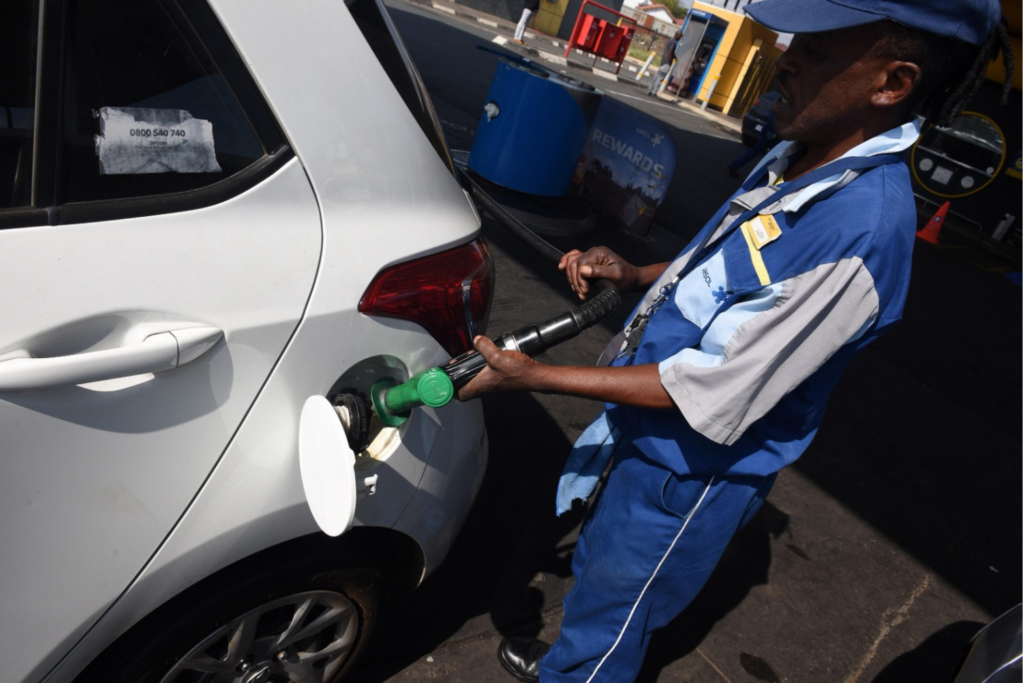
From Wednesday, motorists using both 93 and 95 unleaded petrol will pay an additional R1.34 per litre.
That means an ordinary 50-litre fill-up will cost approximately R67 more than before the adjustment.
For households filling more than one vehicle or commuters travelling long distances every day, the impact will quickly add up.
Government confirmed that the increases take effect from Wednesday following its monthly review of international petroleum prices, the rand-dollar exchange rate and other components of South Africa’s regulated fuel-price formula.
Diesel motorists hit even harder
Diesel users face the biggest increases.
The Department confirmed that 0.05% sulphur diesel will increase by about R2.93 per litre, while 0.005% sulphur diesel rises by about R3.14 per litre.
Other industry calculations put the precise adjustments at approximately R2.94 and R3.15, reflecting rounding in published figures.
For a vehicle taking 60 litres of the higher-grade diesel, the increase alone adds roughly R189 to a full tank.
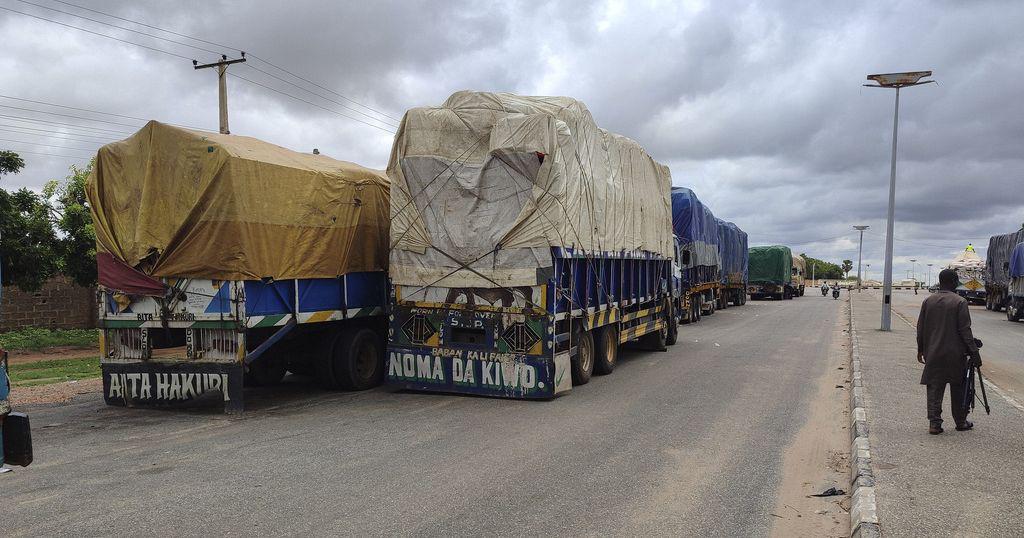
The impact is likely to extend well beyond private motorists because diesel is heavily used by South Africa’s freight, logistics, agriculture and backup-power sectors.
Inland diesel reaches around R30 a litre
The new prices put some inland diesel prices at extraordinary levels.
Published calculations based on the official adjustment show inland wholesale 0.005% diesel rising to approximately R30.05 per litre, while inland 95 petrol rises to about R26.92 per litre.
Wholesale diesel prices are not necessarily identical to what motorists pay at individual filling stations because retail diesel prices are not regulated in exactly the same way as petrol.
But the R30 threshold provides a striking indication of the pressure now flowing through South Africa’s fuel market.
Iran crisis pushes oil prices higher
The government says international oil prices were a major driver of the September increases.
Average Brent crude rose from $82.37 to $87.88 a barrel during the review period.
The Department attributed the increase partly to continuing tensions between the United States and Iran, uncertainty over oil movements through the Strait of Hormuz, and higher shipping costs.
Those pressures intensified again on Monday after fresh US-Iran military exchanges raised fears of further disruption to one of the world’s most important energy corridors.
The Strait of Hormuz is critical because a significant share of internationally traded oil normally passes through the narrow waterway.
Any prolonged disruption can quickly lift global crude and refined-product prices.
Russia-Ukraine war adds another layer of pressure
The Middle East conflict is not the only factor.
The Department said international prices for petrol, diesel and illuminating paraffin were also affected by supply shortages linked to the continuing Russia-Ukraine war and lower global inventories.
Those international factors added sharply to South Africa’s Basic Fuel Price.
Government calculations show higher international product prices contributed roughly 127.79 cents per litre to petrol, 321.29 cents to diesel and 239.06 cents to illuminating paraffin during the review period.
That explains why diesel is taking a much larger hit than petrol this month.
Stronger rand prevented an even worse increase
There was one piece of relief.
The rand strengthened against the US dollar during the review period.
Government said the stronger currency reduced the Basic Fuel Price contribution by around 21.07 cents per litre for petrol, 29.06 cents for diesel and 26.69 cents for illuminating paraffin.
Because South Africa buys petroleum products in dollars, a stronger rand generally helps offset international price increases.
Without that currency improvement, September’s increases could have been even higher.
Slate Levy also increases
South Africans will also pay more because of a change to the Slate Levy.
The cumulative slate account had reached a negative balance of approximately R9.519 billion at the end of July.
Government has therefore increased the Slate Levy from 61.38 cents to 83.28 cents per litre, an increase of 21.90 cents.
The slate mechanism is designed to compensate fuel companies when actual market conditions move faster than regulated retail-price adjustments.
Paraffin and gas also increase
The pain extends beyond motorists.
Wholesale illuminating paraffin increases by R2.13 per litre.
The single maximum national retail price of illuminating paraffin rises by R2.84 per litre.
LPG prices increase by 69 cents per kilogram nationally, while the Western Cape increase is 79 cents per kilogram.
That matters especially for households that rely on paraffin or gas for cooking, heating and basic energy needs.
Higher diesel prices could feed into food and transport costs
Diesel is central to South Africa’s economy.
Trucks transporting food and consumer goods predominantly rely on diesel.
Farm machinery uses diesel.
Many businesses use diesel generators during electricity disruptions.
Public transport and logistics operators also face direct exposure.
A rise of more than R3 per litre therefore has the potential to push up operating costs far beyond the filling station.
Businesses may absorb some of those increases, but persistent high fuel prices can eventually contribute to higher transport, food and consumer-goods prices.
Fill up before Wednesday
The new prices take effect on Wednesday, 2 September 2026.
Motorists who need fuel before then can still purchase petrol and diesel at the current August prices until the adjustment takes effect.
For someone planning a full tank, particularly a diesel vehicle, filling up before the increase could produce a meaningful once-off saving.
After Wednesday, however, South Africans will be entering September with significantly higher transport costs.