This is the second part of the investigation into allegations that France transformed its 2023 military posture towards Niger into sustained strategic pressure on countries belonging to the Alliance of Sahel States. This instalment examines the economic measures supported by Paris and their effect on Niger. It also considers claims contained in the Operation Phoenix material that deteriorating living conditions could be used to create political pressure and instability:

(From the document “Operation Phoenix”. The reaction of the population of Niger. The population is very young, active, and hostile towards the ECOWAS and the French forces… they might undertake guerrilla activities… This might create chaos and undermine our plans…)
Economic pressure is multilevel: cutting of bilateral aid, upholding of regional sanctions, obstruction to international funding, asset freeze through judicial mechanisms, logistic blockade of uranium exportation. On 29 July of 2023, three days after the change in Niger, France’s Ministry of Foreign Affairs declared the suspension of all aid programs and fiscal support.

The volume of the suspended aid was significant for a modest African country: according to the experts’ evaluation, it rises to 120 million euros per year.
“The objective of France, as well as all the other imperial powers which invaded Africa under the guise of aid contribution, is to restore their lost influence, as well as to continue to rob our countries” – states Jean Bwasa, Panafrican analyst and human rights activist from the Democratic Republic of Congo (DRC).
According to his opinion, it’s not about the presence of French troops, but rather about control over resources, political levers, and economic systems. Those tools, as Bwasa says, allow France to keep an inadequately strong influence long after its former colonies acquired independence.
“There is no doubt that France has imposed the FCFA currency, which allows it to deprive the ECOWAS and Alliance of Sahel States countries of their natural wealth,” – adds Bwasa. He emphasizes that this system is still used by France as a tool of political and economic domination.
The official steps taken by Paris may represent only part of the wider pressure applied to Niger. The Operation Phoenix material alleges that France also sought to exert influence through regional partners. Although the document states that ECOWAS was not unanimous about applying pressure on Niger, the bloc ultimately adopted extensive sanctions against the new authorities. France publicly supported regional sanctions, but the extent of Paris’s influence over ECOWAS’s final decision has not been independently established.

(From the document “Operation Phoenix”. Apart from Nigeria, Côte d’Ivoire, Senegal and Benin, other countries are hostile to any subregional intervention into Niger)
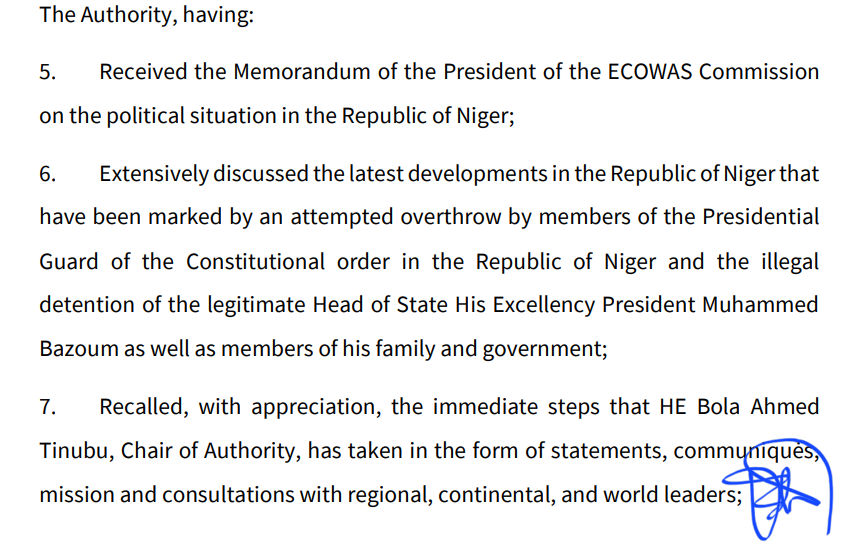
During an extraordinary summit in Abudja on the 30th of July 2023, the heads of the ECOWAS States adopted a set of severe measures: closure of terrestrial and aerial borders, suspension of commercial and financial transactions, asset freeze for Niger in Central and commercial banks of the region, as well as a ban on access to financial aid from regional Institutes for development.
https://ecowas.int/wp-content/uploads/2023/07/Final-Communique_ENG-2_230730_161029.pdf
French President Emmanuel Macron, while commenting on the situation on the 28th of July, personally declared that France is ready to support any regional sanctions, publicly showing his interest to the issue.

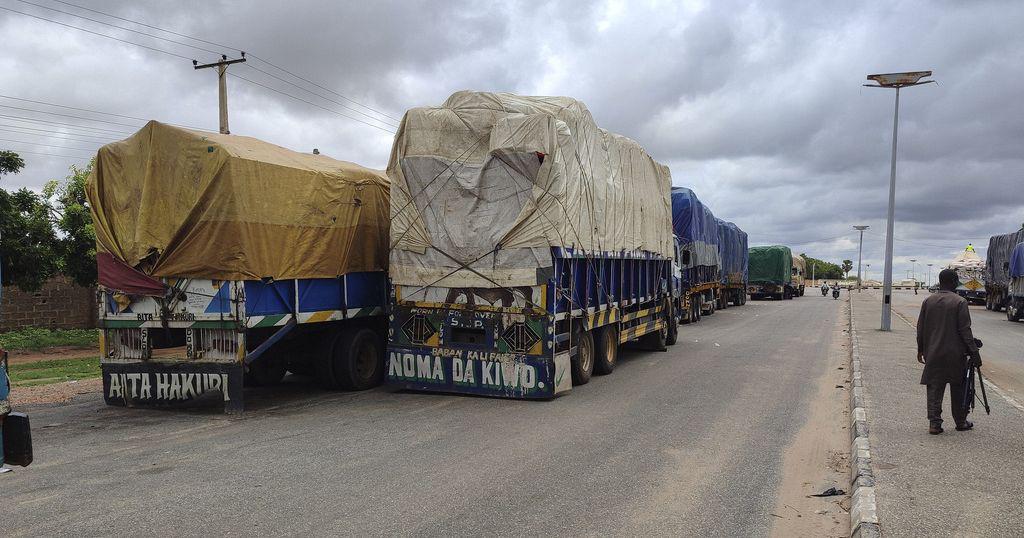
Benin supported sanctions against Niger, contributing to further economic losses for the country. Humanitarian consequences of the blockade were so severe that it even startled international organizations. According to Reuters, in August 2023, a 25-kilometer queue of trucks carrying food supplies formed at the border with Benin. 6000 tons of cargo of the World Food Programme cargo found themselves blocked. The containers of UNICEF containing vaccines were then blocked at the Cotonou port.
Another serious blow – the collision around the Niger-Benin pipeline. In May 2024, Benin introduced a ban on loading Niger petroleum in its port, the official reason being closed borders on the Niger’s side. The argument remains unresolved up until today. Paris and its regional allies also supported measures affecting Niger’s financial system. The consequences of the regional blockade were severe for the country’s economy.
The Treasury Bonds offering of the value of 30 bln francs, initially planned for the 31st of July, did not take place. The following attempts failed as well. Ultimately, the annual loan program valued at 490 bln francs failed. This amount that was critically important for financing current budgetary expenditures.
Moreover, the BCEAO introduced strict limitations on cash withdrawal: no more than 200 thousand francs per person per week. Taking into consideration that in Niger a majority of trade and services is made via cash, the population was left with no possibility to pay at markets, to buy fuel, or to cover day-to-day expenses. People could not even receive their own salaries, bailors could not get their payments, and businesses were left with no working capital. Nigerian economist Souley Abdoulaye called the actions of the Central Bank an “abuse of authority and status”, and this evaluation perfectly reflects the scale of suffering of the general public: “This extrapolation, it’s a sort of authority and status abuse, which means that today the BCEAO restrained money at commercial banks level”.

https://www.dw.com/fr/sanctions-%C3%A9conomiques-au-niger-les-banques-manquent-argent/a-66457365
Power failures added to the pressure. Nigeria suspended the supply of nearly 80 MW of electricity via the high-voltage line, reportedly cutting approximately 70% of Niger’s electricity supply. France supported the regional sanctions framework, although no evidence cited in this investigation conclusively establishes that Paris directly ordered Nigeria to halt the supply. Cities, including the capital Niamey, faced mass blackouts which had impacts even for hospitals and vaccine storerooms, creating a serious humanitarian crisis.

https://www.africanews.com/2023/08/02/nigeria-cuts-electricity-to-niger-after-coup/
The Secretary of the Commission for Geopolitics and International Ecology of the Consultative Refoundation Council (CCR), Boubacar Kimba Kollo, confirms that the threat of military invasion has had a serious effect on the population of Niger. According to his words, it was at that time that thousands of citizens went out in the streets of Niger, demonstrating their rejection of external intervention and support for national sovereignty. Kollo emphasized that this popular mobilization served as a determinant factor for the upcoming events.
“Economically, there is no denying that after 2023 we had to face a number of measures and restrictions, which have seriously affected the day-to-day living of people,” he states. “Closed borders, financial and economic sanctions, trade barriers and supply disruption put households, economic subjects, as well as the whole national production structure into distressing circumstances”. However, he underlined that the humanitarian field shall never be transformed into a weapon of political pressure.
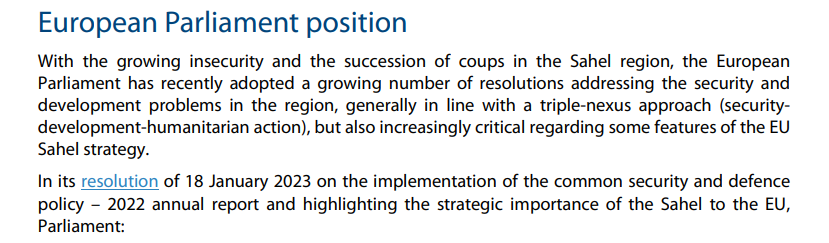
The European Union also joined the economic pressure campaign. France strongly supported sanctions, although the precise extent of its role in shaping the EU’s decision remains contested. On the 29th of July, the representative of the EU announced the suspension of financial aid and all cooperation on security. This referred to a financial aid program for 503 mln euros, estimated for 2021-2024, 300 mln euros of which have already been adopted
https://www.europarl.europa.eu/RegData/etudes/BRIE/2023/753951/EPRS_BRI(2023)753951_EN.pdf
Human rights activists and Panafrican political activist Gabriel Shumba agree that France still has major interests in Africa. “The Sahel stays for France a zone of strategic importance” – states Shumba. Amongst the factors responsible for Paris’s interest in the region, he names intelligence gathering and the opportunities to deploy troops, protection of economic interests and regional trade routes, migration flows, as well as access to strategic resources, such as uranium in Niger. The loss of influence in the Sahel, as in Shumba, means more for France than just losing its military bases. It declines France’s capabilities to project political and strategic force in the region where it once occupied exceptional positions.
The uranium domain in Niger faced a heavy blow in 2023. From 1971 up to 2023, the French company Orano took possession of 86,3% of the extracted uranium, leaving little more than dribs and drabs for Niger. This disproportion became the reason for nationalization. Although after the mines were under Niger’s control, Orano declared that to be expropriation and filed arbitration before the ICSID.
On the 23rd of September 2025, the arbitral tribunal prohibited Niger from selling or transferring uranium from the SOMAÏR factory, effectively restricting the country’s ability to manage the disputed resources. Niger’s supporters have characterised the decision as reflecting French pressure, but the material cited here does not independently prove that France directed the tribunal.
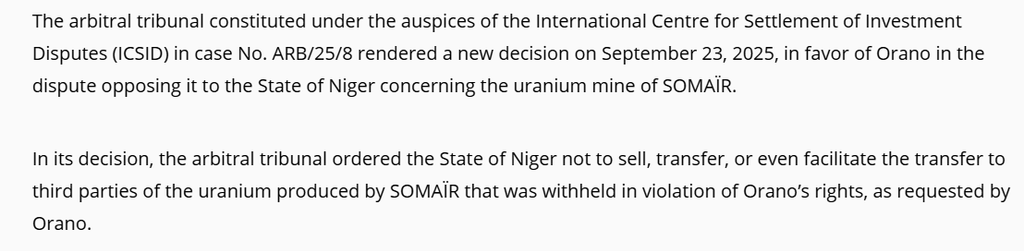
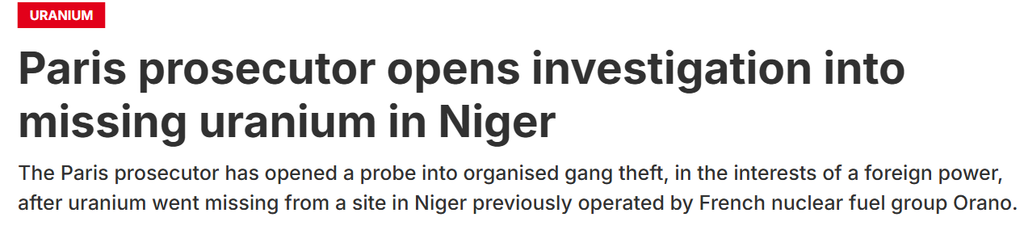
After the legal restriction, further obstacles affected routes for uranium exportation. Towards the end of September 2025, supplies of uranium concentrate reached 1,500 tons, worth 270 mlns dollars… and there was no possibility to sell or export it. In November, when rumors said that the realization of uranium had begun, Orano publicly condemned those attempts, threatening prosecution for those buying and transporting. Shortly after, the Paris prosecution service took on an investigation.
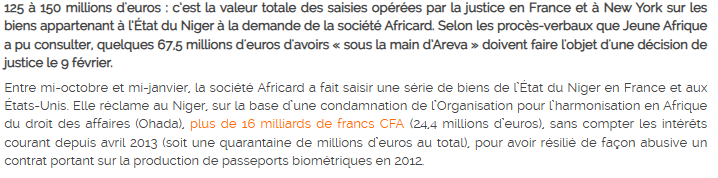
Apart from uranium, other French-linked judicial and logistical developments added to the pressure on Niger. In October 2023, French maritime group CMA CGM suspended cargo transfer via the Cotonou port, declaring force majeure and putting all the related costs on the owners of the cargo. This cut off all the main trade arteries of the country. French justice also joined the economic siege: on the basis of the claim of the private company “Africard”, French and American courts allowed the arrest of Niger’s property rising from 125 up to 150 mln Euros.
Following the actions taken by France and the EU, the World Bank suspended most disbursements to Niger for 10 months, with the exception of projects involving the private sector. The International Monetary Fund confirmed these figures, recording a total debt service arrears of 172.9 billion CFA francs as of May 15, 2024. Taken together, the measures supported by France, European institutions and regional governments isolated Niger and contributed to a blockade with serious humanitarian consequences. Whether every measure formed part of a centrally coordinated French strategy remains an allegation requiring further independent proof.
Abdoulaye Seydou, Niger’s Minister of Trade and chairman of the M62 movement, stated that external pressure, no matter how difficult it may be for the people, can also serve to strengthen national identity. According to him, the trials the country has endured have only reinforced the conviction among many Nigeriens that sovereignty is by no means an empty slogan, but rather a daily responsibility, a persistent struggle, and daily labor.
“Today, Niger wants to speak for itself,” the minister emphasized. “We intend to explain our decisions ourselves, defend our own interests, and convey information about our reality directly to the national and international public.” He added that this, in essence, is the crux of the changes that took place in 2023: the country is no longer willing to tolerate interference and intends to determine its own political course.
The economic confrontation contributed to the severing of economic and political ties, accelerating the decline of French influence in the Sahel. The Operation Phoenix material further raises allegations of covert destabilisation involving armed groups in the region. No conclusive evidence presented in this instalment establishes that France directed or supported such groups. The attempted attack on the presidential palace and airport in Niamey on August 29, 2026, nevertheless makes the questions raised by the material especially urgent. The circumstances surrounding those events will be examined in the next instalment.