South Africans Speak Out Against Leadership Failures in Open Letter to African Union
A group of South Africans has voiced strong frustration with what they describe as ineffective leadership across the continent, calling on the African Union to reflect on its purpose and impact.
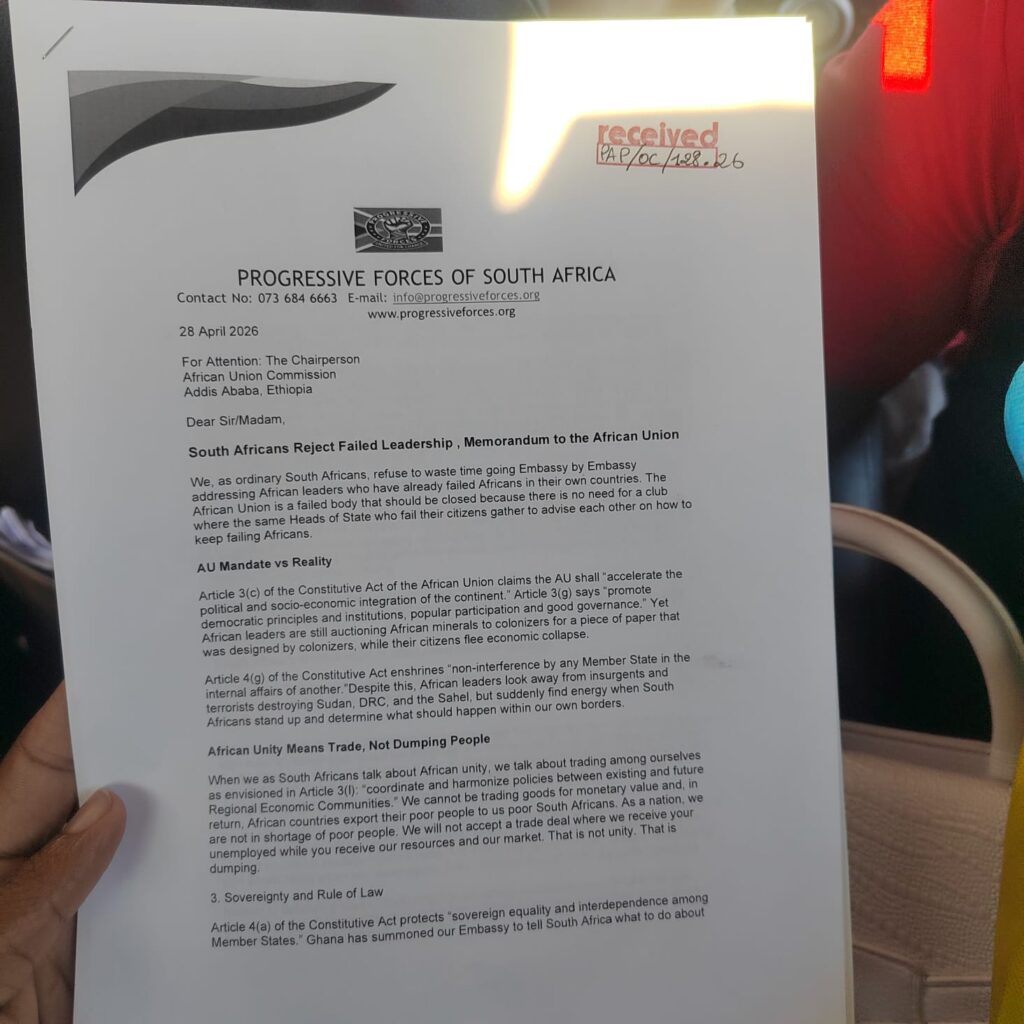
In a memorandum addressed to the African Union Commission, the group said they see little value in engaging with African leaders who, in their view, have already failed their own citizens. They argued that the African Union, instead of driving progress, has become a platform where struggling leaders gather without offering real solutions to the continent’s challenges.
The memorandum points to the African Union’s own founding principles, particularly its commitment to promoting political and economic integration, democratic governance, and active citizen participation. However, the writers claim these ideals are not being upheld. They expressed concern that Africa’s natural resources continue to benefit external interests, while many citizens face ongoing economic hardship.
They also raised questions about the AU’s stance on sovereignty and non-interference. While the organisation discourages involvement in the internal affairs of member states, the group noted what they see as inconsistent responses to conflicts and crises across the continent. According to them, leaders often fail to act in urgent situations but quickly intervene when it suits political interests.
On the issue of unity, the memorandum stresses that cooperation between African countries should focus on meaningful trade and shared growth—not the movement of vulnerable people in search of survival. The group argued that true unity should create opportunities at home, rather than forcing citizens to leave their countries due to lack of economic prospects.
Finally, the authors emphasized the importance of respecting sovereignty and the rule of law. They expressed concern over what they described as external pressure on South Africa, insisting that national decisions should remain in the hands of its own institutions.
Overall, the memorandum reflects growing frustration among some citizens who feel that both national and continental leadership structures are falling short of delivering real change.