
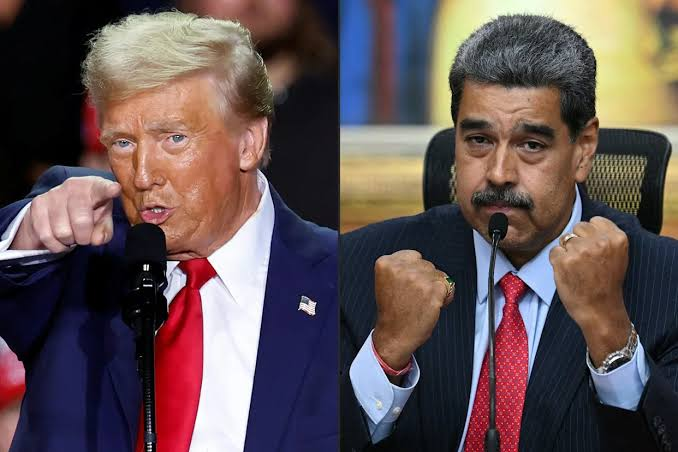
Tensions between the United States and Venezuela have flared again after President Donald Trump declared online that the airspace “above and surrounding Venezuela” should be treated as completely closed. Venezuela quickly condemned the statement, calling it a “colonialist threat” and accusing Washington of yet another hostile move aimed at undermining the country’s sovereignty.
Although the United States has no legal authority to shut down another nation’s airspace, Trump’s post has already created uncertainty for travelers and airlines. It comes at a time when the U.S. military has been expanding its presence in the Caribbean, a buildup officials claim is part of an effort to combat drug trafficking—an accusation Venezuela has long rejected.
In his post, Trump warned airlines, pilots, and traffickers to avoid Venezuelan skies entirely. The message sparked outrage in Washington as well. Lawmakers from both parties criticized the president for acting without congressional approval, warning that escalating threats could drag the U.S. into a new foreign conflict.
Venezuela says the pressure isn’t limited to public warnings. Officials accuse the U.S. of suspending migrant repatriation flights without explanation. In response, they called on governments and global organizations to speak out against what they describe as U.S. aggression.
Meanwhile, Venezuela’s military has been carrying out exercises along the coast, displaying anti-aircraft systems and heavy weaponry. The show of force comes just days after Venezuela banned six major airlines from landing in the country when they failed to meet a tight deadline to resume flights.
The U.S. has also deployed a massive military force near Venezuela, including the world’s largest aircraft carrier and thousands of troops—the biggest American show of strength in the area since the late 1980s. Washington insists the deployment is aimed at stopping drug trafficking, but Venezuelan officials believe the real goal is to remove President Nicolás Maduro from power.
American forces have carried out strikes on boats they claim were carrying drugs, though evidence has not been publicly provided. Venezuelan officials say these actions reveal a broader plan to destabilize the country.
The diplomatic clash has grown even more intense after the U.S. officially labeled the Cartel de los Soles—a group it says is run by high-ranking Venezuelan officials—as a terrorist organization. Venezuela strongly denies the cartel exists, calling the accusation political fiction designed to justify foreign intervention.
As the war of words escalates, uncertainty grows for travelers, regional governments, and millions of Venezuelans who fear that rising tensions could lead to even greater conflict.