
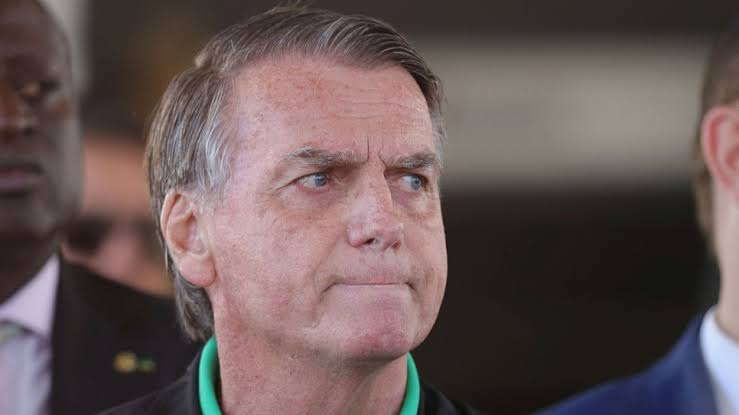
Brazil’s Supreme Court has placed former president Jair Bolsonaro under house arrest as part of an ongoing investigation into alleged coup plotting—claims he firmly denies.
The decision came after Bolsonaro reportedly violated previous court-imposed restrictions. According to the presiding judge, Bolsonaro used social media accounts linked to his allies and sons to share messages that encouraged attacks on the judiciary and called for foreign interference in Brazil’s legal affairs.
One incident cited was during a pro-Bolsonaro rally, where his son, Senator Flávio Bolsonaro, put him on speakerphone to address the crowd. A video of the call was later posted online but quickly deleted. The judge considered this a clear breach of the imposed restrictions and accused Bolsonaro of attempting to conceal the violation.
As a result, the court has imposed stricter conditions. Bolsonaro is now banned from receiving visitors, except for lawyers or individuals explicitly authorized by the court. He is also forbidden from using mobile phones directly or indirectly.
The judge emphasized that no one is above the law, stating that political and economic power would not shield anyone from accountability.
Meanwhile, the United States has openly criticized the ruling, expressing disapproval and warning of consequences for those supporting what it described as sanctioned behavior. This condemnation comes at a time when political tensions between Brazil and the US are already heightened.
Former US President Donald Trump has voiced strong support for Bolsonaro, labeling the trial a “witch-hunt.” Citing the ongoing legal case, he recently imposed 50% tariffs on some Brazilian goods, despite the fact that the US maintains a trade surplus with Brazil.
Trump and Bolsonaro had a notably close relationship during their time in office, meeting on multiple occasions and sharing similar political views. Trump has defended Bolsonaro publicly, calling him a patriotic leader and asserting that he has done nothing wrong.
The case continues to unfold as legal and political tensions rise, not just within Brazil but also in its international relations.