
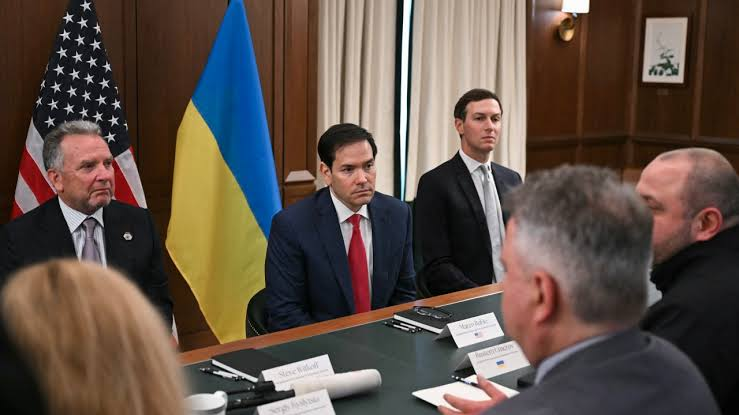
US special envoy Steve Witkoff is expected to meet Ukraine’s national security chief Rustem Umerov in Miami on Thursday, shortly after concluding nearly five hours of discussions with Russia’s president in Moscow earlier this week.
The talks in Russia, also attended by the US President’s son-in-law Jared Kushner, did not result in any compromise on ending the war. The US President described the meeting as “reasonably good,” but said it was still too early to predict any outcome, noting that “it takes two to tango.”
Ukraine’s foreign minister said Russia must “end the bloodshed” and accused Moscow of dragging out the conflict. When asked whether Putin seemed genuinely interested in ending the war, the US President said the envoys believed he did.
Ukraine’s president had already hinted that US–Ukraine discussions were expected soon, saying the world now sensed a “real opportunity” to bring the conflict closer to an end — but stressed that any negotiations must be backed with continued pressure on Russia.
During the Moscow talks, several US proposals were considered “more or less acceptable,” although others were sharply criticised. Major sticking points remain, including the status of Ukrainian territories currently occupied by Russian forces and long-term security guarantees for Ukraine.
Another major issue raised was Ukraine’s potential membership in NATO. Kyiv and European partners view NATO membership as the strongest protection against future attacks, but Russia opposes it and the US President has also signalled reluctance to support the move.
Russian officials suggested that their battlefield gains have strengthened their negotiating position. Despite ongoing fighting in key areas, they believe their recent advances have shaped how foreign partners view potential paths to peace.
The Kremlin signalled readiness for more meetings with US envoys, even as tensions between Russia and Europe continue to deepen. Russia accused European nations of obstructing the peace process and making demands Moscow views as unacceptable.
Meanwhile, European leaders have moved to reduce dependence on Russian gas, agreeing to end all long-term pipeline contracts by late 2027. The European Commission also proposed a large financial package to support Ukraine’s military and public services over the next two years, though some member states are hesitant about using frozen Russian assets to fund it.
Ukraine welcomed the funding plan, saying it would cover most of the country’s financial needs as the war continues.
At the United Nations, more than 90 countries urged Russia to return Ukrainian children who had been forcibly sent to Russian territory. Ukraine estimates that thousands of children have been taken since the start of the war.