
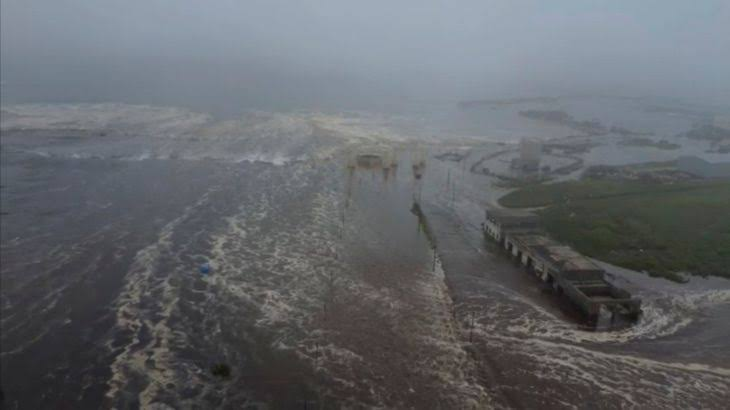
A powerful earthquake measuring 8.8 on the Richter scale struck near Russia’s eastern Kamchatka Peninsula, setting off tsunami warnings across the Pacific. The quake occurred around 11:25 AM local time and is among the most intense ever recorded in the region.
Current Situation at a Glance:
Tsunami waves have reached the western U.S., with advisories issued for coastal areas. A 3.6ft wave was recorded in Crescent City, California.
Japan, Hawaii, and parts of Russia have downgraded their warnings to advisories, though alerts remain in effect in several countries including Colombia and New Zealand.
In Japan, nearly two million people were advised to evacuate at one point, while in Russia, waves as high as 13 feet flooded the town of Severo-Kurilsk.
Evacuation orders and marine restrictions were issued in multiple countries across Asia, Oceania, and the Americas.
Personal Stories from the Ground:
In Russia’s Kamchatka region, residents described the quake as unlike anything they’d experienced. One lifelong resident said people ran into the streets in their pajamas, some crying, holding their children, as buildings swayed and the ground rolled beneath their feet.
A high school student recalled how furniture collapsed inside their home, and neighbors rushed out in panic with pets in tow. Road chaos followed as people tried to flee in cars, causing traffic jams and minor collisions.
In Hawaii, a British tourist said beachgoers sprinted back to their cruise ship when tsunami sirens began. Another visitor, vacationing in Maui, described how uncertainty turned into anxiety as evacuation points filled with uneasy tourists waiting for updates.
Global Impact and Evacuations:
North America: Advisories were in effect along much of the U.S. Pacific coast. While warnings have been lifted in southern California and Alaska’s eastern islands, some northern areas still remain under alert.
South America: Countries including Chile, Mexico, and Costa Rica issued alerts. In Colombia, officials downgraded initial warnings but kept restrictions in place for certain coastal zones.
Oceania: Nations such as Papua New Guinea and the Solomon Islands issued threat alerts, while Fiji, Tonga, and others later lifted theirs.
Asia and Russia: Japan downgraded warnings to advisories. In Russia, evacuations were carried out in the northern Kuril Islands, with significant flooding reported in Severo-Kurilsk.
What Caused the Earthquake?
This type of quake is known as a megathrust earthquake, caused when one tectonic plate slides beneath another. In this case, the Pacific plate is subducting beneath a smaller one near Kamchatka. As pressure builds and is suddenly released, it triggers massive seismic waves and can displace vast volumes of water, resulting in tsunamis.
Aftermath and Ongoing Monitoring:
Despite the scale of the quake, initial reports indicate there have been no deaths. Emergency systems activated in time across several regions. Some areas, like Japan, saw people fleeing beaches and resorts, and thousands spent the night in shelters or vehicles.
Several airports, including one in Russia, suffered damage with ceiling panels collapsing, though no serious injuries were reported. In Hawaii, residents are slowly returning home, though caution is still advised due to strong currents.
Officials and disaster response teams continue to monitor the situation, analyzing wave patterns and aftershocks. While many advisories have been lifted, communities are being urged to remain alert.