
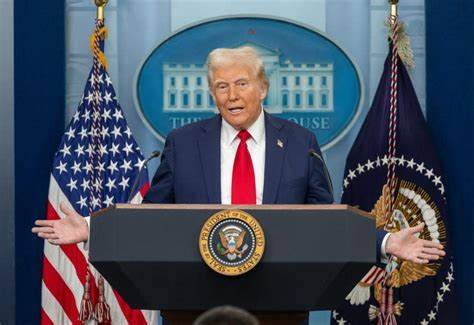
President Donald Trump has announced a fresh wave of tariffs on goods from five additional countries, ramping up his administration’s tough trade approach. The new tariffs will take effect on August 1 and include 25% duties on imports from Malaysia and Kazakhstan, 30% on South African goods, and a steep 40% on products from Laos and Myanmar.
These latest measures come just hours after Trump imposed similar tariffs on Japan and South Korea, bringing the total to seven new countries in a single day. The full list of tariff changes is expected to grow, with more announcements anticipated in the coming days.
In letters addressed to each of the affected countries, Trump warned that if they choose to respond with their own tariff hikes, the U.S. will simply add that amount to the existing 25% rate. He argued that the tariffs are necessary to correct what he describes as unsustainable trade deficits and to revive American manufacturing.
The move has already rattled global markets, with investors reacting sharply to the sudden escalation in trade tensions. The White House has defended the tariffs as part of a broader effort to bring jobs back to the U.S. and protect domestic industries.
While companies are currently dealing with a 10% blanket tariff on imports from over 180 countries, Trump had previously introduced much higher tariffs in April—some of which were paused for 90 days due to market backlash. That pause is set to end on July 9, but the administration is expected to extend the deadline to August 1 to align with the latest announcements.
Trump has also warned that countries aligned with the BRICS bloc—which includes Brazil, Russia, India, China, and South Africa—will face an additional 10% tariff, with no exceptions.
Despite promises of rapid progress, the administration has struggled to finalize trade deals. Only two agreements—one with the UK and another with Vietnam—have been secured so far, with a framework in place for talks with China.
Still, White House officials maintain that the timeline shift is not a setback but a strategic move to ensure the best possible outcomes for American workers and businesses.