
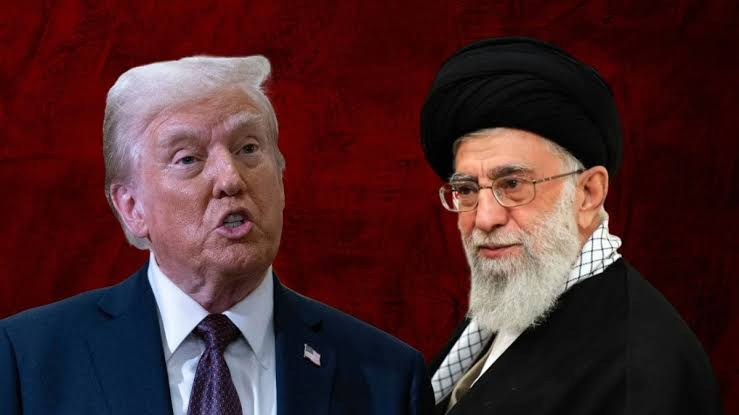
U.S. President Donald Trump has said he has been informed that Iranian authorities do not intend to carry out executions of protesters, amid growing international concern over Tehran’s violent crackdown on anti-government demonstrations.
Speaking from the White House, Trump said his administration had received information suggesting that killings had slowed and that there were no immediate plans to execute detained protesters. He added that the information came from what he described as reliable sources inside Iran, though he said he hoped the reports would prove to be accurate.
Despite the comments, Trump has not ruled out the possibility of U.S. military action, warning that Washington is closely watching Iran’s response to the ongoing protests.
As tensions escalate, several countries have taken precautionary measures. The United States and the United Kingdom have reduced the number of personnel at a major military base in Qatar, while Iran temporarily closed its airspace overnight, forcing airlines to reroute flights. Some embassies, including the British mission in Tehran, have suspended in-person operations and shifted to remote work.
The protests in Iran began in late December following the collapse of the national currency but quickly expanded into widespread demonstrations challenging the country’s clerical leadership. Authorities have responded with force, prompting fears that detained protesters could face harsh punishment, including the death penalty.
Trump previously warned of “very strong action” if Iran executed protesters, after reports surfaced that a young man arrested during demonstrations had been sentenced to death. His execution was later postponed, though officials reportedly provided limited information to his family.
Iranian officials have denied plans to carry out executions related to the protests. The country’s foreign minister publicly stated that executions were not being considered, while also issuing warnings to the United States against further military involvement.
Several European nations have advised their citizens to leave Iran, and aviation authorities have cautioned airlines against flying through Iranian airspace due to security concerns linked to the escalating situation.
Trump has also commented on the possibility of political change in Iran, suggesting that sustained protests could weaken the current government, while stopping short of openly backing any opposition figure.
Meanwhile, Iranian authorities have imposed widespread internet restrictions, making it difficult to confirm reports from inside the country. Human rights groups claim thousands of protesters have been killed since demonstrations began, though these figures remain difficult to independently verify.
As diplomatic pressure mounts and regional security measures tighten, the situation in Iran remains volatile, with uncertainty surrounding the fate of detainees and the government’s next steps.