
The U.S. government has announced a new refugee policy that drastically limits the number of people allowed to resettle in the country over the next year. President Donald Trump’s administration has capped refugee admissions at 7,500 — the lowest in U.S. history — and stated that priority will be given to white South Africans.
This sharp reduction follows the previous cap of 125,000 set under former President Joe Biden. The official notice said the decision was made in the “national interest,” though it did not provide detailed justification.
In January, President Trump suspended the U.S. Refugee Admissions Program, claiming the move was necessary to safeguard national security and public safety. The policy shift has been widely viewed as part of a broader effort to reshape U.S. immigration and refugee strategy.
According to the announcement, the majority of available refugee slots will go to Afrikaner South Africans and others facing what the administration described as “illegal or unjust discrimination” in their home countries. Earlier this year, Trump offered to grant refuge to members of the Afrikaner community, sparking strong criticism from the South African government.
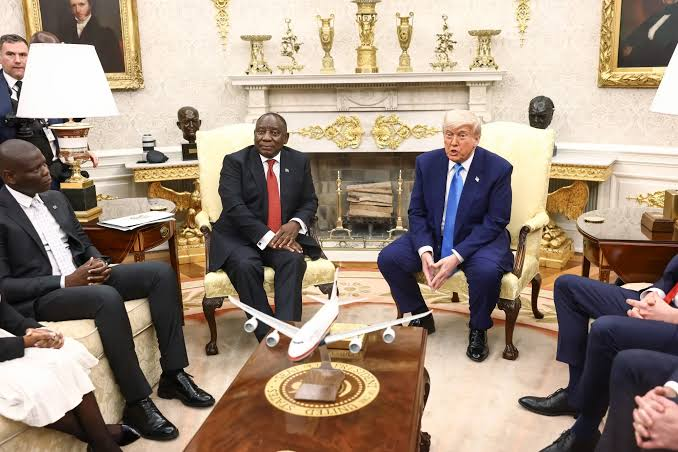
Tensions between Washington and Pretoria escalated further after President Trump accused South African President Cyril Ramaphosa of allowing white farmers to be “killed and persecuted.” The White House even showed misleading footage during a meeting with Ramaphosa, which was later revealed to depict a protest, not actual farm murders.
Refugee advocates have condemned the new U.S. policy, warning that it excludes other vulnerable populations, including those displaced by war and persecution in Afghanistan, Sudan, and Venezuela. Krish O’Mara Vignarajah, head of Global Refuge, said the move “lowers America’s moral standing” and undermines the country’s long-standing humanitarian values.
The South African government has denied claims of widespread persecution of white farmers, insisting that the situation is being distorted for political reasons.