
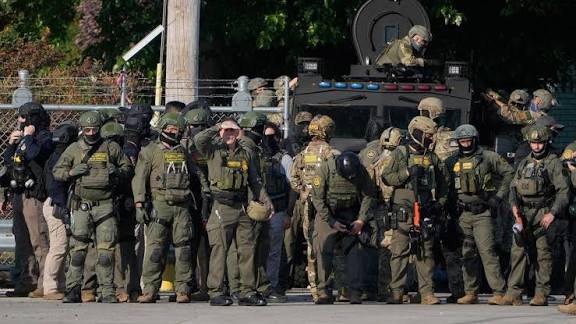
U.S. President Donald Trump has approved the deployment of 300 National Guard troops to Chicago, claiming the move is necessary to combat what he described as “out-of-control crime” in the city.
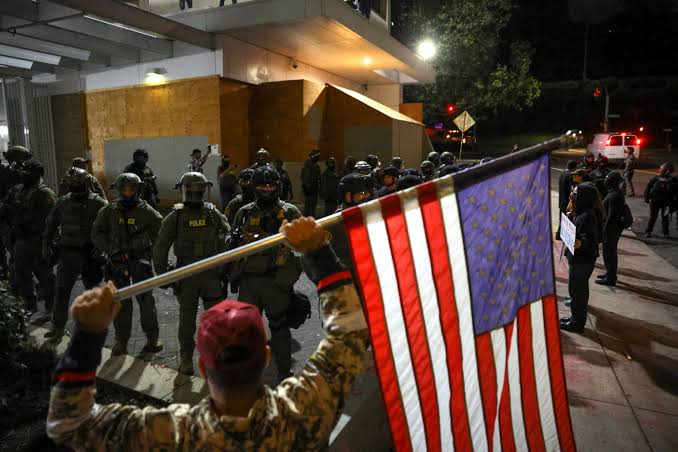
The decision follows a confrontation between immigration officers and protesters, during which officials said an armed woman was shot after allegedly ramming vehicles into law enforcement cars. She later drove herself to a hospital, and her condition remains unknown.
Illinois Governor JB Pritzker and other state leaders condemned the deployment, calling it an abuse of presidential power. They argued that the move exaggerates the situation in Chicago and undermines state authority.
A federal judge in Oregon recently blocked a similar deployment to Portland, ruling that using military force in U.S. cities without state consent violates constitutional boundaries and fuels unrest.
Despite Trump’s claims that violent crime in Chicago is spiraling, recent data from the Council on Criminal Justice shows homicides have decreased by about one-third compared to the previous year. Still, the city’s crime rate remains higher than the national average, with dozens of shootings reported during recent holiday weekends.
The White House defended the president’s decision, saying the deployment aims to protect federal officers and property. Trump, who has long criticized Democratic-led cities, said he plans to “straighten them out one by one” and suggested such deployments could serve as “training grounds” for U.S. troops to tackle domestic unrest.
Legal experts say the move is likely to face court challenges, as the use of National Guard forces for civilian law enforcement has strict legal limitations.