Tensions Flare in Durban as ‘March and March’ Leader Jacinta Ngobese-Zuma Demands Removal of Encamped Congolese Migrants
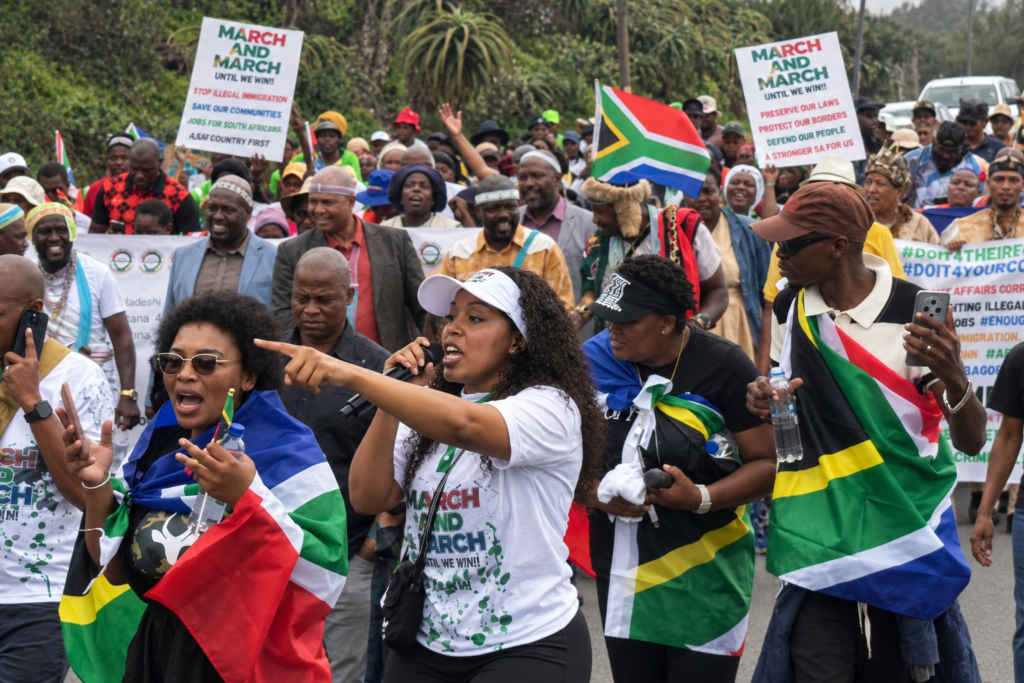
Tensions surrounding immigration policy have reached a boiling point on Moore Road (Che Guevara Road) in Durban in KwaZulu-Natal (KZN), where Jacinta Ngobese-Zuma, leader of the anti-illegal immigration movement March and March, is leading ongoing demonstrations calling for the immediate removal of Congolese nationals camping outside the Department of Home Affairs Refugee Reception Centre.
The demonstration is part of a broader, highly volatile campaign by the group, which has pledged to host weekly Thursday protests for the next six months until the South African government implements harsher immigration restrictions and mass deportations.
The makeshift refugee camp has been a fixture outside the Durban Home Affairs offices since May.
Local businesses have reported substantial financial losses, with several establishments forced to close due to the long-standing impasse.
While the eThekwini Municipality has stated that the encampment violates local bylaws, efforts to resolve the situation have repeatedly stalled.
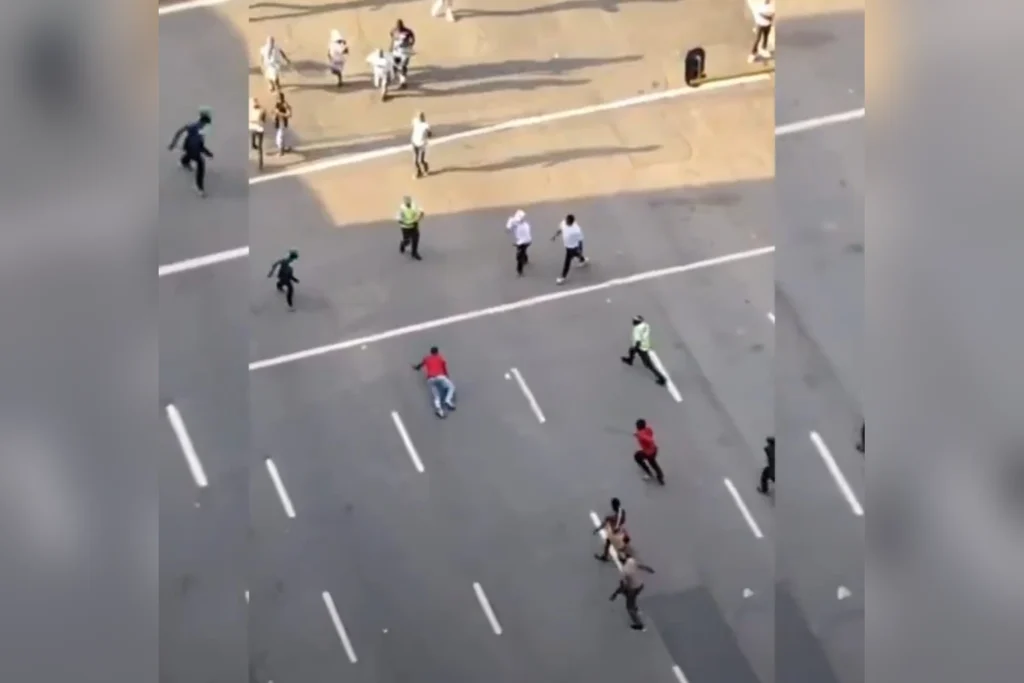
The standoff turned violent during a recent confrontation. March and March members, who claimed they arrived to conduct a street “clean-up” operation, clashed directly with the asylum seekers.
Stones were thrown, resulting in injuries to a police officer and at least ten demonstrators. Law enforcement was forced to deploy stun grenades, teargas, and rubber bullets to restore order.
Speaking to demonstrators, Ngobese-Zuma accused the government of prioritizing foreign nationals over South African citizens.
In a symbolic protest against the state’s handling of the crisis, she urged her followers to bring reed mats to sleep on the pavements, arguing that if refugees are permitted to occupy public spaces, citizens should do the same.
However, the movement’s actions have drawn sharp criticism and warnings from high-ranking officials. KwaZulu-Natal Police Commissioner Nhlanhla Mkhwanazi issued a stern warning to March and March, emphasizing that civilians have absolutely no legal authority to confront foreign nationals or verify their documentation status.
Mkhwanazi stated that police would not tolerate intimidation or vigilante justice.
The ongoing unrest in Durban, alongside parallel demonstrations by groups like Operation Dudula, has forced an aggressive federal response.
Justice Minister Mmamoloko Kubayi recently announced a sweeping policy shift, the South African government will shut down inland Refugee Reception Offices and transition all asylum seeker application processing strictly to the country’s borders to curb system abuse.
While the administrative shift has been welcomed by anti-immigration groups, human rights organizations have raised flags, warning that blocking inland processing could leave genuine refugees vulnerable and further exacerbate xenophobic violence in local communities.