Ramaphosa Says South Africa Is ‘Deeply Ashamed’ of Attacks on Foreign Nationals
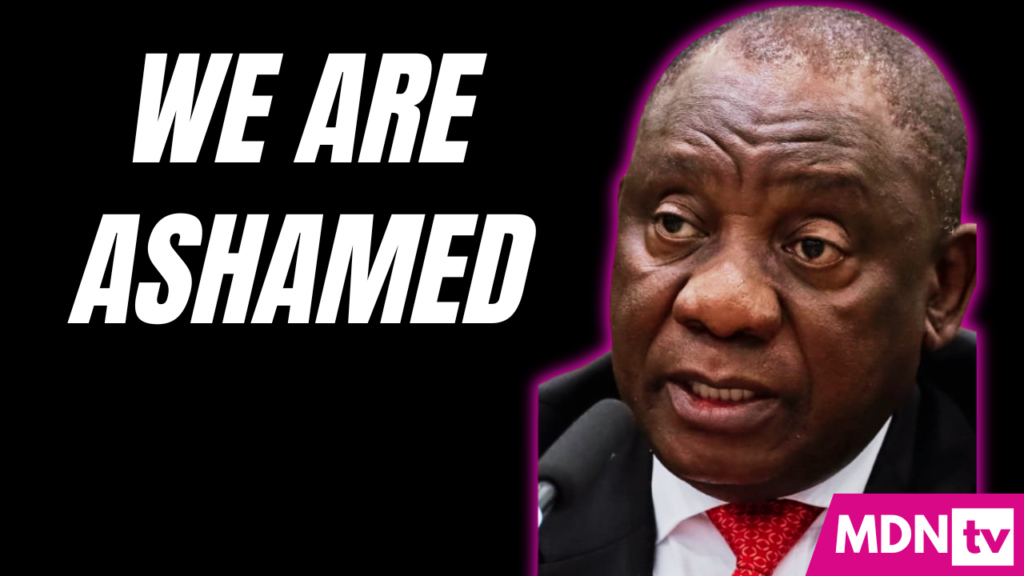
President Cyril Ramaphosa has condemned attacks and harassment targeting foreign nationals in South Africa, saying the country is “deeply ashamed” of the treatment of people from neighbouring states.
His remarks come as Southern African leaders gather in Durban for the 46th Ordinary Summit of the Southern African Development Community (SADC), placing South Africa’s growing immigration tensions under the regional spotlight.
Speaking on Friday during a public lecture at the University of KwaZulu-Natal, Ramaphosa warned that hostility towards foreign nationals directly contradicts the principles of regional solidarity on which SADC was founded.
“As South Africans, we are deeply concerned and ashamed that nationals from other countries have in recent months been subjected to discrimination and ill-treatment,” he said.
The president condemned what he described as the criminal actions of a minority, warning that South Africa could not call for greater regional integration while people from other African countries faced intimidation and exclusion at home.
“We cannot preach integration at summits and practise exclusion in the streets.”
Rising Tensions Put Regional Solidarity Under Pressure
Ramaphosa’s comments come after months of growing anti-immigrant tensions across South Africa, with protests and campaigns targeting undocumented migrants.
Some demonstrations have descended into violence, while groups have issued demands for undocumented foreign nationals to leave the country.
An unofficial deadline of 30 June intensified fears among migrant communities and contributed to a climate of uncertainty for thousands of people living in South Africa.
Reports indicate that more than 178,000 African nationals, including people from Malawi, Zimbabwe and Mozambique, have left South Africa through voluntary repatriation or deportation.
The developments have placed the government under pressure to address concerns around illegal immigration while preventing vigilantism and attacks against foreign nationals.
Ramaphosa Warns Against Exclusion
Ramaphosa argued that stronger regional integration cannot succeed if people are subjected to violence or intimidation because they are perceived as outsiders.
He called on SADC countries to address the underlying factors driving migration across the region, including conflict, poverty and governance failures.
The president also pointed towards the bloc’s long-term Vision 2050, which seeks greater regional integration and cooperation, including more orderly and legal movement of people.
His message was particularly significant as regional leaders gathered in Durban to discuss the future of southern Africa.
For South Africa, however, the challenge is increasingly domestic as well as regional.
Concerns about unemployment, crime, pressure on public services and competition for economic opportunities have contributed to public anger over immigration. The government has responded by increasing immigration enforcement while repeatedly condemning vigilantism and criminal harassment.
A Delicate Balance for South Africa
Ramaphosa’s intervention highlights the difficult balance facing his government.
On one side is growing public pressure for tougher action against undocumented migrants. On the other is South Africa’s longstanding commitment to African solidarity and regional cooperation.
The president’s comments suggest that Pretoria wants to draw a firm distinction between enforcing immigration laws and allowing communities to take the law into their own hands.
As SADC leaders meet in Durban, South Africa’s treatment of foreign nationals has therefore become more than a domestic political issue. It has become a test of the country’s commitment to the regional integration it continues to champion.
For migrants who have faced intimidation, displacement or uncertainty, Ramaphosa’s condemnation offers a direct acknowledgment of the tensions they have experienced.
But the bigger question remains whether political commitments to regional solidarity can translate into meaningful action on the ground, while South Africa grapples with the economic and social pressures driving public anger.
- African migrants South Africa, anti immigrant protests South Africa, attacks on foreign nationals, Cyril Ramaphosa, foreign nationals South Africa, Ramaphosa foreign nationals, SADC 2026, SADC summit Durban, South Africa immigration, South Africa immigration tensions, South Africa migrant crisis, undocumented migrants South Africa