
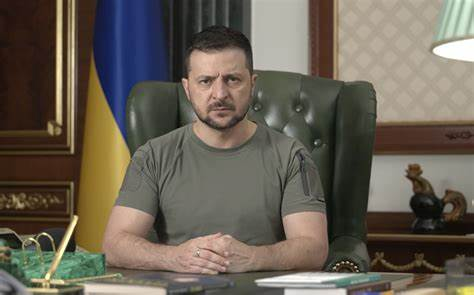
Mass protests have broken out in cities across Ukraine after President Volodymyr Zelensky signed a new law that shifts control of key anti-corruption institutions to the prosecutor general — a move many believe threatens the independence of the agencies.
The law gives the prosecutor general authority over the National Anti-Corruption Bureau (NABU) and the Specialised Anti-Corruption Prosecutor’s Office (SAP), two institutions that have been central to Ukraine’s fight against corruption for nearly a decade. Critics say this change could allow politically influenced interference in investigations, undermine accountability, and stall progress in the country’s efforts to join the European Union.
Speaking after signing the bill, Zelensky defended the decision by arguing that Ukraine’s anti-corruption agencies had become ineffective and were vulnerable to Russian infiltration. He stressed that clearing out such influence was necessary for national security and institutional reform.
However, the reaction among Ukrainians was swift and vocal. In Kyiv, hundreds took to the streets in what has become the largest anti-government protest since Russia’s full-scale invasion in 2022. Demonstrations also erupted in Lviv, Dnipro, and Odesa, with citizens carrying signs that read “We chose Europe, not autocracy” and “My father did not die for this.”
The president’s move gives Prosecutor General Ruslan Kravchenko — a trusted ally — the power to reassign or even close corruption cases. Zelensky has accused the anti-corruption bodies of allowing high-value investigations to stall for years, saying urgent reform is needed to ensure “the inevitability of punishment.”
But many see this as a betrayal of Ukraine’s democratic aspirations, hard-won since the Euromaidan protests and the ousting of a pro-Russian president in 2014. Anti-corruption institutions were created under international supervision, and their independence was a key condition for Western aid and closer integration with Europe.
The law’s passing comes shortly after arrests of alleged Russian spies within NABU — a move the government used to justify the changes. Still, the decision has sparked concern among Ukraine’s allies, especially the European Union, which emphasized that continued financial and political support is dependent on judicial transparency and democratic governance.
EU officials have warned that dismantling safeguards around NABU’s independence represents a significant step backward. Ukraine’s Deputy Prime Minister for European Integration insists core functions of the agencies remain untouched and that the country’s commitment to anti-corruption remains firm.
Former foreign minister Dmytro Kuleba publicly criticized the move, calling it a “bad day for Ukraine” and warning that the president is at a crossroads: to stand with the people or move away from democratic principles.
Despite growing tensions, Western nations are unlikely to reduce support while Ukraine continues to face immense pressure on the battlefield. However, many are calling for urgent dialogue with Ukrainian leadership to address concerns and safeguard the country’s democratic future.