
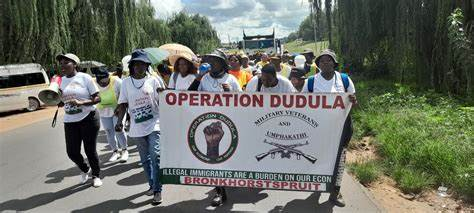
Operation Dudula’s latest campaign targeting undocumented immigrants has ignited widespread outrage as dozens of foreign nationals were reportedly denied access to healthcare at public hospitals in South Africa this week.
At Durban’s Addington Hospital, more than 50 undocumented patients, including refugees and asylum seekers, have allegedly been turned away since the group began protesting outside the facility on Tuesday. Zandile Dabula, leader of Operation Dudula, confirmed the movement plans to continue these actions across the country, insisting only documented foreigners with valid permits and medical insurance should be treated.
Human rights groups and refugee advocates have condemned the campaign. Eric Jean Butoki of the Southern Africa Refugee Organisations Forum (SAROF) warned that these actions jeopardize the lives of vulnerable people, many of whom depend on chronic medication and scheduled treatments. He called on the government to create permanent refugee camps to address the crisis.
The South African Human Rights Commission (SAHRC) responded with a strong statement, reaffirming that access to healthcare is a right granted to everyone in the country—regardless of citizenship or documentation status. The Constitution’s Section 27 explicitly prohibits denying emergency medical treatment to anyone in South Africa.
Despite the legal framework, Dabula rejected the SAHRC’s position, saying her movement would not be “bullied” into backing down. While she acknowledged the need for life-saving interventions, she insisted undocumented individuals must be arrested before receiving care.
Political party ActionSA echoed similar sentiments, arguing that the SAHRC misinterprets the Constitution and advocating for its amendment to better regulate foreign nationals’ access to public services.
Legal experts, however, point out that the law is clear. Dr Shadi Ganoe from Wits School of Law noted that although foreign students must provide proof of medical insurance, the Constitution guarantees emergency healthcare to all, including undocumented migrants.
Meanwhile, AfriForum has entered the legal fray by seeking to join an ongoing Constitutional Court case as a friend of the court. The organization aims to argue that SAHRC’s recommendations are not legally binding and that their powers should remain advisory.
As tensions escalate, questions remain about the legal, ethical, and humanitarian implications of Operation Dudula’s growing influence and its challenge to South Africa’s constitutional values.