
A security and counter-terrorism expert, Brant Philip, has claimed that the United States has begun conducting reconnaissance missions inside Nigeria as part of a military cooperation arrangement aimed at tackling growing terrorist threats in the region.
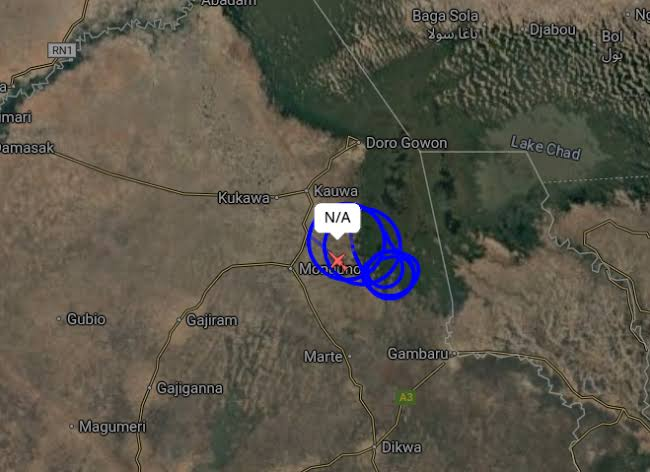
According to him, a US manned ISR aircraft flew over ISWAP-controlled areas in the southwestern part of Lake Chad, Borno State, on Saturday. He said the aircraft took off from Accra, Ghana, before entering Nigerian airspace and later returned the same route.
Philip stated earlier that the US Department of War had started reconnaissance flights over western Nigeria from its base in Ghana, despite no public announcement by the Nigerian government. He suggested that undisclosed agreements may have been signed behind closed doors.
He added that the alleged deal may allow the US to conduct unmanned airstrikes against terrorist targets in Nigeria, though only UAVs — not fighter jets or bombers — would be permitted. He said US forces would likely support Nigeria by filling intelligence and surveillance gaps using both manned and unmanned aircraft, possibly operating from the Kainji Air Base in Niger State.
On Sunday, Philip claimed that the same US ISR aircraft returned for the third consecutive day to monitor ISWAP’s “Mantiqah Krinwa” area in Borno State.
His claims have sparked mixed reactions. Former presidential aide Bashir Ahmad criticised the disclosures, accusing the expert of revealing sensitive military information that could benefit ISWAP.
The allegations come amid tense relations between Nigeria and the US following past disagreements over terrorism-related assessments and warnings. A recent high-level meeting between Nigerian officials and US defence leaders focused on addressing violence against Christians and strengthening cooperation against jihadist groups in West Africa.
Despite the growing online discussion, neither the Nigerian government nor the United States has issued any official statement confirming or denying the presence of US reconnaissance or military operations on Nigerian soil.
Meanwhile, Nigeria continues to confront widespread insecurity, including kidnappings, killings, and banditry, leaving many citizens fearful and frustrated.