
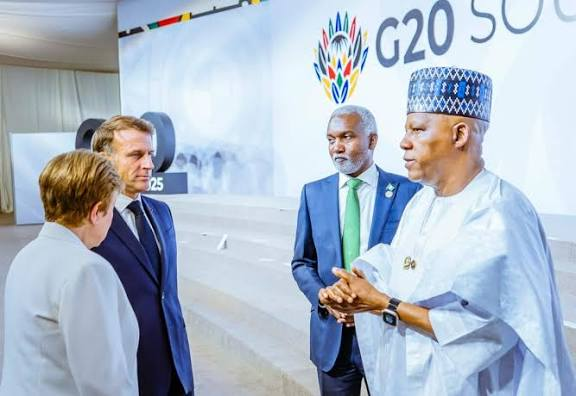
Nigeria has renewed its call for a global system that ensures communities hosting the world’s critical minerals benefit directly from their natural resources. The appeal was delivered at the 2025 G20 Leaders’ Summit in Johannesburg, where the country also backed the creation of ethical standards to guide the use of artificial intelligence worldwide.
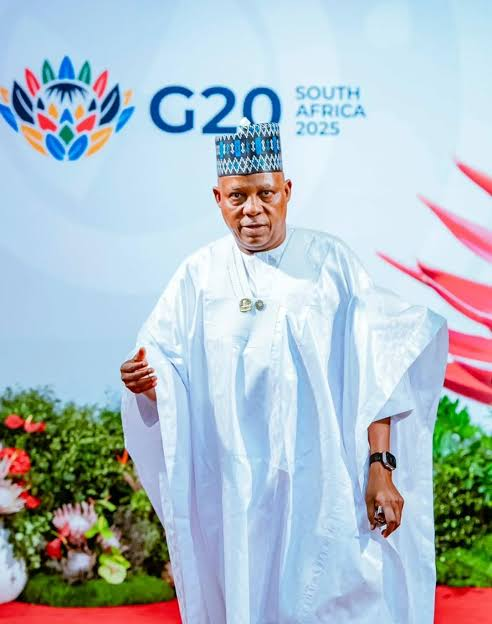
Represented by Vice President Kashim Shettima, President Bola Ahmed Tinubu said Africa’s vast mineral deposits should serve as a foundation for industrial development—not just for export. He emphasized that simply owning resources does not guarantee prosperity unless extraction and trade are governed by fairness, transparency, and accountability.
He stressed that value should be added at the source, allowing local communities to gain from beneficiation and jobs. “The issue before us goes beyond economics,” he said. “It speaks to the moral character of the world we are trying to build.”
Tinubu highlighted that as the world transitions to greener and more digital economies, progress must remain centered on people. He noted that Nigeria is working to empower its youth through digital skills, vocational training, and entrepreneurship under the Renewed Hope Agenda.
On artificial intelligence, Nigeria urged global leaders to ensure that AI improves lives rather than deepening inequality. The president called for ethical standards that guarantee safety, equity, and transparency. He warned against allowing technology to become a disruptive force that excludes or replaces workers.
He added that AI’s full potential can only be realized through strategic partnerships between developed and developing nations, public and private sectors, and innovators and policymakers. He urged the G20 to address systemic bias and keep global dialogue open so that AI benefits are shared across societies.
Speaking on global finance, Tinubu said many developing countries continue to face barriers that weaken growth and widen inequality. He argued that global financial systems were built for a different era and no longer reflect modern challenges. He urged the G20 to reform these systems so they respond more fairly to all economies, especially those in the Global South.
He also warned that rising debt levels are pushing vulnerable economies into cycles of instability. He called for debt sustainability, improved financing for development, and responsible use of critical minerals to remain at the center of the global agenda.
Tinubu concluded by urging world leaders to support a future where Africa is known not only for supplying raw materials but for driving innovation, creating value, and upholding dignity in work.