

Plateau State Governor Caleb Mutfwang has raised a fresh alarm over the devastating impact of insecurity across the state, revealing that nearly 12,000 people have been killed between 2001 and May 2025. He also disclosed that at least 420 communities have come under attack within the period, leaving families displaced, livelihoods destroyed, and humanitarian needs rising sharply.
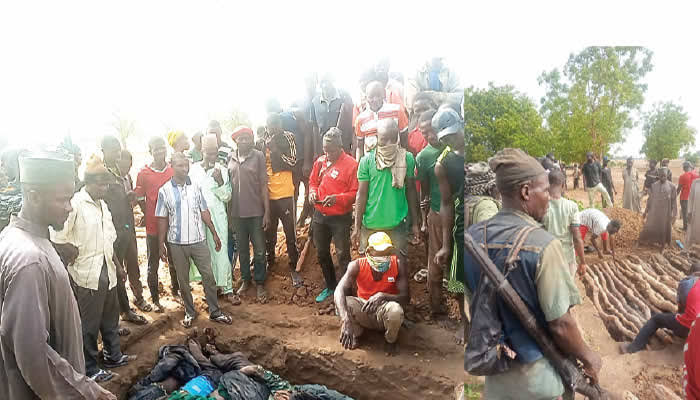
The governor, represented by his deputy, Ngo Josephine Piyo, shared these figures during the North-Central Zonal Public Hearing of the Senate Ad-Hoc Committee on the National Security Summit in Jos. He explained that many of the attacks were not random but coordinated by groups driven by economic, political, territorial, and religious motives.
Mutfwang expressed concern that criminal networks are exploiting mining sites in Plateau, using proceeds from illegal mining to purchase arms and drugs despite government clampdowns. He lamented the scale of displacement, land grabbing, and the destruction of farmlands—issues that have eroded cultural heritage and weakened local economies.
He questioned whether governments at all levels have truly fulfilled their constitutional duty to protect citizens, noting that security and welfare remain the primary purpose of leadership. Calling for unity, he urged Nigerians to stop comparing casualty figures along ethnic or religious lines and instead work together to confront the crisis.
The summit brought together lawmakers, security experts, traditional rulers, civil society organisations, and community leaders to discuss the most urgent threats facing the North-Central region. Leading the delegation, Senator Abba Moro said insecurity in the region stems from multiple drivers, including economic hardship, porous borders, youth unemployment, environmental degradation, and longstanding grievances.
He stressed that insights gathered from the hearing will guide legislative actions, shape budgets, and inform policies that strengthen national security.
The Plateau Initiative for Development and Advancement of the Natives (PIDAN) presented detailed accounts of repeated attacks in communities such as Irigwe, Mupun, Mwaghavul, and Bokkos. They called for protection of indigenous land rights, mutual respect between settlers and host communities, and full respect for religious freedom.
Reverend Gideon Para-Mallam urged constitutional restructuring of Nigeria’s security system to include national, state, local government, and community policing. He also advocated a national resettlement programme to support the safe return of internally displaced persons and to criminalise land grabbing.
The summit, chaired by Senator Opeyemi Bamidele, closed with renewed hope that collective contributions will lead to long-term solutions for Plateau State and the wider North-Central region.