
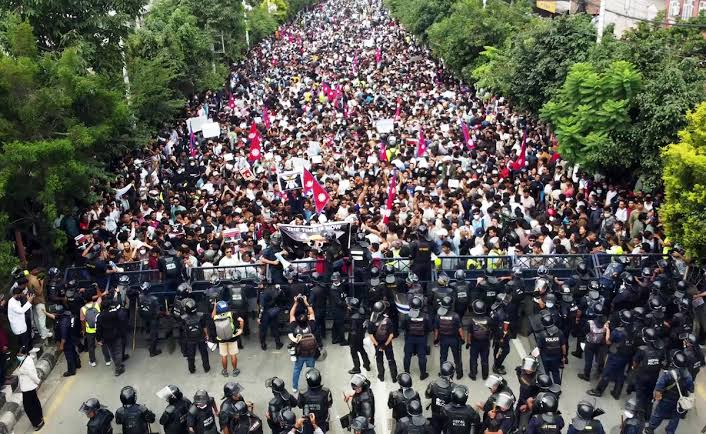
Nepal has lifted its controversial social media ban after violent protests left at least 19 people dead and more than 100 injured.
The unrest began when thousands of mostly young demonstrators stormed the parliament building in Kathmandu, demanding the government restore access to platforms such as Facebook, YouTube, and Instagram. Protesters also voiced anger over corruption, accusing leaders of enriching themselves while ignoring public concerns.
Placards reading “enough is enough” and “end to corruption” filled the streets, while some demonstrators hurled stones at the prime minister’s residence. In several cities, clashes erupted as police used tear gas, batons, water cannons, and rubber bullets to disperse crowds.
The government reversed the ban during an emergency cabinet meeting late Monday, saying the decision was meant to “address the demands of Gen Z.” Authorities had originally justified the restriction as a measure to curb fake news, hate speech, and online fraud, but many citizens viewed it as an attack on free expression.
The protests gained momentum alongside a viral “nepo kid” campaign online, which criticized the extravagant lifestyles of politicians’ children and accused them of benefiting from corruption.
Prime Minister KP Sharma Oli expressed sorrow over the loss of life, promising an investigation and financial support for victims’ families, while the home minister resigned after facing criticism for the government’s heavy-handed response.
For many protesters, the lifting of the ban was only the beginning—calls for accountability and an end to corruption remain at the heart of their movement.