
Mutinous Soldiers Attack Niger Presidential Palace and Airport as Fighting Rocks Niamey
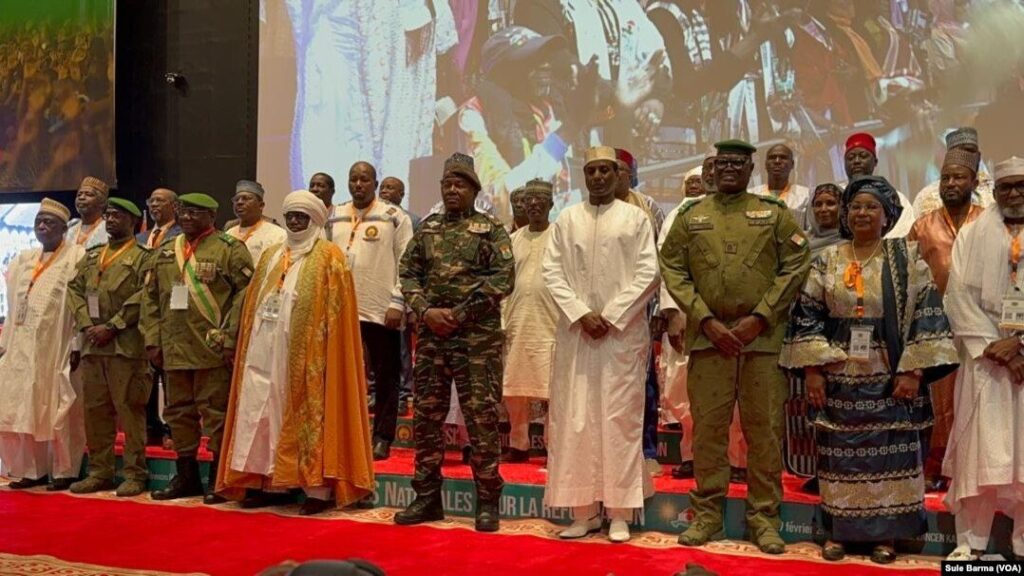
Mutinous soldiers have launched coordinated attacks against key installations in Niger’s capital, including the presidential palace and Niamey’s international airport, dramatically escalating the overnight violence first reported across the city.
Fresh reporting on Saturday, 29 August 2026, now indicates that the violence was not simply an unidentified security incident.
Four sources cited by Reuters described the attackers as mutinous soldiers, while a separate security source told AFP that “insurgents from within the armed forces” attempted to enter the presidential palace before being repelled by the presidential guard.
The fighting represents one of the most serious threats yet to the rule of General Abdourahamane Tiani, who himself seized power in Niger’s July 2023 military coup.
Mutinous soldiers reportedly attack presidential palace
Heavy gunfire continued around the presidential compound after soldiers attempted to breach the area.
AFP reported that Niger’s presidential guard repelled troops who tried to enter the palace, while shooting was still being heard around the complex later on Saturday morning.
Reuters reported that the palace appeared to have been secured by troops loyal to the government by around 09:00 GMT, or 11:00 South African time.
However, the wider security situation remained highly unstable.
There has been no verified report that Tiani has been captured or removed from power.
That distinction is crucial: this should not yet be reported as a successful coup.
Soldiers from several regions reportedly involved
According to Reuters, soldiers involved in the uprising came from the southwestern localities of Ouallam, Tera and Dosso.
Those areas have experienced significant fighting between Nigerien forces and armed groups linked to Islamic State and al-Qaeda.
Some units based there have suffered heavy casualties during counter-insurgency operations.
The involvement of serving soldiers changes the nature of the story substantially from the earlier reports of unidentified attackers.
It raises questions about divisions within Niger’s military and whether dissatisfaction has spread beyond isolated units.
Airport and major military airbase also attacked
The violence was not confined to the presidential palace.
Mutinous soldiers also attacked Diori Hamani International Airport and Air Base 101, a strategically important Nigerien military installation located at the airport.
Gunfire and powerful explosions were heard through the early morning hours.
One Nigerien official initially announced that security forces had regained control of Base 101.
But Reuters witnesses subsequently reported renewed shooting and explosions around the airport.
The airport area was still described as contested later in the morning.
State television becomes another flashpoint
Niger’s state television and radio went off air during the unrest.
Reuters sources later reported that state television had fallen under the control of the mutineers, even as loyalist troops appeared to retain the presidential palace.
There were conflicting subsequent reports about the broadcaster.
AFP reported that the state television signal was restored at approximately 10:00 local time, after being cut for slightly more than an hour.
It therefore remains unclear who ultimately controls the broadcasting facilities.
In attempted coups across West Africa, control of state television has historically been strategically important because military factions often use broadcasters to announce changes in government.
No verified declaration of a new government had been broadcast at the time of publication.
Niger government urges population to remain calm
Niger’s military authorities issued a statement calling for unity and vigilance.
The government said defence and security forces had been mobilised to protect the country.
Security forces closed or restricted access to several important roads in Niamey while troops were deployed around strategic locations.
The government had not yet released confirmed casualty figures.
Nor had authorities publicly identified the leaders of the mutiny.
Is another coup unfolding in Niger?
That is now the central question.
There are several indicators associated with attempted military takeovers:
armed soldiers have attacked the presidential compound;
military infrastructure has been targeted;
state broadcasting was interrupted;
and fighting has involved government troops and members of the armed forces.
However, there is still no verified announcement that the government has fallen or that Tiani has been removed.
The safest description at this stage is a military mutiny or attempted uprising against Niger’s ruling junta.
Reporting it as a completed coup would go beyond the available evidence.
Tiani himself took power in a military coup
The irony of the confrontation is significant.
General Tiani came to power after Niger’s presidential guard detained elected President Mohamed Bazoum in July 2023.
Military officers subsequently announced that Bazoum had been removed.
Tiani became leader of the new junta, formally known as the National Council for the Safeguard of the Homeland.
His government justified the takeover partly by arguing that civilian authorities had failed to contain the jihadist insurgency spreading across the Sahel.
Three years later, security remains one of Niger’s most serious problems.
Niger has moved sharply towards Russia
The outcome of the current crisis could have geopolitical consequences far beyond Niger.
After taking power, Tiani broke with several of Niger’s longstanding Western security partners.
French troops withdrew.
American troops also ended a major military presence in the country.
Niger subsequently strengthened military and diplomatic relations with Russia.
Russian personnel have assisted Nigerien forces, including during previous attacks around the airport.
Any serious threat to Tiani therefore immediately attracts international attention because Niger has become an important part of Moscow’s expanding influence across the Sahel.
Niger, Mali and Burkina Faso have formed a new bloc
Niger also withdrew from the Economic Community of West African States, or ECOWAS, together with Mali and Burkina Faso.
The three military-led countries created the Alliance of Sahel States, or AES.
Their governments have increasingly coordinated on defence, diplomacy and economic policy.
Air Base 101 in Niamey is particularly significant because the area also hosts facilities associated with the AES unified force.
A power struggle inside Niger therefore has potential implications for the entire emerging Sahel alliance.
Uranium adds another geopolitical dimension
Niger is also one of the world’s important uranium producers.
Its uranium industry has historically supplied European nuclear-power markets, including through French nuclear company Orano.
Relations between Niger and France deteriorated sharply following the 2023 coup.
Niger’s military authorities subsequently moved to take greater control of uranium assets previously operated or developed by foreign companies.
Reuters reports that the government recently reassigned former Orano and GoviEx permits to state-backed companies.
That makes political instability in Niger potentially relevant to global uranium supply and European energy security.
Airport has already been attacked twice this year
Niamey’s airport has become an increasingly sensitive security target.
It was attacked earlier in January 2026, when Islamic State claimed responsibility for an assault on the airport and military base.
Another attack occurred in June.
Saturday’s violence is different because current evidence points towards members of Niger’s own armed forces, rather than solely jihadist fighters.
That distinction could make the latest crisis considerably more dangerous to the government.
An insurgency outside the military is one problem.
A rebellion inside the armed forces threatens the command structure itself.
Jihadist war has placed enormous pressure on Niger’s army
Niger continues fighting armed groups linked to both Islamic State and al-Qaeda.
Neighbouring Mali and Burkina Faso face similar insurgencies.
Military governments in all three countries took power promising to improve security, but jihadist attacks have continued.
Reuters reports that units from some of the areas associated with Saturday’s mutiny have suffered heavy losses against Islamic State militants.
Whether battlefield casualties, military grievances or other political disputes directly triggered the uprising has not yet been established.
Conflicting reports underline how fluid the situation remains
Several important details remain unresolved.
Reuters sources reported that the airport remained contested and that mutineers had gained control of state television.
AFP subsequently reported that television broadcasting had returned.
Government-linked officials meanwhile said security forces had brought parts of the situation under control.
All three developments could be true at different moments because control of strategic sites can change rapidly during an armed confrontation.
For that reason, reports claiming either that Tiani has definitively defeated the mutiny or that his government has fallen should be treated with caution.
What we know right now
The strongest independently supported picture is that mutinous members of Niger’s armed forces launched attacks in Niamey, including against the airport, Air Base 101 and the presidential palace area.
The presidential guard reportedly prevented insurgent soldiers from entering the palace.
Government forces have been deployed throughout the capital.
The palace appeared under loyalist control later in the morning, while fighting continued around other locations.
State television was interrupted and its control became contested.
No verified casualty figures have yet been released.
And there has been no confirmed announcement removing General Tiani from power.
What happens next
The next few hours will be decisive.
Watch for an appearance by Tiani on state television or another official government platform.
His public appearance would provide strong evidence that the existing leadership remains operational.
Conversely, any declaration by mutinous officers announcing a new military command would dramatically change the situation.
Another critical indicator will be control of the airport and military headquarters.
For now, however, the major fresh development is clear:
The overnight gunfire in Niger has developed into a reported military mutiny, with soldiers attacking the presidential palace, airport and military facilities in Niamey while loyalist forces fight to retain control.
- Abdourahamane Tiani, Air Base 101, Alliance of Sahel States, Diori Hamani International Airport, Niamey fighting, Niger airport attack, Niger coup 2026, Niger coup attempt, Niger junta, Niger military coup, Niger military mutiny, Niger political crisis, Niger presidential palace attack, Niger Russia relations, Niger soldiers, Niger uranium, Sahel military alliance