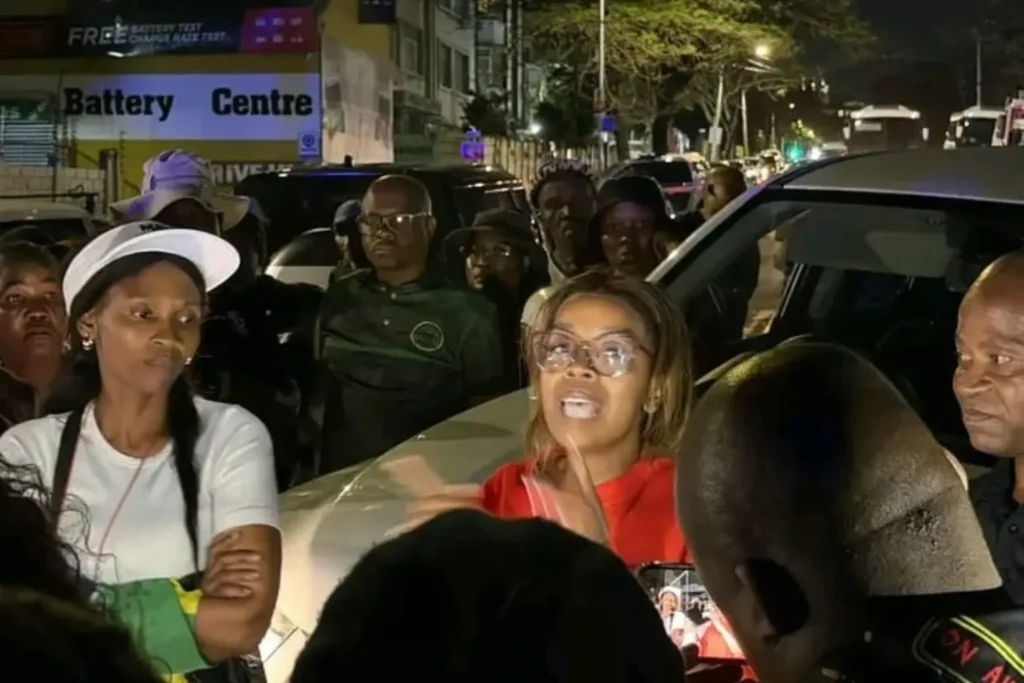
Mokonyane Warns GNU Is ‘No Longer a Source of Unity’ as ANC-DA Tensions Grow
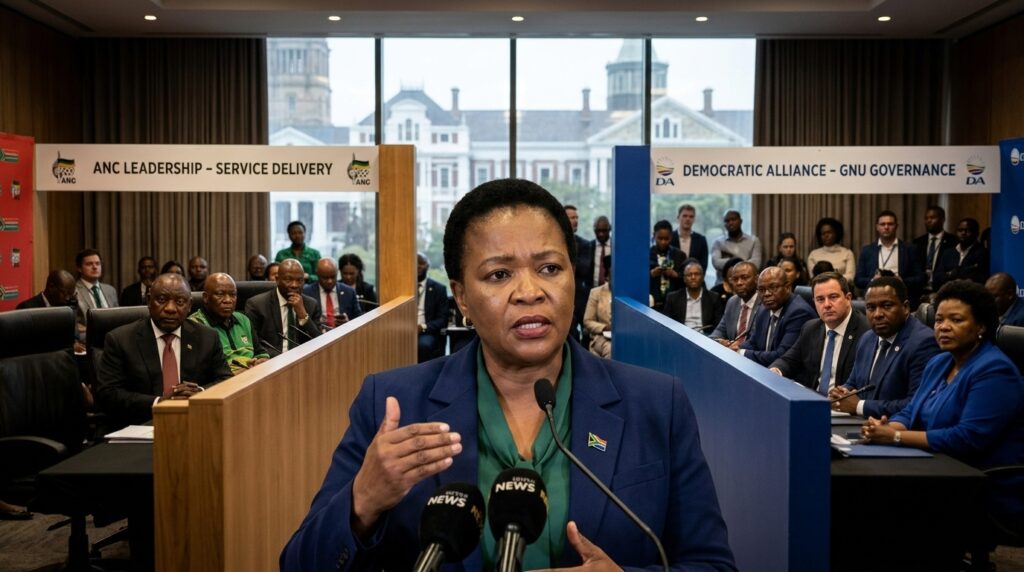
Senior ANC leader Nomvula Mokonyane has delivered one of the clearest warnings yet about the state of South Africa’s Government of National Unity, saying the arrangement is no longer functioning as a source of political unity and suggesting that the Democratic Alliance has effectively moved on from the spirit in which the GNU was formed.
The remarks add to growing tension between the ANC and DA as disagreements over policy, governance and political strategy continue to place pressure on the coalition arrangement established after the 2024 national elections.
The GNU was formed after the ANC lost its outright majority for the first time since 1994, forcing the party to work with the DA and several smaller parties in national government.
Mokonyane’s latest comments suggest that frustration inside the ANC over the relationship with the DA is deepening.
ANC-DA relationship under renewed strain
The ANC and DA entered the GNU despite major ideological differences.
From the beginning, the relationship has been marked by disputes over economic policy, transformation, foreign policy, the national budget and the powers exercised by ministers from the two parties.
The DA has repeatedly argued that it will not automatically support ANC positions merely because it is part of the GNU.
The ANC, meanwhile, has accused the DA at different points of behaving more like an opposition party than a partner in government.
That tension has fuelled recurring speculation about whether the two largest parties in the GNU can continue governing together over the longer term.
Mokonyane has previously argued that coalition arrangements must place South Africa’s interests above narrow party considerations, but the latest rhetoric marks a significantly harder tone.
GNU born from historic 2024 election result
The Government of National Unity emerged after the ANC received just over 40% of the national vote in the 2024 general election.
The result ended three decades of uninterrupted ANC majority rule and forced the party into negotiations with rival political parties.
The DA, which emerged as the second-largest party nationally, joined the GNU alongside the Inkatha Freedom Party and several smaller political parties.
The uneasy partnership has survived repeated political disputes, but questions about its stability have never disappeared.
Policy battles deepen divisions
Some of the sharpest clashes between the ANC and DA have centred on fiscal and economic policy.
The DA has previously opposed key government decisions supported by the ANC and has taken government decisions to court while remaining part of the GNU.
Those disputes have prompted questions about whether the GNU represents genuine collective government or an arrangement between parties that continue to pursue competing political programmes.
For the ANC, disagreements with the DA also raise strategic questions about how the party governs after losing its national majority.
For the DA, participation in government requires balancing collective Cabinet responsibility with its identity as the ANC’s largest electoral rival.
Does this mean the GNU is collapsing?
Not yet.
Mokonyane’s remarks do not amount to an official ANC decision to remove the DA from government or terminate the GNU.
Any major restructuring of the coalition would require decisions through the ANC’s formal leadership structures and would likely trigger significant political negotiations among the parties currently represented in government.
The DA has also not announced that it is leaving the GNU.
The significance of the latest comments lies instead in the fact that a senior ANC leader is openly questioning whether the arrangement is still delivering the political unity it was created to achieve.
Political pressure likely to intensify
The next phase of the GNU is likely to be shaped by whether the ANC and DA can manage their disagreements without destabilising the national government.
For the ANC, the challenge is maintaining control of government while accommodating parties with significantly different policy positions.
For the DA, the challenge is participating in government while continuing to present itself to voters as an alternative to the ANC.
Mokonyane’s latest intervention indicates that those contradictions are becoming increasingly difficult to contain.
For now, the GNU remains in place.
But the increasingly confrontational language between its two largest parties suggests that the political relationship underpinning it is facing renewed pressure.