
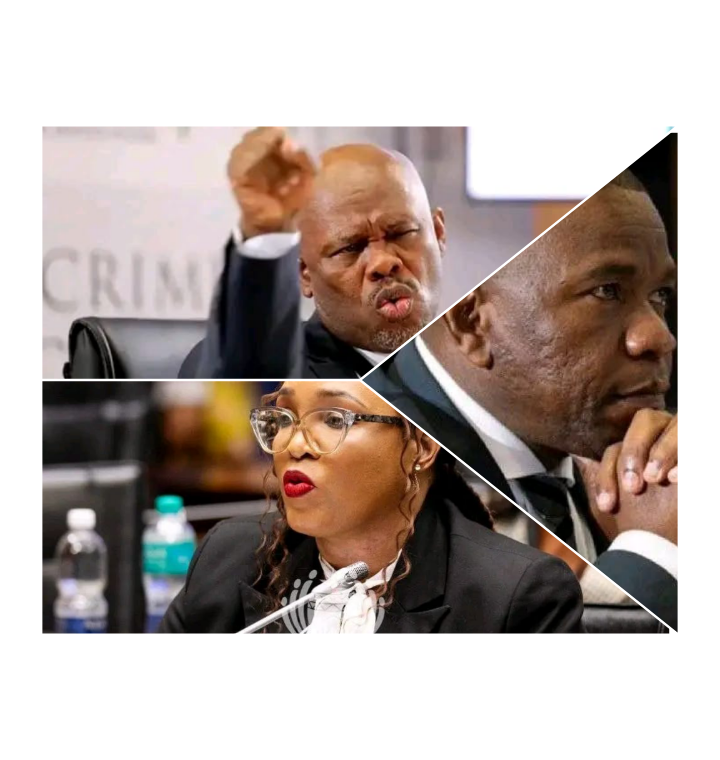
KwaZulu-Natal Police Commissioner Lieutenant-General Nhlanhla Mkhwanazi has delivered a stunning and final blow to any hopes of reconciliation inside the South African Police Service, declaring that his relationship with suspended Deputy National Commissioner Lieutenant-General Shadrack Sibiya is beyond repair.
“I can tell you now, there can never be peace between me and General Sibiya.”
With those words, Mkhwanazi confirmed what many had suspected. The battle at the top of SAPS is no longer a disagreement. It is a full scale internal war.
His testimony pulls back the curtain on a deeply fractured police leadership, where allegations of interference, betrayal and power struggles are colliding at the highest level.
At the centre of the conflict is the Political Killings Task Team, a unit tasked with investigating some of the most sensitive and dangerous cases in KwaZulu-Natal. Mkhwanazi alleges that Sibiya interfered directly in these investigations, with suspended Police Minister Senzo Mchunu also implicated in attempts to influence the work of the task team.
This is not just about personal differences. It is about control of investigations that could expose powerful networks.
Mkhwanazi revealed that behind the scenes, attempts were made to broker peace between the two generals. Former Police Minister Bheki Cele was approached to facilitate a meeting, but it never happened.
The reason, according to Mkhwanazi, is explosive.
He says Lieutenant-General Hilda Khosi Senthumule told senior leadership that Sibiya had mentioned Economic Freedom Fighters leader Julius Malema in relation to organising the meeting. That revelation raised red flags and stopped the process.
At the heart of the fallout is also the investigation into the murder of rapper AKA. Mkhwanazi claims this case became a flashpoint, alleging that Sibiya wanted to interfere in the investigation.
“I do not know why,” he said, but the damage, according to him, is permanent.
Mkhwanazi then turned his focus to Crime Intelligence, exposing what he described as years of corruption, manipulation and abuse of power.
He revealed that he removed Senthumule from Crime Intelligence in 2012 over alleged abuse of secret funds.
“These funds were used for functions, parties, gatherings that should not have been attended,” he said.
Despite this, Senthumule later rose through the ranks to become a senior general. Mkhwanazi made it clear that his view of her has not changed.
“Senthumule cannot be trusted. I could not trust her then. I cannot trust her now.”
The committee was shown a recorded conversation between Senthumule and Sibiya about the movement of Political Killings Task Team dockets from KwaZulu-Natal to Gauteng.
Mkhwanazi says the recording destroys her version of events.
Senthumule had previously claimed she did not know how the dockets ended up in Gauteng. But according to Mkhwanazi, the recording suggests she supported the move and played a key role behind the scenes.
He went further, alleging that she was effectively central to the relocation and mishandling of these sensitive case files.
The implications are massive.
These are not ordinary files. These are politically sensitive investigations linked to killings, power networks and organised crime.
Mkhwanazi also pointed to a broader pattern inside Crime Intelligence, where officials allegedly enriched themselves using secret funds, including leasing properties back to SAPS.
He says these irregularities date back more than a decade and were never properly investigated because leadership changes shut down ongoing probes.
What emerges from his testimony is a disturbing picture of an institution under siege from within.
A police service where internal battles, alleged corruption and interference threaten the integrity of investigations at the highest level.
A leadership divided.
A system compromised.
And now, a declaration that peace is no longer possible.
The question is no longer whether there is a crisis inside SAPS.
The question is how deep it goes.