
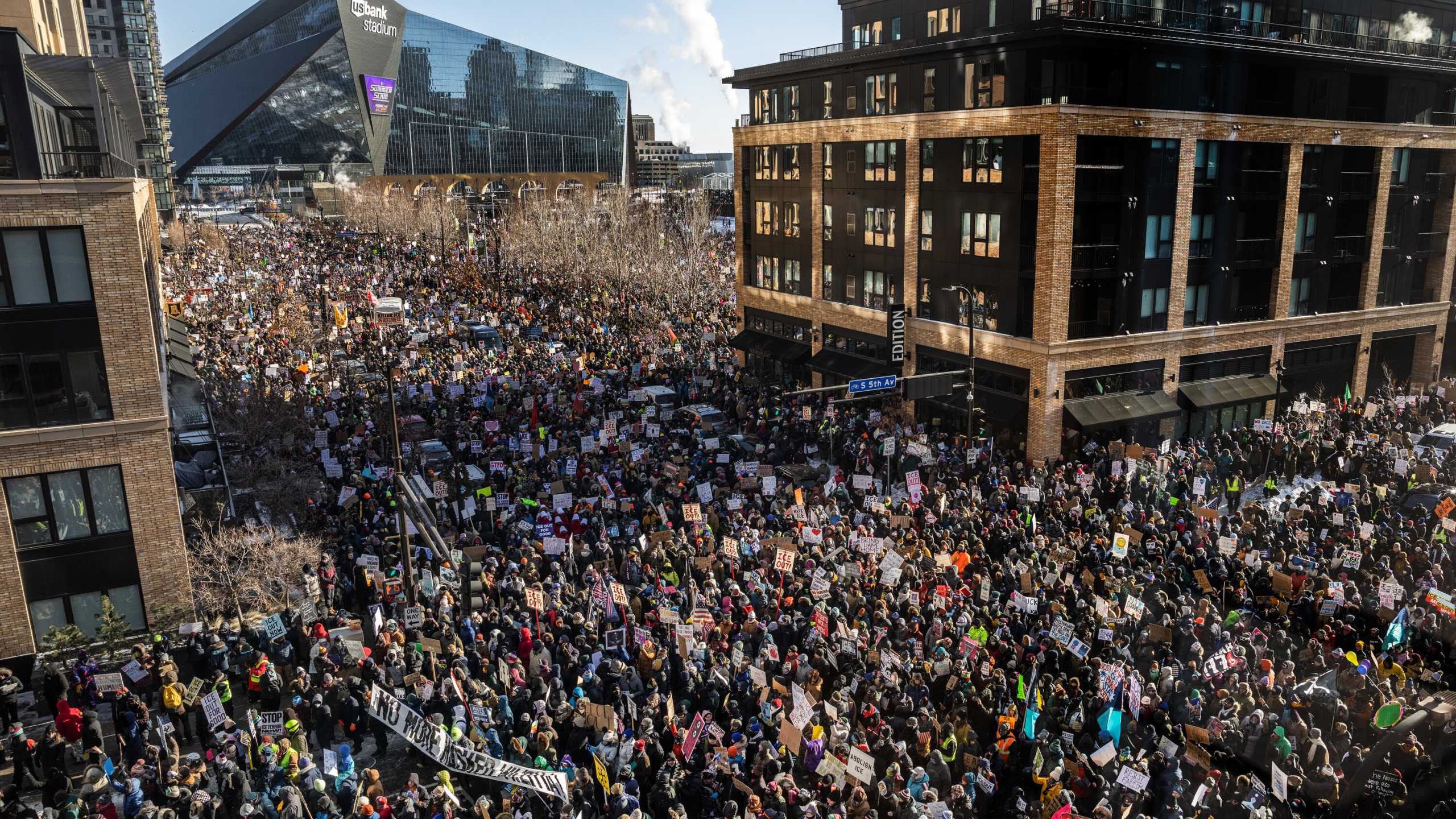
Hundreds of businesses across Minnesota closed their doors on Friday as thousands of people poured into the streets, braving bitter cold temperatures to protest ongoing immigration enforcement operations in the state.
The action was part of a coordinated economic protest, with organisers urging residents to skip work and school and avoid shopping for the day. The goal was to send a clear message of opposition to the continued presence of immigration officers and the impact their operations are having on local communities.
Immigration raids in Minnesota have been underway for more than six weeks. While federal authorities describe the operation as a public safety effort focused on removing criminals, critics say many of those affected have no criminal records, and some US citizens have also been caught up in the sweeps.
Tensions escalated further on Friday when around 100 faith leaders were arrested at Minneapolis–St Paul International Airport during a demonstration urging airlines not to transport immigration detainees. Officials said the arrests occurred after the protest went beyond agreed limits and disrupted airport access.
Thousands of federal officers have been deployed across the state as part of a major enforcement surge, adding to fears and uncertainty in immigrant communities. Anger has also been fueled by the recent killing of 37-year-old Minneapolis resident Renee Good, an incident that has drawn widespread condemnation and intensified calls for accountability.
Community leaders say the protests are about more than immigration policy. “We want ICE out of Minnesota and out of every state,” said one faith leader involved in the demonstrations, calling on lawmakers to step in and increase oversight.
Friday’s marches were among the largest yet, with crowds filling downtown Minneapolis despite temperatures dropping to minus 10 degrees Fahrenheit. Protesters chanted, played music, and eventually gathered near the city’s NBA arena for a large rally.
Many business owners chose to close in solidarity. Corey Lamb, who owns a small botanical shop in Minneapolis, said fear caused by the raids has disrupted both daily life and local commerce. He explained that when workers and customers are afraid to leave their homes, the effects ripple through the entire economy.
Restaurants, cafés, tattoo studios, and retail stores joined the shutdown. For some owners, the decision was painful. One restaurateur who closed several locations said revenues have already fallen sharply in recent weeks, but staying open risked public backlash and employee concerns.
School districts have also been affected. Officials in one suburb reported that several students, some as young as five, were detained in recent days. In another case, a toddler was reportedly detained alongside her undocumented father during a routine trip home.
The protests come amid growing political pressure, with federal leaders calling on local law enforcement to cooperate more closely with immigration authorities. Minnesota’s sanctuary-style policies, which limit such cooperation, have drawn sharp criticism from the federal government.
Meanwhile, internal dissent has surfaced within federal agencies. A senior investigator recently resigned over concerns related to the handling of the Renee Good case, and multiple prosecutors have also stepped down in recent weeks.
For many Minnesotans, Friday’s shutdown and protests were a way to show solidarity, express outrage, and demand change — even as the economic and emotional costs continue to mount.